Can Humidifiers Cause Pneumonia? Understanding the Risks and How to Stay Safe
Humidifiers add moisture to dry air and help ease respiratory symptoms from colds, allergies, and asthma. However, a contaminated humidifier disperses bacteria, mold, and fungi into breathable air, potentially causing lung infections including pneumonia and hypersensitivity pneumonitis. This guide covers how contamination happens, warning signs to recognize, and maintenance practices that keep your family safe.
How Can Humidifiers Cause Pneumonia and Respiratory Issues?
The device itself poses no direct threat. Can humidifiers cause pneumonia? Only when neglected units become breeding grounds for harmful microorganisms that get released into your breathing space.
Bacteria like Pseudomonas species, along with molds, fungi, and amoebas, thrive in warm, moist environments. Your humidifier tank creates ideal conditions for these pathogens when water sits unchanged. Cool mist humidifiers present higher risk because they don't boil water before dispersing it.
The contamination mechanism works like this:
- Standing water accumulates microbes within 24-48 hours
- Mineral buildup from tap water creates surfaces where bacteria attach and multiply
- Mist dispersal aerosolizes pathogens to the perfect particle size for deep lung penetration
- Each breath pulls contaminated droplets directly into your respiratory system
Warm mist humidifiers reduce this risk by heating water before release, though they don't eliminate it entirely. The heating process kills most bacteria and mold spores, while cool mist units require more vigilant cleaning to stay safe.
Dr. Robin Deterding, pediatric pulmonologist at Children's Hospital Colorado, puts it bluntly: bacteria, chemicals, minerals, and mold all aerosolize to the right particulate size that you breathe directly into your lungs, where they become toxic. [Children's Hospital Colorado] reports cases where chronic lung disease symptoms traced back to contaminated humidifiers.
What Is Humidifier Lung (Hypersensitivity Pneumonitis)?
This condition develops when your immune system overreacts to organic particles inhaled from contaminated humidifier mist. Humidifier lung causes inflammation in lung tissue, creating symptoms similar to pneumonia without an actual bacterial or viral infection.
The distinction matters for treatment. True bacterial pneumonia requires antibiotics. Humidifier lung, a form of hypersensitivity pneumonitis, requires removal from the contaminated environment and sometimes corticosteroids to reduce inflammation.
Repeated exposure triggers the problem:
- First exposures sensitize your immune system to mold spores or bacterial proteins
- Subsequent inhalation causes progressively stronger inflammatory responses
- Lung tissue swells and struggles to transfer oxygen efficiently
- Symptoms typically appear after one to two weeks of regular exposure to contaminated units
The South Korea humidifier disinfectant tragedy illustrates these severe consequences. Thousands developed lung injuries from inhaling aerosolized disinfectant chemicals added to humidifiers, resulting in over 1,500 deaths between 2011 and 2020.
Symptoms range from mild respiratory irritation to severe breathing difficulty. Without intervention, chronic exposure leads to permanent lung scarring and reduced function. PMC Research documents cases where patients required months of treatment after prolonged exposure to contaminated cool-mist vaporizers.
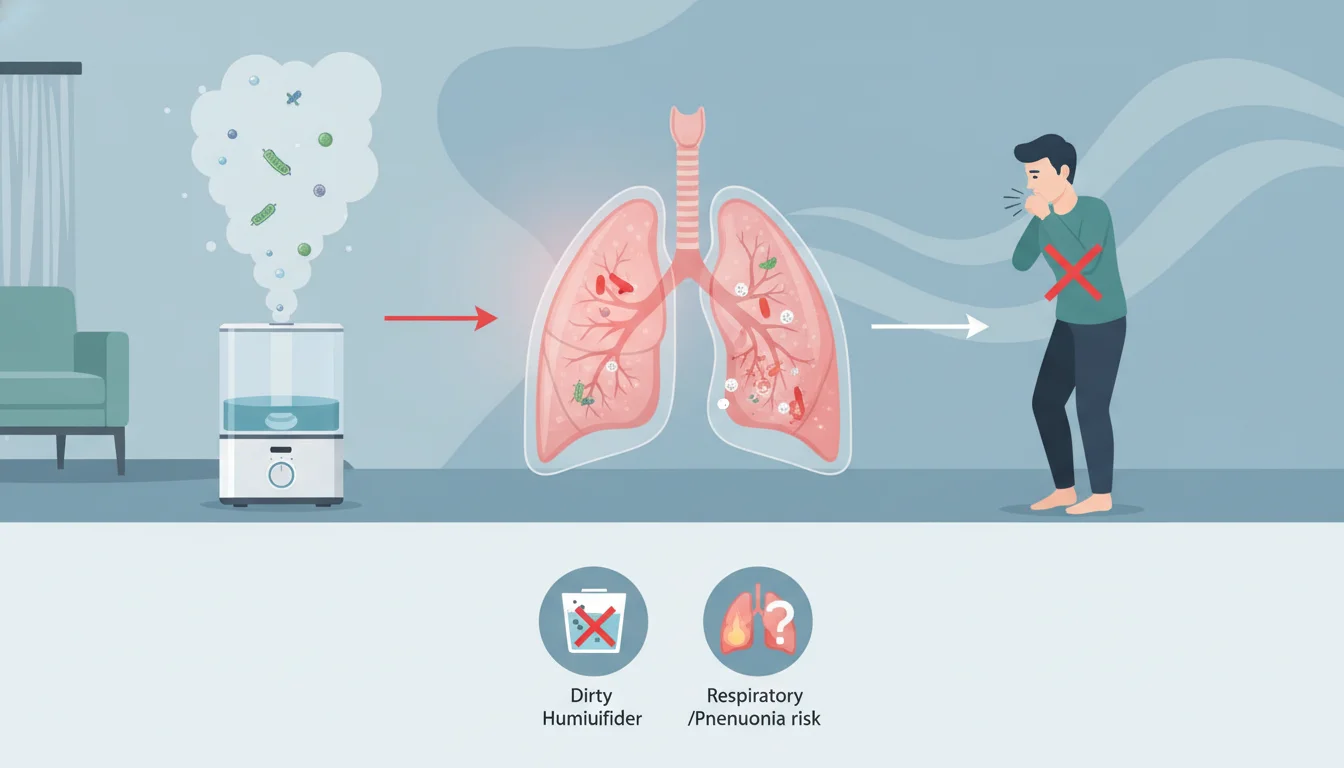
Warning Signs of Humidifier-Related Respiratory Problems
Symptoms mirror common respiratory infections but follow a distinctive pattern: they worsen when the humidifier runs and improve when you leave the contaminated environment.
Watch for these warning signs:
| Symptom | Acute Presentation | Chronic Presentation |
|---|---|---|
| Cough | Dry, persistent, worse at night | Productive, ongoing for weeks |
| Breathing | Shortness of breath during activity | Difficulty breathing at rest |
| Fever | 100-102°F, comes and goes | Low-grade, persistent |
| Chest sensation | Tightness, mild discomfort | Pain, heavy feeling |
| Energy | Fatigue, body aches | Chronic exhaustion |
| Recovery pattern | Improves within days away from home | Symptoms persist, slow improvement |
The telltale sign: your symptoms ease during work or vacation and return when you're home using the humidifier. This pattern strongly suggests environmental exposure rather than infectious illness.
Seek immediate medical attention if you experience difficulty breathing at rest, fever above 102°F, chest pain that worsens with breathing, coughing blood-tinged mucus, or bluish discoloration around your lips or fingernails. These symptoms indicate potential oxygen deprivation requiring urgent evaluation. MedlinePlus provides comprehensive guidance on distinguishing community-acquired pneumonia from other respiratory conditions.
Who Is Most at Risk?
Certain groups face elevated danger from contaminated humidifier exposure. Their bodies lack robust defenses against inhaled pathogens or react more severely to airborne irritants.
High-risk populations include:
- Infants and young children with immature immune systems and smaller airways where inflammation causes proportionally greater obstruction
- Adults over 65 with naturally declining respiratory function and reduced mucociliary clearance
- Asthma and COPD patients whose airways are already sensitized and reactive to irritants
- Immunocompromised individuals undergoing chemotherapy or taking immunosuppressive medications, or those with HIV or organ transplants
- Allergy sufferers, particularly those sensitive to mold or dust mites that proliferate in humid environments
Risk compounds when multiple factors combine. An elderly person with COPD faces substantially higher danger than either factor alone would suggest. [Respiratory Therapy Zone] emphasizes that these vulnerable populations require extra vigilance with humidifier hygiene.
If someone in your household falls into these categories, consider whether a humidifier is truly necessary. When added humidity is needed, implement strict cleaning protocols and consider safer humidifier types.
How to Clean and Maintain Your Humidifier Safely
Consistent maintenance eliminates the conditions where dangerous microorganisms grow. These habits take just minutes daily but prevent serious health consequences.
Daily tasks:
- Empty all remaining water from the tank and base
- Wipe interior surfaces dry with a clean cloth
- Refill with fresh distilled or demineralized water only
Weekly deep cleaning:
- Disassemble all removable parts
- Soak components in white vinegar or 3% hydrogen peroxide for 30 minutes
- Scrub with a soft brush to remove mineral deposits and biofilm
- Rinse thoroughly with clean water
- Air dry completely before reassembling
Critical practices:
| Practice | Why It Matters |
|---|---|
| Use distilled water | Tap water minerals create "white dust" deposits that harbor bacteria and become airborne |
| Never exceed 24 hours | Standing water becomes contaminated within one to two days |
| Replace filters on schedule | Clogged filters reduce effectiveness and trap moisture where mold grows |
| Store dry | Residual moisture in stored units breeds mold during the off-season |
| Replace unit every 1-2 years | Internal components degrade, creating hard-to-clean crevices |
Skip the essential oils unless your manufacturer explicitly approves them. Oil residue coats internal surfaces, traps bacteria, and damages some humidifier components. The respiratory benefits claimed for diffused oils don't outweigh infection risks from poorly maintained devices.
Choosing a Safer Humidifier: Types and Recommendations
Different humidifier technologies carry different risk profiles. Your choice affects both safety and maintenance burden.
| Type | How It Works | Safety Profile | Best For |
|---|---|---|---|
| Steam vaporizer | Boils water, releases steam | Lowest pathogen risk, burn hazard | Adults, supervised use |
| Evaporative | Fan blows air through wet wick | Filter traps some contaminants | General home use |
| Ultrasonic | Vibrates water into fine mist | Disperses minerals and microbes if unclean | Those committed to daily cleaning |
| Impeller | Spinning disk creates mist | Similar to ultrasonic, needs frequent cleaning | Budget-conscious users |
Steam vaporizers kill most pathogens through the boiling process. The trade-off is that hot steam can cause burns. Keep these units away from children and position them where accidental contact is impossible.
Evaporative models self-regulate humidity, and their wicking filters catch some particles. However, filters require regular replacement. When filters stay damp too long, they become contamination sources themselves.
Features worth paying for:
- Antimicrobial tank materials or UV sterilization chambers
- Wide tank openings for easy hand-cleaning access
- Dishwasher-safe removable parts
- Built-in hygrometers that shut off at target humidity
- No hidden crevices where water pools
Smart humidifiers with humidity monitoring prevent over-humidification. Indoor humidity above 50% encourages dust mites and mold growth throughout your home, creating new respiratory hazards while solving others. Target 30-50% relative humidity for optimal respiratory comfort without promoting allergen growth.
FAQ
How often should I replace my humidifier entirely?
Replace units every one to two years even with perfect maintenance. Internal components develop microscopic cracks and mineral deposits in areas you cannot clean. Newer models with antimicrobial features offer improved safety over older designs.
Is tap water safe to use in humidifiers?
Tap water contains minerals that become airborne "white dust" and create surfaces where bacteria multiply. Distilled or demineralized water eliminates these particles. The cost difference is minimal compared to potential medical bills from respiratory infections.
Do humidifier cleaning tablets work?
Cleaning tablets help maintain units between deep cleans but don't replace manual scrubbing. Biofilm—the slimy layer where bacteria hide—requires physical removal. Use tablets as supplements to weekly vinegar soaks and brush cleaning.
Can I use bleach to clean my humidifier?
Diluted bleach (one teaspoon per gallon of water) disinfects effectively, but residual bleach irritates respiratory passages. If using bleach, rinse components at least three times and air dry completely. White vinegar achieves similar results without toxic residue concerns.
How do I know if my humidifier is making me sick?
Track whether symptoms improve when you're away from home for two to three days. If coughing, congestion, or fatigue decrease during work trips or vacations and then return when you're home, your humidifier likely contributes. Stop using it immediately and deep clean or replace the unit.
Should I run my humidifier all night?
Running humidifiers overnight without monitoring risks over-humidification and faster contamination. Use a hygrometer to maintain 30-50% humidity. Consider models with auto-shutoff features or timers that cycle the unit rather than running continuously.
What humidity level is safest for respiratory health?
Maintain 30-50% relative humidity. Below 30% dries mucous membranes and worsens cold symptoms. Above 50% promotes dust mites, mold growth, and bacterial proliferation. A $10 hygrometer from any hardware store helps you stay in the safe range.
Share this post
Related Posts
Who Should Not Use a Humidifier: 8 Groups at Risk in 2026
Who Should Not Use a Humidifier: 8 Groups at Risk in 2026
Will a Humidifier Help With Bloody Nose? Science-Backed Answer for 2026
Will a Humidifier Help With Bloody Nose? Science-Backed Answer for 2026
Best Humidifiers for Sinus Issues: Expert Guide to Relief in 2026
Best Humidifiers for Sinus Issues: Expert Guide to Relief in 2026