Will a Humidifier Help With Bloody Nose? Science-Backed Answer for 2026
A humidifier adds moisture to indoor air, preventing nasal membranes from drying out and cracking. Research shows that for every 1% increase in relative humidity, nosebleed cases decrease by 1.1%. This guide covers optimal humidity levels, humidifier types, placement strategies, and complementary prevention methods.

Why Dry Air Causes Bloody Noses
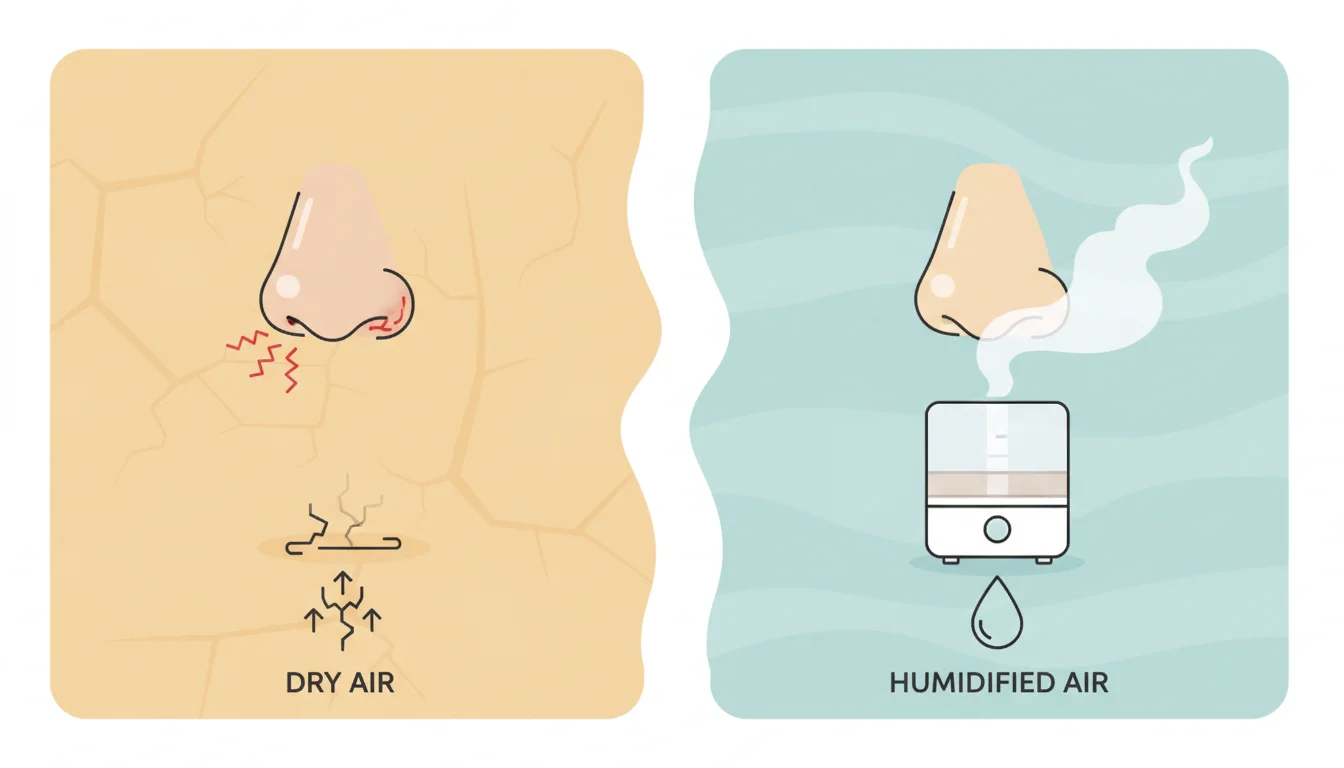
Your nasal passages contain delicate blood vessels sitting just beneath thin mucous membranes. When air lacks moisture, it pulls water from these tissues, leaving them brittle and prone to rupture.
The mechanism is straightforward:
- Nasal anatomy vulnerability: Blood vessels in your nose lie extremely close to the surface, making them susceptible to damage when surrounding tissue dries and cracks
- Moisture evaporation: Low-humidity air acts like a sponge, drawing moisture from nasal tissues until they become crusty and fragile
- Winter heating systems: Indoor heaters strip moisture from air, often dropping humidity below 20% in heated rooms
- Environmental factors: High altitude, air conditioning, and arid climates all reduce relative humidity and increase bleeding risk
A study published in JAMA Otolaryngology found a strong negative correlation between daily humidity levels and nosebleed cases. Lower humidity directly increased bleeding incidents across the study population. Mount Sinai Health System confirms that central heating remains one of the primary culprits for winter nosebleeds.
Children face higher risk because their nasal blood vessels are less developed and positioned closer to the surface. Combined with frequent nose rubbing and picking, dry winter air creates perfect conditions for recurring bleeds.
How Humidifiers Prevent Nosebleeds
Will a humidifier help with bloody nose problems? Adding water vapor to your environment keeps nasal membranes hydrated and resilient against cracking. This prevents the tissue damage that leads to spontaneous bleeding.
The science behind humidifier effectiveness involves several mechanisms:
- Continuous moisture replenishment: Humidifiers replace the water vapor that heating systems remove, maintaining tissue hydration around the clock
- Membrane protection: Moist nasal tissue stays flexible and intact, preventing the micro-tears that expose blood vessels
- Nighttime benefits: Bedroom humidifiers work during your 6-8 hours of sleep—the period when nasal drying is most severe due to mouth breathing
- Extended health advantages: Beyond nosebleed prevention, proper humidity reduces snoring, improves sleep quality, and decreases sinus infections
Studies show that controlling indoor humidity reduces nosebleed frequency by up to 70% in dry environments. Aprilaire notes that whole-home humidifiers with digital controls provide the most consistent protection by maintaining stable moisture levels throughout your living space.
I learned this the hard way after three winters of cracked, bleeding nostrils. A $40 bedroom humidifier solved what years of saline sprays only partially addressed.
Ideal Humidity Levels for Preventing Bloody Noses
Target 40-50% relative humidity for optimal nasal health. This range keeps membranes moist without creating conditions that promote mold growth or dust mite proliferation.
| Humidity Level | Effect on Nasal Health | Risk Factors |
|---|---|---|
| Below 30% | High nosebleed risk, cracked membranes, crusty nasal passages | Significant tissue damage, frequent bleeding |
| 30-40% | Moderate protection, some dryness possible | Occasional irritation during sleep |
| 40-50% | Optimal range, membranes stay hydrated | Minimal risk when maintained consistently |
| 50-60% | Adequate moisture, upper limit for comfort | Monitor for condensation on windows |
| Above 60% | Excessive moisture | Mold growth, dust mite proliferation, allergen increase |
A hygrometer costs $10-20 and tells you exactly where your indoor humidity stands. Place one in your bedroom, since that's where you spend the most continuous hours.
Seasonal adjustments matter. Winter heating systems push humidity into the 15-25% range in many homes, so you'll need to run humidifiers more aggressively during cold months. Summer air conditioning also removes moisture, though typically less severely than winter heating. [Mayo Clinic] recommends checking levels weekly and adjusting your humidifier output accordingly.
Best Types of Humidifiers for Nosebleed Prevention
Each humidifier type offers distinct advantages for maintaining nasal moisture. Your choice depends on room size, noise tolerance, maintenance willingness, and whether children share your space.
| Humidifier Type | Best For | Noise Level | Maintenance | Safety | Effectiveness Rating |
|---|---|---|---|---|---|
| Cool Mist | Homes with children, warm climates | Moderate | Weekly cleaning | No burn risk | High |
| Warm Mist | Cold climates, sinus issues | Low | Weekly cleaning, mineral buildup | Burn risk | High |
| Ultrasonic | Bedrooms, light sleepers | Very low | Frequent cleaning, white dust possible | Safe | High |
| Evaporative | Large rooms, low maintenance preference | Moderate | Filter replacement | Safe | Moderate-High |
| Whole-House | Chronic sufferers, multiple rooms | Silent in rooms | Professional maintenance | Safe | Highest |
Cool mist humidifiers use a fan or ultrasonic vibrations to disperse room-temperature water vapor. Parents prefer these because there's no heating element that could burn curious children. They work well in any climate.
Warm mist humidifiers boil water before releasing steam, which kills bacteria and feels soothing during respiratory illness. The heated vapor provides slight relief for congested sinuses. Keep these away from children and pets.
Ultrasonic humidifiers vibrate water at high frequency to create an ultra-fine mist. They operate nearly silently, making them ideal for bedrooms. However, they require distilled water to avoid white mineral dust on furniture.
Evaporative humidifiers draw air through a wet wick filter, releasing moisture naturally. They self-regulate, producing less mist as humidity rises. Filters need regular replacement.
Whole-house humidifiers connect directly to your HVAC system and maintain consistent humidity throughout your home. Nampons recommends these for chronic nosebleed sufferers willing to invest in a permanent solution.
Humidifier Placement and Maintenance Tips
Position your humidifier 3-6 feet from your bed, elevated on a nightstand or dresser. This distance allows mist to disperse evenly while keeping your immediate breathing zone adequately moisturized.
Placement guidelines that protect both you and your belongings:
- Elevation matters: Placing humidifiers on the floor concentrates moisture low, missing your breathing zone and potentially damaging flooring
- Wall clearance: Keep at least 12 inches from walls to prevent moisture accumulation and potential mold growth
- Electronics distance: Water vapor and electronics don't mix, so maintain several feet between your humidifier and computers, TVs, or charging devices
- Airflow consideration: Position away from vents and drafts that could disperse mist before it reaches you
Maintenance determines whether your humidifier helps or harms your nasal health:
- Weekly deep cleaning: Empty the tank, scrub with white vinegar, rinse thoroughly, and dry completely to prevent mold colonies
- Daily water changes: Stagnant water breeds bacteria within 24-48 hours, so dump and refill daily
- Distilled water preference: Tap water minerals create white dust on surfaces and can irritate airways
- Filter replacement: Follow manufacturer schedules, typically every 1-3 months depending on use
[Mayo Clinic] warns that dirty humidifiers can trigger allergic reactions and asthma flares. A neglected unit becomes worse than no humidifier at all.
Additional Remedies to Use With Your Humidifier
Combining humidity control with direct nasal moisture creates the strongest defense against nosebleeds. These complementary strategies work together to keep your nasal passages healthy.
- Saline nasal spray: Use 2-3 times daily to add moisture directly where you need it, especially before bed and upon waking
- Petroleum jelly application: A thin layer inside each nostril before sleep creates a protective barrier against overnight drying
- Hydration habits: Drinking 8+ glasses of water daily supports mucous membrane health from the inside out
- Gentle nose care: Avoid aggressive blowing and picking, which damage already-vulnerable tissue
- Nasal saline rinse: Neti pots or squeeze bottles flush irritants and add deep moisture for chronic sufferers
[Sleep and Sinus Centers] recommends layering these approaches. A humidifier handles ambient air while saline spray and petroleum jelly protect the nasal lining directly.
Trust me on the petroleum jelly tip. It feels strange at first, but it creates a moisture seal that lasts the entire night.
When to See a Doctor About Nosebleeds
Most nosebleeds respond well to humidity control and home care. However, some situations require medical evaluation to rule out underlying conditions or structural problems.
Seek medical attention for these warning signs:
- Duration over 20 minutes: If direct pressure doesn't stop bleeding within 20 minutes, you need professional intervention
- Frequency exceeding once weekly: Recurring nosebleeds suggest an underlying issue beyond dry air
- Post-injury bleeding: Nosebleeds following head trauma could indicate more serious damage
- Excessive blood loss symptoms: Dizziness, rapid heartbeat, or difficulty breathing during nosebleeds warrants emergency care
- No improvement after 2 weeks: If humidifier use and home remedies don't reduce nosebleed frequency, consult an ENT specialist
[Cleveland Clinic] notes that posterior nosebleeds, which originate deeper in the nasal cavity, require medical treatment. These bleeds often drain down the throat rather than out the nose.
FAQ
How long does it take for a humidifier to help with nosebleeds?
Most people notice improvement within 3-7 days of consistent humidifier use. Nasal membranes need time to rehydrate and heal. Keep humidity at 40-50% continuously for best results.
Should I run my humidifier all night for nosebleed prevention?
Running your bedroom humidifier throughout the night provides the most protection. Nighttime hours represent 6-8 continuous hours of breathing dry air. Monitor humidity levels to avoid exceeding 50%.
Can a humidifier make nosebleeds worse?
A dirty or overused humidifier can irritate nasal passages and worsen symptoms. Clean your unit weekly and keep humidity below 50%. Mold growth from neglected humidifiers causes more harm than dry air.
What size humidifier do I need for nosebleed prevention?
Match humidifier capacity to your room size. Bedrooms under 300 square feet need 1-2 gallon tanks. Larger spaces require 3+ gallon units or whole-house systems for adequate coverage.
Is a cool mist or warm mist humidifier better for bloody noses?
Both types effectively prevent nosebleeds by adding moisture to the air. Cool mist is safer for homes with children. Warm mist feels more soothing during cold and flu season but poses burn risks.
Can I use tap water in my humidifier for nosebleed prevention?
Distilled or demineralized water is preferable. Tap water minerals create white dust that settles on surfaces and can irritate sensitive nasal passages. The extra cost of distilled water prevents these issues.
Do humidifiers help with nosebleeds in summer?
Air conditioning removes moisture similarly to winter heating. Summer humidity levels indoors often drop to 30-35%, enough to cause nasal dryness. Monitor your hygrometer year-round and run humidifiers when needed.
What humidity level is too high and could cause other problems?
Humidity above 60% promotes mold growth and dust mite proliferation. These allergens can trigger respiratory issues that offset any nosebleed benefits. Stay within the 40-50% range for optimal results.
Share this post
Related Posts
Who Should Not Use a Humidifier: 8 Groups at Risk in 2026
Who Should Not Use a Humidifier: 8 Groups at Risk in 2026
Best Humidifiers for Sinus Issues: Expert Guide to Relief in 2026
Best Humidifiers for Sinus Issues: Expert Guide to Relief in 2026
Why Does My Humidifier Smell? Causes, Fixes & Prevention Tips for 2026
Why Does My Humidifier Smell? Causes, Fixes & Prevention Tips for 2026