Why Does My Humidifier Smell? Causes, Fixes & Prevention Tips for 2026
A smelly humidifier signals microbial contamination that requires immediate attention. The U.S. Consumer Product Safety Commission warns that breathing mist from dirty humidifiers can cause flu-like symptoms, asthma flare-ups, and serious lung infections. This guide covers why your humidifier smells, how to identify specific odors, cleaning methods that actually work, and prevention strategies to keep your air healthy.

Common Causes of Humidifier Odors
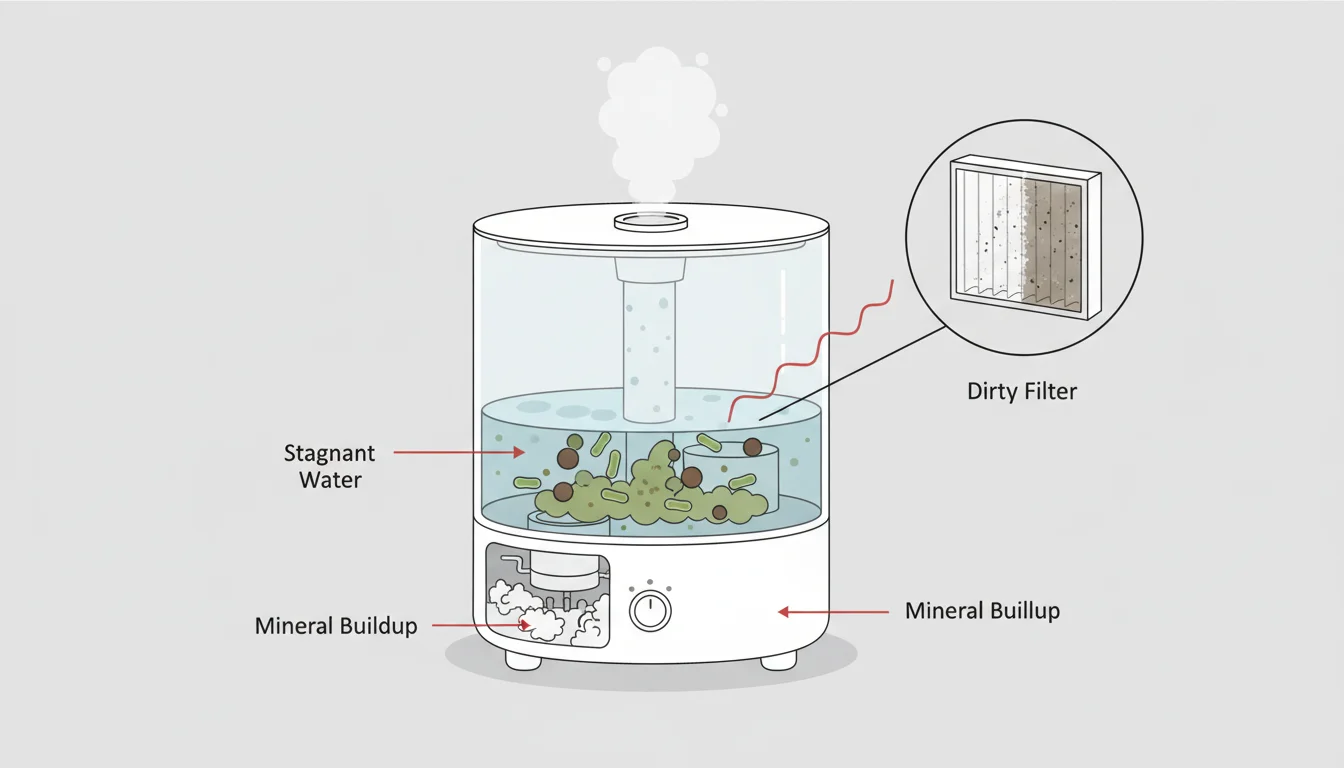
Six primary culprits create that unpleasant smell wafting from your humidifier. Bacteria, mold, biofilm, mineral deposits, dirty filters, and poor ventilation each produce distinct odors and require specific solutions.
| Cause | Odor Type | What's Happening | Fix |
|---|---|---|---|
| Bacteria buildup | Sour, yeast-like | Stagnant water breeds bacteria in tank and base | Clean and disinfect tank every 3 days |
| Mold and mildew | Musty, basement-like | Warm moisture creates perfect growth conditions | Scrub with vinegar, dry completely |
| Biofilm formation | Rancid, persistent | Slimy microbial layer coats interior surfaces | Weekly deep clean with soft brush |
| Mineral deposits | Urine-like | Calcium and magnesium from tap water accumulate | Descale with vinegar, switch to distilled water |
| Dirty filters | Sour, stale | Trapped contaminants become moist breeding grounds | Replace every 1-3 months |
| Poor ventilation | Intensifies all odors | Stagnant air around unit traps moisture | Move unit, ensure 6 inches clearance |
Humidifier bacteria smell develops faster than most people realize. Left unchecked for just 48 hours, bacterial colonies double repeatedly in standing water. I learned this the hard way after a weekend trip left my unit untouched.
A humidifier mold smell indicates spores are already airborne in your home. That water tank smell you notice first thing in the morning? It means overnight stagnation created the perfect breeding environment. Miro Home notes that warm, moist tank interiors rapidly become microbial incubators without consistent maintenance.
Identifying Different Humidifier Smells and What They Mean
Each odor tells you exactly what's growing inside your unit and how urgently you need to act. A musty smell from humidifier components means mold has established colonies, while a burning rubber smell signals potential fire hazards requiring immediate shutdown.
| Smell Type | Primary Cause | Urgency Level | Immediate Action |
|---|---|---|---|
| Musty or moldy | Mold/mildew in tank or filter | High | Deep clean with vinegar solution |
| Urine-like | Bacteria + mineral buildup | High | Descale and disinfect |
| Burning rubber | Motor overheating, electrical fault | Critical | Unplug immediately, inspect motor |
| Sulfur/rotten egg | Bacteria in contaminated water | High | Empty tank, sanitize, check water source |
| Plastic (new unit) | Manufacturing residue | Low | Run empty for 24 hours, ventilate |
| Plastic (old unit) | Overheating components | Critical | Stop use, check for warping |
| Sweet or chemical | Cleaning residue or specific mold species | Medium | Rinse thoroughly, air dry |
When your humidifier smells like urine, bacteria have been breaking down organic matter in mineral deposits for days. This distinct ammonia-like odor means the contamination runs deep.
Trust me on this: a burning smell demands you unplug the unit before doing anything else. Jim Needham Blog emphasizes that electrical problems and motor overheating create genuine safety hazards. I've seen melted plastic components from units people continued running after detecting that first whiff of burning.
Step-by-Step Guide to Cleaning a Smelly Humidifier
Effective cleaning follows a daily, weekly, and monthly rhythm that prevents odors from developing. Skip the daily rinse twice, and you're already creating conditions for bacterial growth.
Daily Maintenance (2 minutes)
- Empty all remaining water from the tank
- Rinse the tank with fresh water, swirling vigorously
- Wipe the base unit with a dry cloth
- Refill with fresh distilled water only
Weekly Deep Clean (15 minutes)
- Disassemble all removable parts
- Fill the tank with a 1:1 white vinegar and water solution
- Let the solution sit for 30 minutes minimum
- Scrub all surfaces with a soft-bristled brush
- Pay extra attention to corners and crevices where biofilm hides
- Rinse each component 3 times with clean water
- Air dry completely before reassembly
Monthly Disinfection (20 minutes)
- Follow weekly cleaning steps first
- Mix 1 teaspoon bleach per gallon of water
- Fill the tank with the solution and let it sit for 20 minutes
- Scrub the base unit and all removable components
- Rinse 4-5 times until no bleach smell remains
- Replace filters if present
Fair warning: that vinegar smell during cleaning is temporary. Bleach residue smell is not. Insufficient rinsing means you'll breathe vaporized cleaning chemicals. Ergonomc stresses that thorough rinsing prevents trading one air quality problem for another.
Prevention Strategies to Keep Your Humidifier Fresh
Preventing humidifier odor takes less effort than fixing established contamination. These seven strategies eliminate the conditions that bacteria and mold need to thrive.
- Switch to distilled water to eliminate mineral deposits that harbor bacteria and create that urine-like smell
- Empty the tank daily when not in use—even overnight—because 8 hours of stagnation starts bacterial growth
- Dry all components between uses by leaving the tank inverted on a clean towel
- Replace filters every 30-90 days based on your usage frequency and water hardness
- Add bacteriostatic treatment tablets to inhibit microbial growth between cleanings
- Position for airflow with 6 inches of clearance on all sides to prevent moisture buildup
- Store properly off-season by cleaning thoroughly, drying completely, and keeping in a ventilated area
Children's Hospital Colorado recommends using only distilled water in ultrasonic humidifiers to prevent odors and mineral dispersal. This single change eliminates most contamination sources.
Here's what I wish someone had told me earlier: the $4 gallon of distilled water saves hours of scrubbing mineral scale. Your future self will thank you.
How Water Type Affects Humidifier Odors
Your water source determines 80% of your humidifier's odor potential. Tap water delivers a constant supply of minerals, bacteria, and compounds that create smells and damage your unit.
| Water Type | Mineral Content | Odor Risk | Recommendation |
|---|---|---|---|
| Distilled | None | Very Low | Best choice for all humidifiers |
| Demineralized | Minimal | Low | Excellent alternative to distilled |
| Filtered (pitcher) | Reduced | Medium | Better than tap, not ideal |
| Soft tap water | Low minerals, may contain sodium | Medium | Acceptable with frequent cleaning |
| Hard tap water | High calcium, magnesium | High | Avoid, causes rapid scale buildup |
| Well water | Variable, often contains sulfur | Very High | Test first, sulfur causes rotten egg smell |
That humidifier water tank smell often originates from your municipal water supply. Chlorine, fluoride, and trace minerals all contribute to odor development.
Hard water areas face the toughest battle. Calcium and magnesium deposits form within 48 hours of use, creating textured surfaces where bacteria anchor and multiply. The cost difference between tap and distilled water pays for itself in reduced cleaning time and longer unit lifespan.
When to Clean vs. When to Replace Your Humidifier
Knowing when cleaning won't solve the problem saves you from breathing contaminated air while fighting a losing battle. Some damage simply cannot be reversed.
Clean and continue using when:
- Odor disappears after thorough cleaning
- No visible mold staining remains
- All components dry completely
- Unit operates normally after cleaning
Replace immediately when:
- Persistent odor remains after three deep cleaning attempts
- Black, green, or pink staining won't scrub away
- Cracks exist in the tank or base
- Seals show damage or deterioration
- Motor produces a burning smell
- Unit is older than 5 years with recurring issues
The average humidifier lifespan runs 3-5 years with proper maintenance. After 5 years, internal components degrade, seals weaken, and surfaces become porous enough to harbor permanent contamination.
Let's be honest: a $50 replacement unit costs less than one urgent care visit for respiratory symptoms. When that mold smell keeps returning despite proper cleaning, the tank's surface has become permanently colonized.
Health Risks of Using a Contaminated Humidifier
Dirty humidifiers transform from helpful appliances into active health hazards. Every mist burst carries bacteria, mold spores, and mineral particles directly into your lungs.
Documented health effects include:
- Humidifier lung (hypersensitivity pneumonitis) causing fever, cough, and breathing difficulty
- Asthma attacks triggered by inhaled mold spores
- Allergic reactions from aerosolized bacteria
- Legionnaires' disease from Legionella bacteria in contaminated water
- Respiratory infections from various waterborne pathogens
Children under 5, adults over 65, and anyone with a compromised immune system face the highest risks. The bacteria smell you detect represents millions of microorganisms already dispersed throughout your living space.
Time Magazine reports that contaminated humidifiers disperse bacteria and mold spores that cause respiratory illness in otherwise healthy adults. A mold smell indicates active spore release into your breathing air.
A Virginia Tech study found that ultrasonic humidifiers using tap water released significant mineral particles linked to respiratory irritation. These particles penetrate deep into lung tissue.
FAQ
How often should I clean my humidifier to prevent odors?
Empty and rinse the tank daily. Perform a vinegar deep clean weekly. Disinfect with diluted bleach monthly. This schedule prevents bacterial colonies from establishing.
Why does my new humidifier smell like plastic?
Manufacturing residues cause initial plastic odors that typically dissipate within 1-2 weeks of use. Run the unit in a ventilated area during the break-in period. A persistent plastic smell after 2 weeks indicates overheating.
What kills bacteria in a humidifier?
White vinegar kills most bacteria and dissolves mineral deposits. A diluted bleach solution (1 teaspoon per gallon) eliminates remaining pathogens. Hydrogen peroxide works as a bleach alternative.
Can I use tap water if I clean my humidifier frequently?
Frequent cleaning reduces but doesn't eliminate tap water problems. Minerals still accumulate and create surfaces where bacteria thrive. Distilled water remains the safest choice regardless of cleaning frequency.
Why does my humidifier smell worse in the morning?
Overnight stagnation allows 8+ hours of bacterial multiplication. The smell concentration increases as the water sits. Empty the tank before bed or use a unit with UV sterilization.
Are humidifier cleaning tablets effective?
Bacteriostatic tablets slow microbial growth between cleanings but don't replace proper maintenance. They work best as supplements to regular cleaning routines, not substitutes.
How do I remove persistent mold smell from my humidifier?
Soak all components in undiluted white vinegar for 2 hours. Scrub stained areas with baking soda paste. If the smell persists after two attempts, replacement is necessary.
Can a smelly humidifier make me sick?
Contaminated humidifiers cause documented respiratory illness, ranging from mild irritation to serious infections like Legionnaires' disease. Any persistent odor indicates active contamination requiring immediate cleaning or replacement.
Share this post
Related Posts
Who Should Not Use a Humidifier: 8 Groups at Risk in 2026
Who Should Not Use a Humidifier: 8 Groups at Risk in 2026
Will a Humidifier Help With Bloody Nose? Science-Backed Answer for 2026
Will a Humidifier Help With Bloody Nose? Science-Backed Answer for 2026
Best Humidifiers for Sinus Issues: Expert Guide to Relief in 2026
Best Humidifiers for Sinus Issues: Expert Guide to Relief in 2026