Best Humidifiers for Sinus Issues: Expert Guide to Relief in 2026
Sinus issues affect millions of people, causing congestion, pressure, and headaches that disrupt sleep and daily activities. Maintaining indoor humidity between 40-50% keeps nasal passages moist and mucus flowing properly, offering drug-free relief. This guide covers what humidifier is best for sinus issues, optimal humidity levels, and maintenance practices that maximize therapeutic benefits.
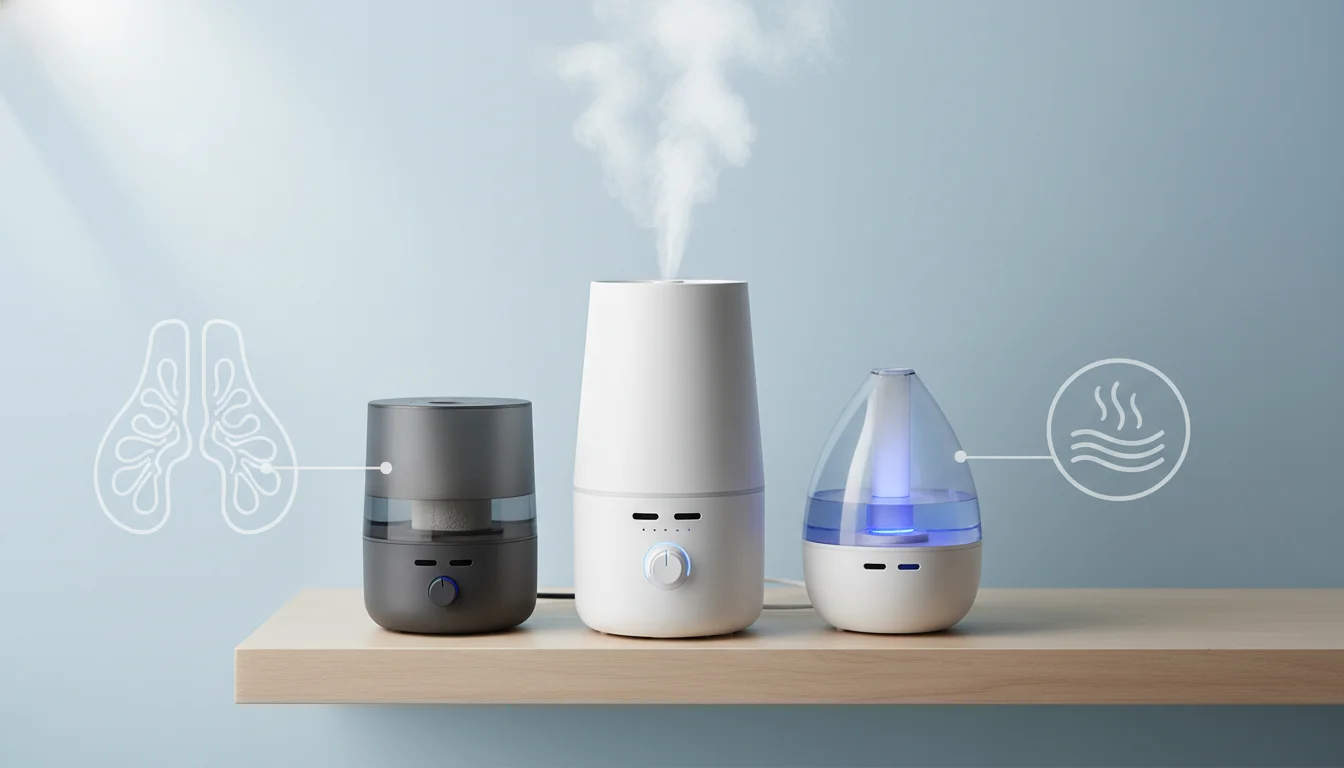
How Humidifiers Help Sinus Problems
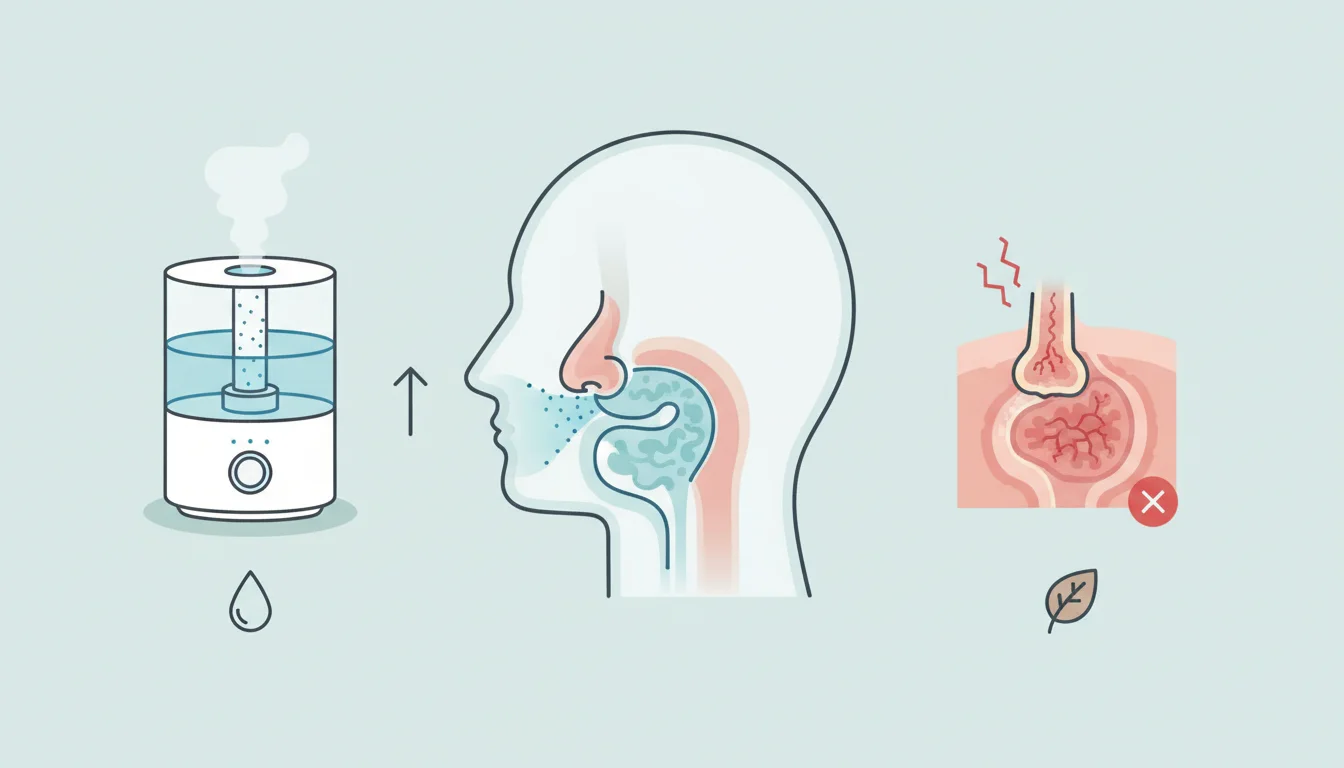
Adding moisture to dry indoor air thins mucus, soothes irritated nasal tissues, and supports your respiratory system's natural defenses.
Dry air forces your nasal passages to work overtime. Mucus thickens into a sticky mess that clogs sinuses and triggers inflammation. Your body responds by producing even more mucus, creating a frustrating cycle.
Here's what proper humidity does for your sinuses:
- Thins mucus secretions so they drain naturally instead of building up
- Soothes inflamed nasal tissues and reduces irritation that triggers congestion
- Supports cilia function so the tiny hairs in your nose can sweep debris out effectively
- Reduces infection risk by maintaining healthy mucous membranes
- Decreases nighttime congestion for better sleep quality
Clinical studies show heated humidifiers improve nasal symptoms and reduce dryness, especially for chronic nasal conditions. ENT specialists at Sleep and Sinus Centers recommend humidifiers to manage chronic rhinitis and postnasal drip because they support mucosal surfaces.
Fair warning: humidifiers work best as part of broader sinus care. They complement medical treatment but won't replace it for serious conditions.
Warm Mist vs Cool Mist Humidifiers for Sinus Relief
Both types achieve identical humidity levels. The difference comes down to delivery method, safety considerations, and personal comfort during acute symptoms.
| Feature | Warm Mist | Cool Mist |
|---|---|---|
| How it works | Boils water to create steam | Ultrasonic vibrations or fan disperses room-temperature mist |
| Bacteria/mold in mist | Killed by boiling process | Requires regular cleaning to prevent buildup |
| Safety around children | Burn risk from hot water and steam | Safe for nurseries and kids' rooms |
| Noise level | Near-silent operation | Ultrasonic models quiet; evaporative models have fan noise |
| Energy use | Higher (heating element) | Lower, better for large spaces |
| Best for | Acute congestion, smaller rooms, cold climates | General use, larger rooms, households with children |
| Comfort factor | Feels soothing like a hot shower | No temperature change in room |
The Asthma and Allergy Foundation of America notes that warm mist humidifiers disperse fewer allergens because boiling kills microbes. Dr. Neeta Ogden, their medical spokesperson, explains that warm mist helps break up mucus similarly to steam from a hot shower.
Here's what I learned testing both: warm mist feels more therapeutic when you're actively sick, while cool mist works just as well for prevention and daily maintenance. If you have kids or pets, cool mist eliminates the burn risk entirely.
Ultrasonic vs Evaporative Humidifiers: Which Is Better for Sinuses?
Ultrasonic models win for sinus relief in most situations. They run quieter and produce finer mist particles that disperse evenly throughout your room.
| Feature | Ultrasonic | Evaporative |
|---|---|---|
| Technology | High-frequency vibrations create microscopic water droplets | Fan blows air through wet wick filter |
| Noise | Whisper quiet | Audible fan sound |
| Self-regulating | No, runs continuously until tank empties | Yes, stops adding moisture at saturation |
| Mineral dust | Releases white mineral dust unless using distilled water | Wick traps minerals |
| Filter costs | None required (demineralization cartridges optional) | Replacement wicks every 1-3 months |
| Upfront cost | Generally lower | Moderate |
| Ongoing costs | Distilled water recommended | Filter replacements |
Models like the Levoit Classic 300S offer automatic humidity control, shutting off when your target level is reached. The Honeywell HCM-350 represents evaporative technology well, naturally regulating output.
Trust me on the distilled water recommendation for ultrasonic units. That white dust coating everything in your room gets old fast, and you don't want to breathe mineral particles when you're trying to help your sinuses.
Optimal Humidity Levels for Different Sinus Conditions
Target 40-50% relative humidity for everyday sinus health. This range keeps mucus fluid without creating conditions that encourage mold or dust mites.
| Condition | Target Humidity | Why This Level |
|---|---|---|
| General maintenance | 40-50% | Balances mucus fluidity with allergen prevention |
| Acute sinus infection | 50-55% | Helps thin mucus faster during active illness |
| Chronic sinusitis | 45% consistent | Prevents flare-ups without encouraging mold growth |
| Winter (heated homes) | 45-50% | Counteracts drying effect of heating systems |
| Summer | 40-45% | Prevents excess moisture and mold growth |
Exceeding 60% humidity impairs cilia function and creates perfect conditions for mold, dust mites, and bacteria. Research from [Northhills ENT] shows that humidity above this threshold increases allergen proliferation and worsens sinus inflammation.
Buy a digital hygrometer. They cost under $15 and remove all guesswork. I check mine twice daily during winter when my heating system runs constantly.
Humidifier Maintenance Tips for Sinus Health
Dirty humidifiers spray bacteria and mold spores directly into the air you breathe, making sinus problems worse instead of better.
Follow this cleaning schedule:
- Daily: Empty tank completely, wipe dry, refill with fresh water
- Every 3 days: Clean tank and base with undiluted white vinegar or 3% hydrogen peroxide
- Weekly: Deep clean all components, scrub any pink film or mineral deposits
- Monthly: Inspect for cracks or damage, replace worn gaskets
- Every 1-3 months: Replace wick filters (evaporative models) or demineralization cartridges
Water quality matters significantly:
- Distilled water eliminates mineral dust and reduces bacterial growth
- Demineralized water works as a second choice
- Tap water leads to white dust, mineral buildup, and faster bacterial colonization
Healthline emphasizes that contaminated humidifiers worsen respiratory symptoms. The effort you put into cleaning directly affects whether your humidifier helps or harms your sinuses.
Combining Humidifiers with Other Sinus Treatments
A humidifier works best as one part of your sinus relief strategy. Pair it with other treatments for comprehensive moisture therapy.
Effective combinations include:
- Saline nasal rinses + humidifier: Rinsing clears passages while humidity keeps them moist afterward
- Medicated nasal sprays + warm mist: Steam inhalation enhances medication absorption
- Bedroom positioning: Place humidifier 3-6 feet from your bed, directed toward your sleeping area
- Air purifier pairing: Reduces airborne irritants while humidifier maintains moisture
- Elevated sleeping position: Drainage improves when combined with humid air
Humidifiers don't replace medical treatment. See a doctor if symptoms persist beyond 10 days, you develop a fever, or facial pain becomes severe. Chronic sinusitis requires professional evaluation and often prescription medications.
I'll be honest: I tried using a humidifier as my only treatment during a bad sinus infection. It helped with comfort but didn't clear the infection. The combination of prescribed antibiotics, saline rinses, and my humidifier worked far better than any single approach.
FAQ
Does sleeping with a humidifier help sinus problems?
Running a humidifier overnight keeps nasal passages moist during the 6-8 hours you spend breathing dry bedroom air. Position the unit 3-6 feet from your bed with mist directed toward your sleeping area. Most people notice reduced morning congestion within 2-3 nights.
What size humidifier do I need for sinus relief?
Match tank capacity to your room size. Small bedrooms (up to 300 sq ft) need 1-2 gallon tanks. Medium rooms (300-500 sq ft) require 2-4 gallon capacity. Larger spaces benefit from console units or multiple smaller humidifiers placed strategically.
Are essential oils safe to use in humidifiers for sinus congestion?
Only use essential oils in humidifiers specifically designed for them. Oils damage plastic tanks and internal components in standard units. Eucalyptus and peppermint oils provide temporary relief sensations but don't increase the actual therapeutic humidity benefit.
How quickly will a humidifier help my sinus symptoms?
Most people feel some relief within 24-48 hours of consistent use. Acute congestion symptoms often improve overnight. Chronic sinus conditions require 1-2 weeks of maintained humidity levels to show significant improvement.
Should I run my humidifier all day or only at night?
Nighttime use provides the most benefit since you're stationary and breathing the humidified air continuously. All-day operation works if humidity stays within 40-50%. Use a hygrometer to monitor levels and avoid over-humidifying your space.
Do humidifiers help with sinus headaches?
Sinus headaches caused by congestion and pressure often improve with proper humidity. Moist nasal passages drain better, reducing the pressure buildup that causes pain. Position a warm mist humidifier nearby during acute headache episodes for faster relief.
Share this post
Related Posts
Who Should Not Use a Humidifier: 8 Groups at Risk in 2026
Who Should Not Use a Humidifier: 8 Groups at Risk in 2026
Will a Humidifier Help With Bloody Nose? Science-Backed Answer for 2026
Will a Humidifier Help With Bloody Nose? Science-Backed Answer for 2026
Why Does My Humidifier Smell? Causes, Fixes & Prevention Tips for 2026
Why Does My Humidifier Smell? Causes, Fixes & Prevention Tips for 2026