Humidifier vs Diffuser: Key Differences and Which One You Actually Need in 2026
The difference between humidifier and diffuser comes down to function: humidifiers add moisture to air, while diffusers disperse essential oils for scent. Both emit mist, but humidifiers hold 1–6 gallons of water compared to a diffuser's 100–500ml reservoir. This guide covers how each works, what they cost, and which one solves your specific problem.
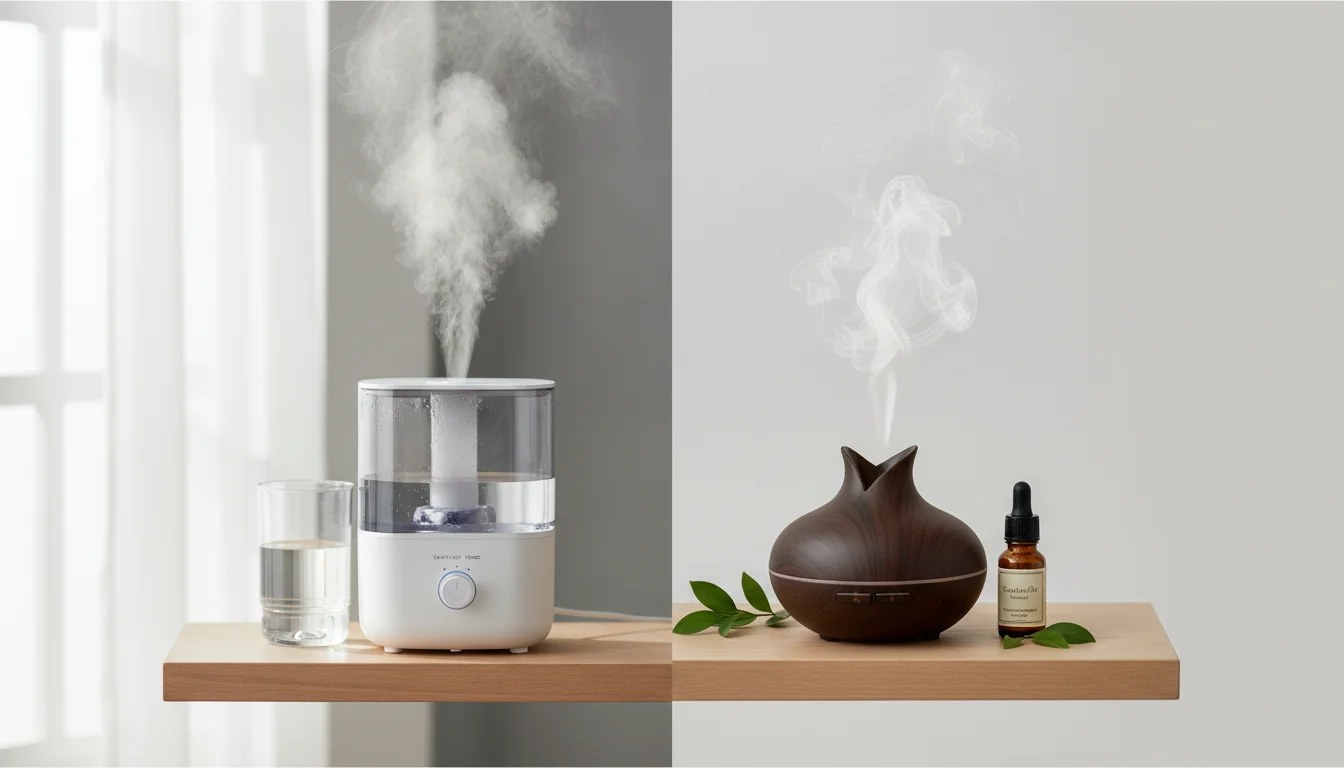
What Is a Humidifier and How Does It Work?
A humidifier increases indoor moisture levels by converting water into vapor or mist. The goal is maintaining humidity between 30–50% for optimal comfort and health.
Four main types exist, each using different technology:
| Type | How It Works | Mist Type | Best For |
|---|---|---|---|
| Evaporative | Fan blows air through wet wick filter | Invisible | Self-regulating rooms |
| Ultrasonic | High-frequency vibrations create mist | Visible white | Quiet bedrooms |
| Impeller | Spinning disc breaks water into droplets | Cool mist | Budget-friendly option |
| Steam vaporizer | Heats water to produce steam | Warm mist | Cold/flu relief |
Tank capacity ranges from 1 to 6 gallons for portable units, with output measured in gallons per day. Larger tanks mean longer run times and better whole-room coverage.
One critical point: most humidifiers are not designed for essential oils. Adding oils damages internal components and voids warranties. The [Mayo Clinic] specifically warns against this practice.
What Is a Diffuser and How Does It Work?
A diffuser breaks essential oils into microscopic particles and releases them into the air for aromatherapy benefits—not humidity control.
The four diffuser types work differently:
- Ultrasonic diffusers use vibrations to create a fine mist from water mixed with essential oils. They're the most common and affordable option.
- Nebulizing diffusers atomize pure oil without water for the strongest scent. They consume more oil but deliver concentrated aromatherapy.
- Heat diffusers warm oils to 100–150°F to release fragrance. Simple to use, but heat alters the oil's chemistry.
- Evaporative diffusers use airflow across an oil-soaked pad. They're the quietest option but offer inconsistent scent distribution.
Tank sizes run small, typically 100–500ml. This matters because diffusers produce minimal moisture. Saje Natural Wellness confirms the humidity impact is negligible.
Fair warning: if you want your bedroom to feel less dry, a diffuser won't help. It's built for scent, period.
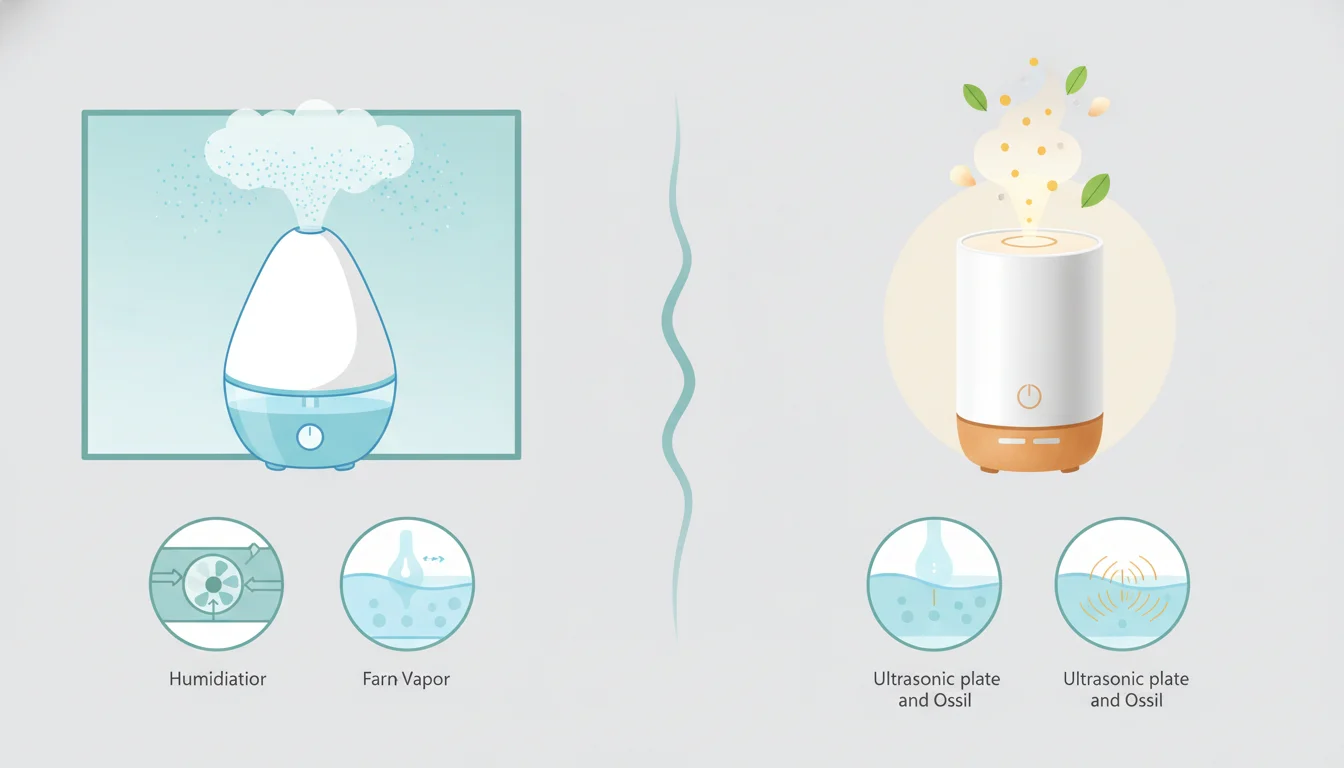
Key Differences Between Humidifiers and Diffusers
The core distinction is purpose: humidifiers fix dry air problems, while diffusers create aromatic environments. Everything else follows from that.
| Feature | Humidifier | Diffuser |
|---|---|---|
| Primary purpose | Increase humidity | Disperse essential oils |
| Tank size | 0.5–6 gallons | 100–500ml |
| Moisture output | Significant (measurable humidity change) | Negligible |
| Essential oil safe | No (damages unit) | Yes (designed for it) |
| Coverage area | Whole room or home | Small personal space |
| Run time | 12–24+ hours | 3–8 hours |
| Price range | $30–$200+ | $15–$100 |
[Stadler Form] puts it plainly: humidifiers have measurable humidification capacity per hour, while diffusers focus entirely on oil nebulization.
Mixing these up leads to disappointment. I've seen people buy expensive diffusers expecting relief from winter dry skin. It doesn't work that way.
Health Benefits: Respiratory Relief vs Aromatherapy Wellness
Humidifiers address physical symptoms from dry air. Diffusers support mood and relaxation through scent.
Humidifier health benefits:
- Relief from dry skin, chapped lips, and cracked nasal passages
- Reduced sinus congestion and nosebleed frequency
- Easier breathing during cold and flu season
- Less irritation for allergy sufferers
Diffuser wellness benefits:
- Stress reduction through calming scents like lavender
- Improved sleep quality with relaxing essential oils
- Energy boost from invigorating oils like peppermint
- Temporary congestion relief through eucalyptus scent
Here's what trips people up: diffusers with eucalyptus oil smell like they're helping congestion, but they're not adding moisture to your airways. Healthline confirms humidifiers are what you need for respiratory relief.
For dry skin specifically, humidifiers win every time. No essential oil blend replaces actual moisture in the air.
Cost, Energy Use, and Maintenance Comparison
Upfront costs favor diffusers, but ongoing expenses tell a different story depending on your usage patterns.
Initial investment:
- Humidifiers: $30–$200+ (ultrasonic and whole-house models cost more)
- Diffusers: $15–$100 (nebulizers at the high end)
Ongoing costs:
- Humidifiers need filter replacements every 1–3 months ($10–$25 each), plus regular cleaning supplies
- Diffusers require essential oils at $10–$30 per bottle, with heavy users going through one monthly
Maintenance reality:
- Humidifiers demand weekly deep cleaning to prevent mold and bacteria. Skip this, and you're spraying contaminated mist into your home.
- Diffusers need wiping after each oil change to prevent buildup. Less critical, but neglecting it affects performance.
Humidifiers draw more power due to larger motors and longer run times. Expect 30–50 watts for ultrasonic models versus 10–15 watts for diffusers.
Here's the honest truth: humidifier maintenance is the part nobody tells you about upfront. Budget 15 minutes weekly for proper cleaning.
Hybrid Devices: Can You Get Both in One?
Combination humidifier-diffuser units exist, promising dual functionality in one device. The reality is more nuanced.
Advantages:
- Single purchase, single countertop footprint
- Convenience for small spaces
- Lower total cost than two separate devices
Limitations:
- Smaller water tanks compromise humidification capacity
- Often mediocre at both functions rather than excellent at one
- Essential oil reservoirs need more frequent refilling
Canopy recommends hybrids only for users with modest needs in both categories. If you need serious humidity control for a large bedroom, a dedicated humidifier will outperform any combo unit.
One firm rule: never add essential oils to a standard humidifier hoping to create a DIY hybrid. You'll damage the unit within weeks.
Which Should You Choose? A Decision Guide
Your primary need determines the right choice. Secondary benefits shouldn't drive this decision.
Choose a humidifier if you:
- Live in a dry climate or run heating all winter
- Wake up with dry throat, cracked lips, or bloody noses
- Have respiratory conditions aggravated by dry air
- Need coverage for rooms larger than 200 square feet
- Want relief from static electricity in your home
Choose a diffuser if you:
- Want your space to smell pleasant
- Practice aromatherapy for stress or sleep support
- Need a solution for a small bedroom or office
- Already have adequate humidity levels
- Enjoy the ritual of selecting and blending oils
Consider owning both if you:
- Want humidity control AND aromatherapy benefits
- Have different needs in different rooms
- Live somewhere with seasonal humidity swings
Seasonal guidance: humidifiers earn their keep from October through March when heating systems dry indoor air. Diffusers work year-round since scent preferences don't change with the weather.
Room recommendations: bedroom humidifiers improve sleep quality, living room diffusers create ambiance for guests, and office diffusers boost focus without the maintenance commitment of a humidifier.
FAQ
Can I put essential oils in my humidifier?
No. Standard humidifiers lack oil-resistant components. Essential oils degrade plastic tanks, clog filters, and void warranties. Use a diffuser or purchase a humidifier specifically marketed as essential-oil compatible.
Do diffusers help with dry skin?
Diffusers provide negligible moisture output. The mist carries scent particles, not meaningful humidity. For dry skin relief, you need a humidifier that raises room humidity above 30%.
How often should I clean my humidifier?
Clean humidifiers weekly at minimum. Empty remaining water daily, wipe the tank, and do a deep clean with vinegar or hydrogen peroxide every 7 days. Neglected humidifiers grow mold and bacteria.
Which is better for a baby's room?
For congestion and dry air relief, choose a cool-mist humidifier. Avoid warm-mist models due to burn risk. Diffusers with essential oils require caution around infants—many oils aren't safe for babies under 6 months.
How long do diffusers and humidifiers last?
Quality humidifiers last 3–5 years with proper maintenance. Diffusers typically last 2–4 years. Nebulizing diffusers have shorter lifespans due to motor wear from continuous atomization.
Can a diffuser replace a humidifier in winter?
No. A 300ml diffuser running 6 hours releases less than a cup of water. A humidifier releases 1–3 gallons daily. The scale difference makes substitution impossible for humidity control.
What size humidifier do I need for my room?
Match tank capacity to square footage: 1-gallon tanks cover up to 300 sq ft, 2-gallon tanks handle 400–500 sq ft, and 4+ gallon units work for 700+ sq ft spaces. Undersized units run constantly without reaching target humidity.
Are ultrasonic diffusers and ultrasonic humidifiers the same thing?
Both use vibration technology, but they're built differently. Ultrasonic humidifiers have larger tanks and higher output. Ultrasonic diffusers have small reservoirs designed for water-oil mixtures. The technology overlaps; the application doesn't.
Share this post
Related Posts
Who Should Not Use a Humidifier: 8 Groups at Risk in 2026
Who Should Not Use a Humidifier: 8 Groups at Risk in 2026
Will a Humidifier Help With Bloody Nose? Science-Backed Answer for 2026
Will a Humidifier Help With Bloody Nose? Science-Backed Answer for 2026
Best Humidifiers for Sinus Issues: Expert Guide to Relief in 2026
Best Humidifiers for Sinus Issues: Expert Guide to Relief in 2026