Humidifier vs Vaporizer for Cough: Which Works Better for Your Symptoms in 2026
The difference between humidifier and vaporizer for cough comes down to temperature: humidifiers release cool mist while vaporizers boil water to produce hot steam. Both add moisture to dry air, but the AAP recommends cool mist humidifiers for households with children due to burn risks from vaporizers. This guide breaks down which device works best for your specific cough type, age group, and safety needs.
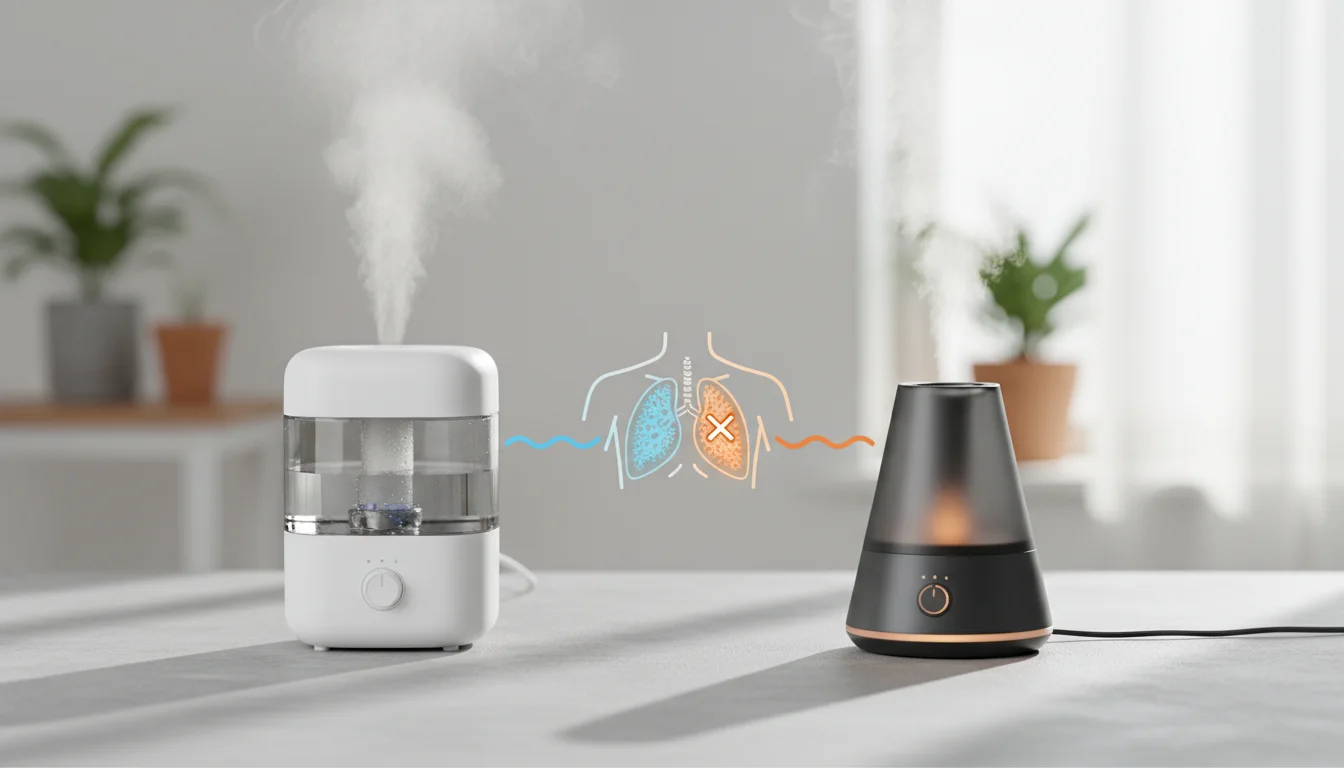
How Humidifiers and Vaporizers Work: The Core Difference
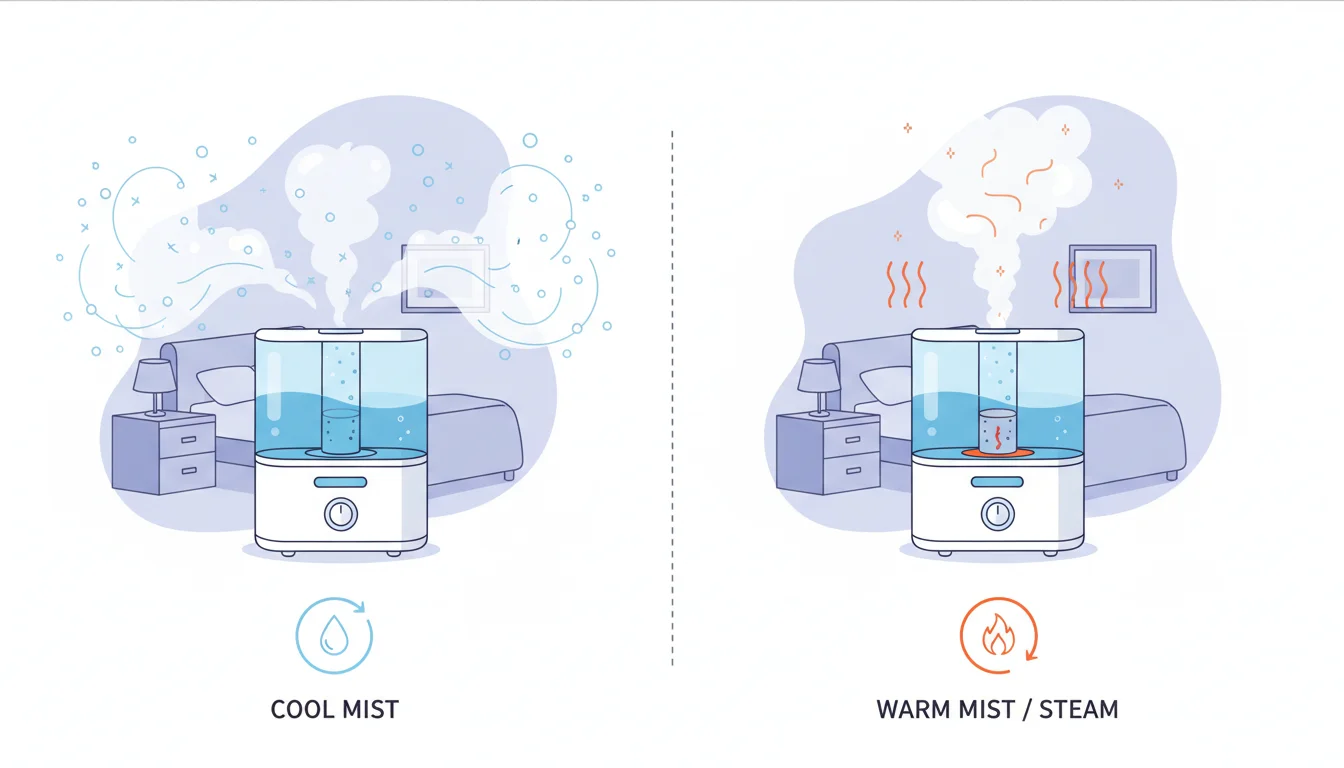
These devices increase indoor humidity through opposite methods. One uses room-temperature water dispersion while the other relies on boiling to create steam.
| Feature | Humidifier | Vaporizer |
|---|---|---|
| Mist Temperature | Cool, room temperature | Hot steam |
| Mechanism | Ultrasonic vibrations or evaporative wick | Heating element boils water |
| Cleaning Frequency | Daily emptying, weekly deep clean | Less frequent due to boiling sterilization |
| Burn Risk | None | Significant |
| Electricity Use | Lower | Higher |
| Bacterial Growth Risk | Higher without proper cleaning | Lower due to boiling process |
The boiling process in vaporizers naturally sterilizes water before releasing it into your air. Cool mist humidifiers skip this step, meaning any bacteria or mold in the tank gets dispersed directly into your breathing space.
I learned this the hard way after finding pink slime in my humidifier tank following three days of neglect. Trust me, that visual stays with you.
For homes running either device during cold months, keep humidity between 30% and 45% to prevent mold growth on walls and furniture, according to Asthma Canada.
Which Device Works Best for Different Cough Types
Your cough's characteristics determine which device provides better relief. Dry coughs respond differently than wet, productive coughs.
| Cough Type | Better Choice | Why |
|---|---|---|
| Dry cough | Humidifier | Cool mist soothes irritated airways without added heat |
| Wet/productive cough | Either works | Vaporizers add warmth some find comforting |
| Nighttime cough | Humidifier | Quieter operation, safer for bedrooms |
| Cold/flu cough | Either works | Both thin mucus effectively |
| Asthma-related cough | Humidifier (consult doctor first) | Hot steam may trigger symptoms |
| Croup in children | Humidifier | Pediatricians specifically recommend cool mist |
Fair warning: if you have asthma, adding any humidity requires caution. Some people find relief while others experience worsened symptoms.
The nighttime difference matters more than I expected. My ultrasonic humidifier runs silently while my old vaporizer gurgled like a coffee maker at 3 AM. Since sleep quality affects recovery speed, this distinction is worth considering.
Safety Considerations by Age Group
Cool mist humidifiers win on safety across nearly every age group. The burn risk from vaporizers changes the calculation entirely for households with children or pets.
Infants and Toddlers
- Use cool mist humidifiers only
- Vaporizers pose severe burn risks if knocked over
- AAP guidelines explicitly recommend against warm mist devices in nurseries
Children Ages 3-12
- Humidifiers remain the safer choice
- If using a vaporizer, place it completely out of reach
- Never leave children unsupervised near operating vaporizers
Adults
- Either device works with proper handling
- Vaporizers allow medicated inhalants like menthol or eucalyptus
- Personal preference for warm versus cool mist becomes the deciding factor
Elderly
- Consider mobility and fall risks
- Hot water spills from tipped vaporizers cause serious burns
- Humidifiers eliminate this hazard entirely
Pets
- Cool mist humidifiers are safer for curious cats and dogs
- A knocked-over vaporizer means hot water on floors and fur
The American Academy of Pediatrics strongly favors cool mist for children's rooms. No cough relief is worth a trip to the emergency room for burns.
Maintenance, Hygiene, and Preventing Mold Growth
Humidifiers demand more cleaning attention than vaporizers. Skip maintenance for a week and you're breathing contaminated air.
Daily Tasks (Both Devices)
- Empty remaining water completely
- Dry all surfaces before refilling
- Use fresh water each time
Weekly Tasks
| Task | Humidifier | Vaporizer |
|---|---|---|
| Deep cleaning | White vinegar or hydrogen peroxide soak | Vinegar soak for mineral deposits |
| Filter check | Inspect for discoloration | Usually no filter to check |
| Tank scrubbing | Required | Light cleaning sufficient |
Warning Signs to Stop Use Immediately
- Pink or black residue anywhere
- Musty or sour smell
- Visible mold spots
- Slimy film in tank
Use distilled water in humidifiers. Tap water leaves white mineral dust on furniture and provides nutrients for bacterial growth. I switched after finding a white film coating my nightstand.
Replace humidifier filters every one to three months based on manufacturer guidelines. A $15 filter costs far less than treating a respiratory infection from contaminated mist, according to Healthline.
Cost Comparison and Long-Term Value
Vaporizers cost less upfront but consume more electricity over time. Humidifiers reverse this pattern with higher purchase prices but lower operating costs.
| Cost Factor | Humidifier | Vaporizer |
|---|---|---|
| Initial Purchase | $25-$80 | $15-$50 |
| Monthly Electricity | $3-$8 | $8-$15 |
| Filter Replacement | $10-$20 every 1-3 months | Usually none |
| Medicated Inhalants | Not compatible | $5-$12 per bottle |
| Typical Lifespan | 2-5 years | 2-5 years |
Room size affects value significantly. A $30 humidifier works great for a 200-square-foot bedroom. That same unit in a 500-square-foot living room runs constantly and dies within a year.
Match tank size to your patience level. Small one-gallon tanks need refilling twice daily, while larger 1.5-gallon tanks run through the night without attention.
When to Skip Both Devices and See a Doctor
Humidifiers and vaporizers provide supportive care only. They treat symptoms, not underlying conditions.
Seek Medical Care When:
- Cough persists beyond three weeks
- Fever exceeds 103°F
- You're coughing blood
- Breathing becomes difficult
- Chest pain accompanies coughing
Stop Using Your Device If:
- Symptoms worsen after starting use
- You develop new respiratory symptoms
- Humidity triggers wheezing or tightness
Some lung conditions worsen with added humidity. People with certain respiratory diseases need professional guidance on safe humidity levels before using either device.
A humidifier can mask symptoms that signal serious problems. That lingering cough after a cold might indicate bronchitis, pneumonia, or another condition requiring antibiotics, according to [Medical News Today].
FAQ
Does a humidifier or vaporizer work faster for cough relief?
Both provide relief within 15 to 30 minutes as humidity levels rise. Vaporizers feel faster to some users because warm steam creates immediate sensory feedback in the airways.
Do humidifiers help with coughs at night?
Cool mist humidifiers reduce nighttime coughing by preventing the throat dryness that triggers coughing fits. Place the unit three to six feet from your bed for optimal moisture distribution without making bedding damp.
Is it safe to run a humidifier all night?
Running a humidifier overnight is safe with proper maintenance and humidity monitoring. Use a hygrometer to ensure levels stay below 45%, and empty any remaining water each morning.
Does adding Vicks to a vaporizer help coughs?
Medicated inhalants like Vicks VapoSteam provide temporary relief for adults when added to vaporizers. Never use medicated additives for children under two, and consult your pediatrician for older children.
Will a humidifier help a cough from allergies?
Humidifiers provide mixed results for allergy-related coughs. Proper humidity reduces airborne irritants, but excessive moisture increases dust mites and mold, which can worsen allergies.
How close should a humidifier be to the bed?
Position humidifiers three to six feet from your bed, preferably on a nightstand or dresser. Too close creates overly damp bedding, while too far reduces the direct benefit to your breathing zone.
Do I need a humidifier if I have central heating?
Central heating systems dry indoor air to 10-20% humidity during winter months. Adding a humidifier restores comfortable 30-45% levels that reduce coughing and respiratory irritation.
Share this post
Related Posts
Who Should Not Use a Humidifier: 8 Groups at Risk in 2026
Who Should Not Use a Humidifier: 8 Groups at Risk in 2026
Will a Humidifier Help With Bloody Nose? Science-Backed Answer for 2026
Will a Humidifier Help With Bloody Nose? Science-Backed Answer for 2026
Best Humidifiers for Sinus Issues: Expert Guide to Relief in 2026
Best Humidifiers for Sinus Issues: Expert Guide to Relief in 2026