Humidifiers and Cats: Complete Safety Guide for Pet Owners (2026)
Using a humidifier around cats requires specific precautions to protect your pet from burns, toxic additives, and bacterial exposure. Cats with asthma or respiratory conditions benefit most from properly maintained cool mist units running at 30-50% humidity. This guide covers safe humidifier types, essential oil dangers, optimal placement, and cleaning protocols for cat households.
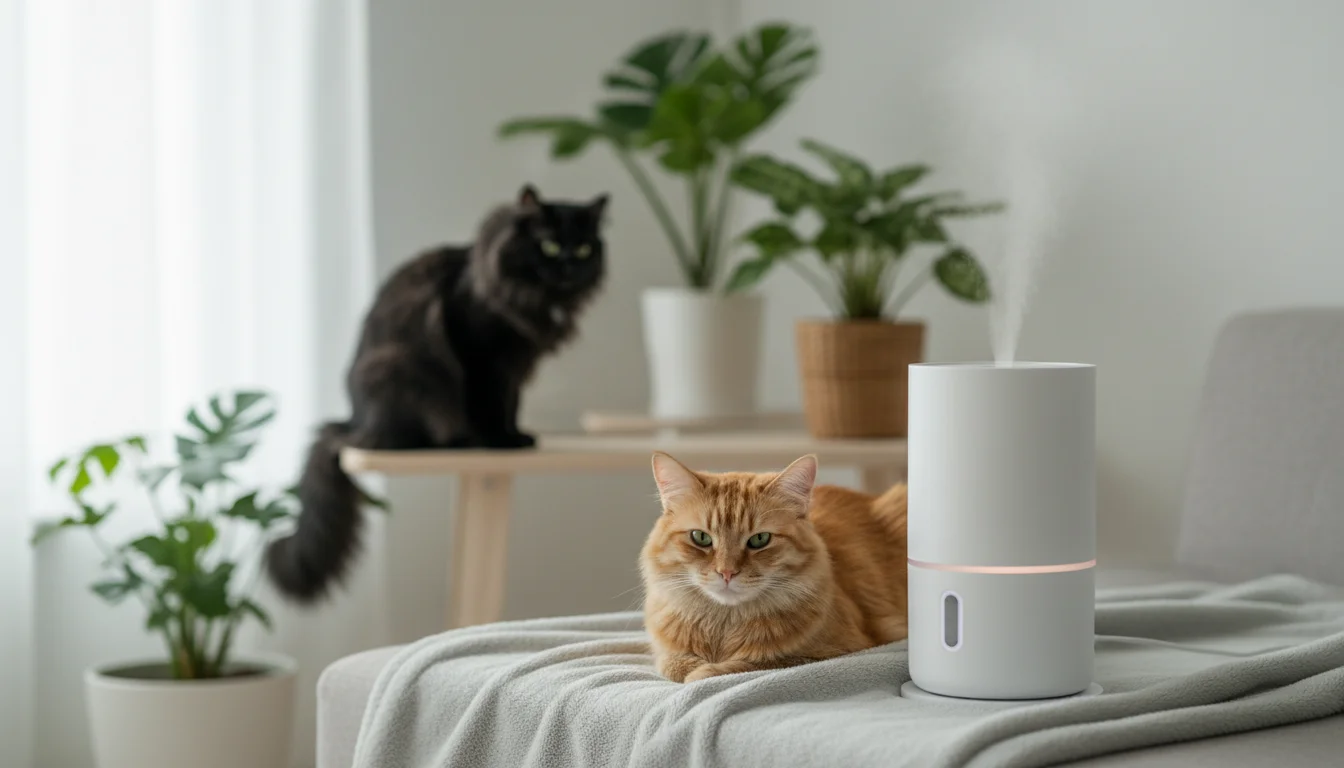
Are Humidifiers Safe for Cats?
Yes, humidifiers pose no inherent danger to cats when you follow basic safety guidelines and avoid harmful additives.
The primary risks come from three sources: essential oils, hot water burns, and bacterial growth from poor maintenance. Cool mist humidifiers eliminate the burn hazard entirely. Regular cleaning prevents mold and bacteria from becoming airborne. Skipping fragrances and oils removes the toxicity risk.
Safety checklist for cat households:
- Choose cool mist or evaporative models over warm mist
- Never add essential oils, fragrances, or scented additives
- Clean the tank every 1-3 days
- Use distilled water to prevent mineral buildup
- Place on stable surfaces out of paw's reach
- Maintain humidity between 30-50%
Veterinarian Dr. Sarah Wooten notes that humidifiers support respiratory and skin health but should complement veterinary care, not replace it. If your cat shows persistent symptoms, schedule a vet visit before relying on humidity changes alone. Catster
Benefits of Humidifiers for Cat Health
Proper humidity levels ease breathing, reduce skin irritation, and eliminate the static shocks that stress cats during dry winter months.
Cats with asthma experience fewer attacks when indoor air stays adequately moist. Dry air triggers bronchial constriction and coughing fits. The ASPCA specifically recommends humidifiers for feline asthma management during heating season. [Guardian Technologies]
Documented health benefits:
- Respiratory relief: Loosens mucus in cats with rhinitis, sinusitis, or upper respiratory infections
- Skin and coat improvement: Prevents flaky skin and dull coats common in winter
- Reduced static: Eliminates those tiny shocks that make cats jump off furniture
- Nasal passage health: Keeps mucous membranes moist and functional
- Senior cat support: Helps older cats with chronic respiratory conditions breathe easier
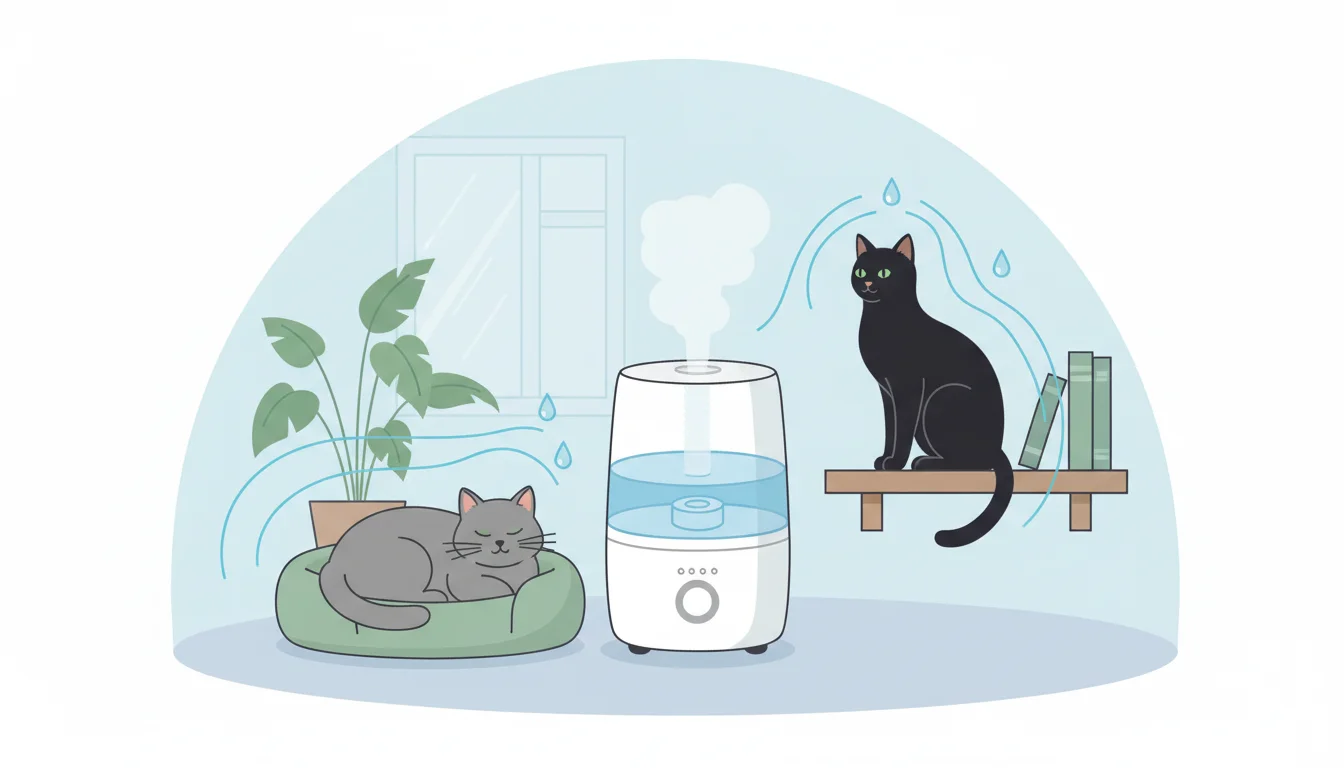
A word of caution: humidity alone won't cure respiratory illness. Some cat owners delay vet visits hoping a humidifier will fix persistent coughing. While humidity helps manage symptoms, infections require medical treatment. Think of humidity as supportive care, not a cure. Klarta
Types of Humidifiers: Which Is Best for Cat Owners?
Evaporative and cool mist humidifiers offer the safest combination of effective humidity and zero burn risk for curious cats.
| Humidifier Type | Safety Rating | Noise Level | Best For | Watch Out For |
|---|---|---|---|---|
| Cool Mist (Ultrasonic) | Excellent | Very quiet | Skittish cats, bedrooms | White mineral dust |
| Evaporative | Excellent | Moderate fan noise | Whole rooms, multi-cat homes | Filter replacement costs |
| Warm Mist | Poor | Moderate | Homes without pets | Burns if tipped, hot surfaces |
| Central HVAC | Excellent | Silent | Whole-home humidity | Installation expense |
Ultrasonic models run nearly silent, which matters if your cat startles easily. The tradeoff: they produce white dust from mineral deposits unless you use distilled water. You may discover a fine white film on everything near the unit if you skip this step.
Evaporative humidifiers trap impurities in their filters, making them the cleanest option for air quality. They cost more in filter replacements but eliminate the dust problem entirely. For households with multiple cats or cats that climb everything, evaporative units provide the best safety-to-effectiveness ratio. [Neater Pets]
Essential Oils and Humidifiers: Critical Safety Warning
Never add essential oils to any humidifier in a home with cats. Full stop.
Cats lack the liver enzymes needed to metabolize phenolic compounds found in most popular essential oils. What smells pleasant to you accumulates in your cat's system and causes progressive toxicity. This includes oils marketed as "natural" or "therapeutic grade."
Oils toxic to cats:
- Tea tree (extremely dangerous)
- Eucalyptus
- Peppermint
- Cinnamon
- Citrus oils (lemon, orange, bergamot)
- Wintergreen
- Clove
Toxicity symptoms to recognize:
- Drooling and vomiting
- Tremors or wobbliness when walking
- Coughing, wheezing, or respiratory distress
- Low heart rate or body temperature
- Excessive grooming or skin irritation
- Liver failure in severe cases
Dr. Hoolahan from AnimalPoisons warns that all essential oils carry toxicity potential for cats due to their unique liver chemistry. Even small amounts diffused into the air cause respiratory irritation. Cats also have a sense of smell 14 times stronger than humans, making exposure far more intense. [Pet Poison Helpline]
Safe alternatives for home scenting:
- Open windows for fresh air circulation
- Baking soda for odor absorption
- Pet-safe enzymatic cleaners
- Fresh flowers (check toxicity first)
If your cat shows any symptoms after humidifier use, stop immediately and contact your veterinarian. Time matters with oil toxicity. BC SPCA
Optimal Humidity Levels and Placement for Cat Households
Keep indoor humidity between 30-50% and position humidifiers where cats cannot access or tip them.
A hygrometer costs under $15 and removes all guesswork. Humidity above 50% promotes mold growth, which creates respiratory problems worse than dry air. Below 30%, you'll see the dry skin and respiratory irritation you're trying to prevent.
Placement rules:
- Set on stable, flat surfaces that won't wobble
- Keep out of jumping range (cats aim higher than you expect)
- Position away from food bowls, water dishes, and litter boxes
- Ensure 2-3 feet of clearance for proper mist distribution
- Choose rooms with adequate ventilation
Avoid placing humidifiers in small, enclosed spaces. Poor ventilation concentrates moisture and creates mold-friendly conditions. Bathrooms and closets make poor choices. Living rooms and bedrooms with normal airflow work best. Cats.com
Be prepared: cats will investigate anything new. Expect your cat to sniff, paw, and possibly attempt to drink from your humidifier for the first few days. Placing it on a high shelf or behind a barrier saves you from constant monitoring.
Maintenance and Cleaning Protocols for Pet Safety
Clean your humidifier every 1-3 days to prevent bacterial colonies and mold from forming in the tank.
Cleaning schedule:
| Task | Frequency | Method |
|---|---|---|
| Empty and rinse tank | Daily | Fresh water only |
| Deep clean tank | Every 3 days | Diluted white vinegar soak |
| Disinfect base unit | Weekly | Vinegar solution, rinse thoroughly |
| Replace filters | Per manufacturer | Check monthly for buildup |
| Inspect for mold | Weekly | Look in crevices and seams |
Signs your humidifier needs immediate attention:
- Visible slime or film inside tank
- Musty or stale odor from mist
- Pink or black growth on any surface
- White crusty buildup on heating elements
- Mist output noticeably decreased
Use distilled water exclusively. Tap water contains minerals that create white dust and provide nutrients for bacterial growth. The extra cost of distilled water saves cleaning time and protects your cat's respiratory system. [Everlasting Comfort]
One important note: skipping one cleaning leads to skipping three. Set a phone reminder. A dirty humidifier spreads more harmful particles than no humidifier at all.
FAQ
Can cats drink water from a humidifier tank?
No. Tank water sits stagnant and develops bacteria within hours. Always provide fresh water in a separate bowl and prevent access to the humidifier reservoir.
Do humidifiers help cats with hairballs?
Indirectly, yes. Proper humidity reduces dry skin and excessive shedding. Less loose fur means less fur ingested during grooming, resulting in fewer hairballs over time.
How close can a cat safely be to a running humidifier?
For cool mist units, direct contact poses no danger beyond getting wet. Maintain 2-3 feet of distance from warm mist models to prevent burns from steam or hot surfaces.
Should I run a humidifier all night in a room with my cat?
Yes, overnight use is safe with cool mist units. Monitor humidity levels to prevent exceeding 50%, and ensure your cat can leave the room if desired.
Can humidifiers make cat allergies worse?
Dirty humidifiers worsen allergies by dispersing mold spores and bacteria. Clean units at proper humidity levels reduce airborne allergens and ease allergy symptoms in most cats.
Do kittens need different humidifier precautions than adult cats?
Kittens explore more aggressively and have developing respiratory systems. Use only cool mist units, secure placement more carefully, and monitor humidity levels closely for cats under one year.
Will my cat be scared of humidifier noise?
Ultrasonic models run nearly silent. Evaporative units produce fan noise similar to a computer. Most cats adjust within a few days. Introduce the humidifier gradually if your cat startles easily.
When should I consult a vet about using a humidifier for my cat?
Consult your veterinarian before using a humidifier if your cat has diagnosed asthma, chronic respiratory conditions, or immune system disorders. Your vet can recommend specific humidity targets for your cat's condition.
Share this post
Related Posts
Who Should Not Use a Humidifier: 8 Groups at Risk in 2026
Who Should Not Use a Humidifier: 8 Groups at Risk in 2026
Will a Humidifier Help With Bloody Nose? Science-Backed Answer for 2026
Will a Humidifier Help With Bloody Nose? Science-Backed Answer for 2026
Best Humidifiers for Sinus Issues: Expert Guide to Relief in 2026
Best Humidifiers for Sinus Issues: Expert Guide to Relief in 2026