Humidifier Before Singing: The Complete Guide to Vocal Hydration in 2026
A humidifier before singing adds moisture to your vocal cords, allowing them to vibrate efficiently and produce clear sound. Studies show that humidity below 40% increases phonation threshold pressure, meaning your voice requires more effort to function properly. This guide covers optimal humidity levels, equipment types, timing protocols, and maintenance practices for peak vocal performance.

Why Singers Need Humidifiers: The Science of Vocal Cord Hydration
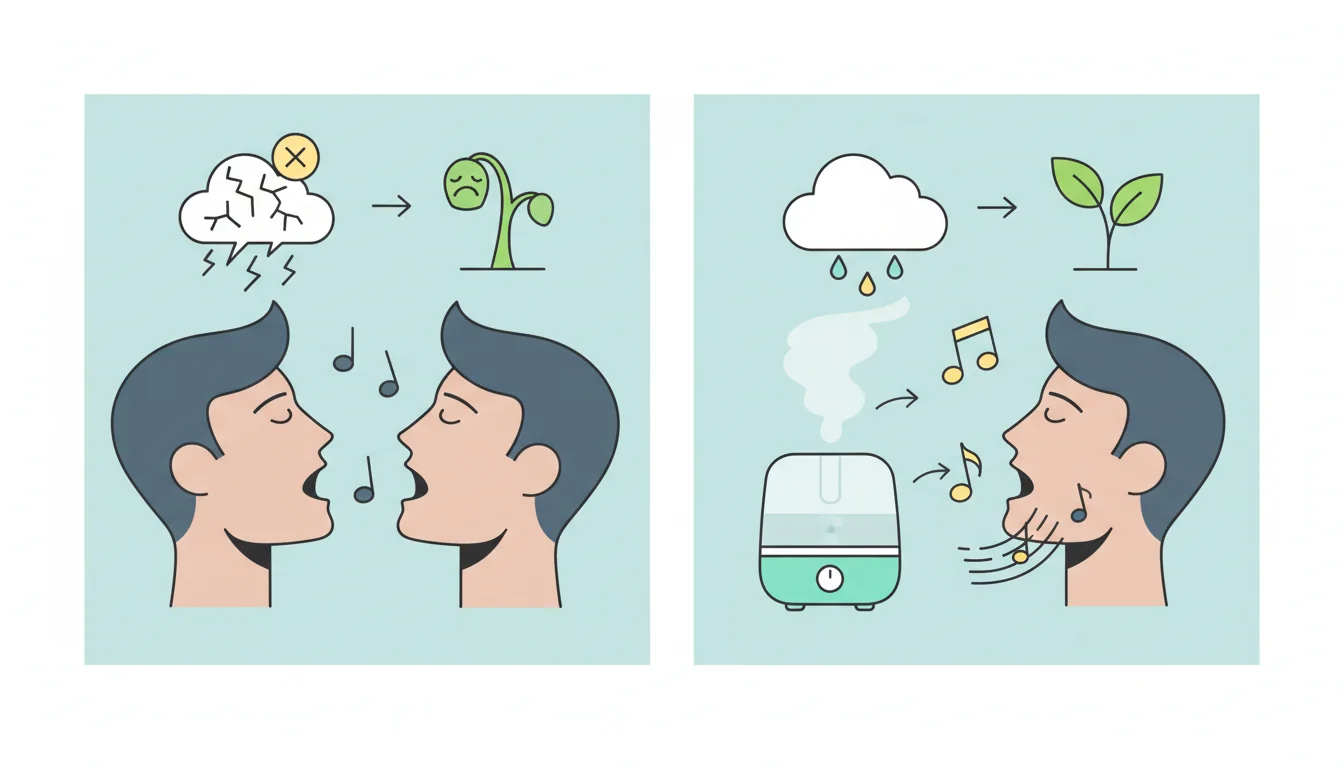
Vocal cords require a thin mucus layer to close properly and vibrate without friction. Dry air strips away this protective coating, forcing the underlying tissue to work harder for the same sound output.
The science is straightforward. When humidity drops below 40%, your vocal fold mucous membranes thicken and become inflamed. This inflammation reduces flexibility, causing:
- Increased vocal strain during sustained notes
- Hoarseness after shorter singing sessions
- Reduced upper range access
- Longer recovery times between performances
- Higher risk of vocal nodules and polyps
Research from the NIH confirms that exposure to 20-30% humidity for just minutes increases the effort needed to produce sound. The good news: rehydration reverses these effects quickly.
Common vocal killers include heated indoor spaces during winter, air-conditioned studios, and airplane cabins where humidity plummets to 10-20%. Your nose normally warms and humidifies incoming air, but mouth breathing during singing bypasses this natural filter entirely.
The mucus layer on healthy vocal folds acts like lubricant between moving parts. Without it, the tissue approximates roughly, creating micro-trauma with each vibration. This explains why singers in dry climates report more vocal fatigue than those in humid regions, according to [Sleep and Sinus Centers].
Optimal Humidity Levels for Singing Performance
The ideal humidity range for vocal health sits between 40-60% relative humidity. Below 40%, vocal cords dehydrate. Above 60%, mold and bacteria thrive in your environment.
A hygrometer costs under $15 and provides precise readings. Place it at breathing height in your practice space—not near windows or vents where readings become inaccurate.
| Humidity Level | Effect on Voice | Action Required |
|---|---|---|
| Below 30% | Severe dehydration, cracking, pain | Immediate humidification needed |
| 30-40% | Gradual drying, fatigue after 20 minutes | Add humidity before extended singing |
| 40-50% | Optimal range for most singers | Maintain current conditions |
| 50-60% | Ideal for recovery and intensive practice | Monitor for condensation on windows |
| Above 60% | Mold risk, breathing discomfort | Reduce humidity, increase ventilation |
Winter heating systems drop indoor humidity to 15-25% in cold climates. Summer air conditioning creates similar problems. Desert regions require year-round humidification for vocal health.
I learned this the hard way during a winter tour. Three shows in, my voice felt like sandpaper. A $30 portable humidifier in hotel rooms saved the remaining dates.
Types of Humidifiers for Singers: Which One Is Right for You?
Cool mist, warm mist, ultrasonic, and evaporative humidifiers each serve different vocal needs. Your choice depends on portability requirements, noise tolerance, and whether you need ambient or direct hydration.
| Type | Mechanism | Noise Level | Portability | Best For |
|---|---|---|---|---|
| Cool Mist | Fan disperses room-temp water | Moderate | Low | Bedroom overnight use |
| Warm Mist | Boils water to create steam | Low | Low | Soothing sore throats, winter use |
| Ultrasonic | High-frequency vibrations | Silent | High | Practice rooms, travel |
| Evaporative | Fan through wet wick filter | Moderate-High | Low | Large rooms, self-regulating |
| Vocal Steamer | Direct warm steam inhalation | Low | High | Pre-performance, quick hydration |
| Nebulizer | Aerosolized saline mist | Low | Medium | Medical-grade vocal fold hydration |
Ultrasonic humidifiers dominate the singer market for good reason. Silent operation means no interference during recording or practice. The Mypurmist personal steamer controls temperature between 37.7-46.1°C, providing direct vocal fold hydration without burn risk.
Budget option: The Miroco portable cool mist humidifier runs under $40 and fits in carry-on luggage. Professional upgrade: dedicated vocal steamers like the Mypurmist offer temperature control and rechargeable batteries for touring.
Nebulizers deserve special mention. Cool saline nebulization hydrates vocal folds more effectively than hot steam without raising tissue temperature. Studies show this approach reduces vocal fatigue risk compared to traditional steamers, according to [Crystal Voice Studio].
For touring singers, pack a handheld ultrasonic unit. Hotel rooms average 25-35% humidity. Running a portable humidifier overnight makes morning warm-ups dramatically easier.
Step-by-Step Guide: How to Use a Humidifier Before Singing
Start humidifying your space 30-60 minutes before singing to reach the 40-60% humidity target. Position the unit near your singing area but not directly in your breathing path.
Morning Protocol:
- Wake up: Drink a full glass of water immediately
- First 30 minutes: Run humidifier or nebulize cool saline for 15-20 minutes
- Ongoing: Sip water every hour, avoid coffee and alcohol
Pre-Performance Protocol:
- 60 minutes before: Turn on humidifier in warm-up space
- 30 minutes before: Check hygrometer, adjust output if needed
- 15 minutes before: Optional nebulizer session for direct hydration
- 10 minutes before: Stop steam inhalation, allow vocal folds to normalize temperature
Timing matters significantly. Water you drink takes 2-4 hours to affect vocal fold tissue. External humidification works within minutes. Plan accordingly.
Place your humidifier 3-6 feet from your singing position. Too close creates uncomfortable mist on your face. Too far reduces effectiveness. Aim the output toward the ceiling for even distribution.
Fair warning: singing immediately after steam inhalation feels strange. Warm vocal folds behave differently than room-temperature ones. Allow 10 minutes for your voice to stabilize before performance.
Combine approaches for best results. Room humidification maintains baseline moisture. Personal steamers provide targeted hydration when you feel strain. Internal hydration supports systemic health. All three working together create optimal conditions.
Humidifier Maintenance and Safety Tips for Singers
Dirty humidifiers spray bacteria and mold directly into your breathing air. Clean your unit weekly at minimum, and use distilled water to prevent mineral buildup and white dust.
Weekly Maintenance:
- Empty remaining water completely
- Wipe interior surfaces with diluted white vinegar
- Rinse thoroughly with fresh water
- Dry all components before reassembly
- Replace water daily—never let it sit
Monthly Maintenance:
- Deep clean with hydrogen peroxide solution
- Inspect filters for discoloration or odor
- Check for mineral deposits on ultrasonic plates
- Replace filters according to manufacturer schedule
Tap water contains minerals that create fine white dust and build up on ultrasonic components. Distilled water costs about $1 per gallon and extends unit lifespan significantly.
| Problem | Cause | Solution |
|---|---|---|
| White dust on surfaces | Mineral content in water | Switch to distilled water |
| Musty smell | Mold or bacteria growth | Deep clean with hydrogen peroxide |
| Reduced mist output | Mineral buildup on transducer | Clean ultrasonic plate with vinegar |
| Water not emptying | Clogged filter or wick | Replace filter, check for blockages |
| Over-humidification | Output too high for room size | Lower setting, crack window, use hygrometer |
Over-humidification creates its own problems. Condensation on windows signals humidity above 60%. Mold grows in these conditions, triggering respiratory issues worse than dry air. Trust your hygrometer, not your intuition.
Electrical safety matters too. Keep units on stable, waterproof surfaces away from outlets. Never run a humidifier in an enclosed space without ventilation.
Expert Tips: Maximizing Vocal Performance with Proper Humidity
Professional singers treat humidification as non-negotiable gear, like microphones or monitors. Studio sessions, live shows, and rehearsals each require different approaches.
Studio Recording: Run a quiet ultrasonic unit continuously. Recording booths trap dry air. Request humidity readings before sessions in unfamiliar studios.
Live Performance: Portable steamers backstage provide quick hydration between songs. Venue HVAC systems prioritize audience comfort over vocal health. Advocate for your needs.
Daily Rehearsal: Maintain 50% humidity in your practice space. This baseline protects your voice during the hours of repetition that build technique.
The cost-benefit calculation favors investment in quality equipment. A $150 vocal steamer prevents sessions lost to vocal strain. Canceled gigs and doctor visits cost far more than prevention.
Vocal coaches consistently recommend the same protocol: humidify your sleeping environment, hydrate internally throughout the day, and use direct steam before demanding vocal work. This three-layer approach provides redundancy when one method falls short.
I keep a hygrometer in every room where I sing. The $15 investment revealed my practice room running at 28% humidity during winter. No wonder those sessions felt brutal.
FAQ
How long before singing should I use a humidifier?
Start your humidifier 30-60 minutes before singing to allow room humidity to reach 40-60%. Personal steamers work faster, requiring only 15-20 minutes of use for direct vocal fold hydration.
Do humidifiers help with vocal strain?
Humidifiers reduce the effort needed for voice production by keeping vocal fold mucosa lubricated. Research shows proper humidity lowers phonation threshold pressure, meaning less muscle work for the same sound output.
Is warm or cool mist better for singing?
Warm mist feels more soothing and opens airways effectively. Cool mist humidifies equally without adding heat. Ultrasonic cool mist units offer silent operation, making them preferred for practice spaces and recording environments.
Should I use tap water or distilled water in my humidifier?
Distilled water prevents mineral buildup on components and eliminates white dust in your air. Tap water minerals accumulate on ultrasonic plates, reducing effectiveness and requiring more frequent cleaning.
How do I know if my room humidity is too low for singing?
Symptoms include throat dryness within 10-15 minutes, cracking on high notes, and fatigue after short sessions. A hygrometer reading below 40% confirms the problem. These devices cost under $15 and provide accurate measurements.
Are vocal steamers worth the investment?
Professional vocal steamers provide controlled temperature and direct hydration that room humidifiers cannot match. For singers performing regularly or recovering from strain, the $100-200 investment pays for itself in prevented vocal problems.
How often should I clean my humidifier?
Clean humidifiers weekly with diluted white vinegar. Deep clean monthly with hydrogen peroxide. Replace filters according to manufacturer guidelines. Dirty units spread bacteria and mold into your breathing air, causing respiratory issues.
Does drinking water hydrate vocal cords directly?
Water consumption takes 2-4 hours to affect vocal fold tissue hydration. Internal hydration supports overall vocal health but works too slowly for pre-performance needs. Combine drinking water with external humidification for complete coverage.
Share this post
Related Posts
Who Should Not Use a Humidifier: 8 Groups at Risk in 2026
Who Should Not Use a Humidifier: 8 Groups at Risk in 2026
Will a Humidifier Help With Bloody Nose? Science-Backed Answer for 2026
Will a Humidifier Help With Bloody Nose? Science-Backed Answer for 2026
Best Humidifiers for Sinus Issues: Expert Guide to Relief in 2026
Best Humidifiers for Sinus Issues: Expert Guide to Relief in 2026