Humidifier During Pregnancy: Complete Safety & Benefits Guide for 2026
A humidifier during pregnancy adds moisture to indoor air, relieving respiratory congestion and dry skin without medication. Research shows 28% of pregnant women use humidifiers, with usage highest among those aware of indoor air quality's impact on maternal health. This guide covers safety protocols, optimal humidity levels, and maintenance schedules for each trimester.
Why Pregnant Women Need Humidifiers: Key Benefits Explained
Adding moisture to your indoor environment addresses five common pregnancy discomforts simultaneously, from nasal congestion to skin irritation.
Primary benefits for expectant mothers:
- Pregnancy rhinitis relief: Up to 30% of pregnant women experience chronic nasal congestion due to increased blood volume and swollen nasal passages. Humidified air keeps mucous membranes hydrated, loosening mucus for easier breathing.
- Dry skin prevention: Hormonal changes during pregnancy worsen skin dryness and itching. Proper humidity reduces the need for excessive lotions and provides around-the-clock moisture support.
- Improved sleep quality: Throat dryness and nighttime congestion disrupt sleep patterns. Moist air reduces waking episodes and supports deeper rest cycles.
- Medication-free relief: Many decongestants and antihistamines carry pregnancy restrictions. Humidifiers offer a natural alternative your doctor will likely approve.
- Nosebleed prevention: Increased blood flow makes nasal tissues more fragile during pregnancy. Humid air keeps these delicate membranes supple and less prone to cracking.
I noticed sleep improvement within three nights of consistent use. The difference between waking up with a raw throat versus breathing comfortably through the night transformed my next-day energy level. Canopy notes that humidifiers help keep nasal passages hydrated, improving relaxation and sleep quality for pregnant women.
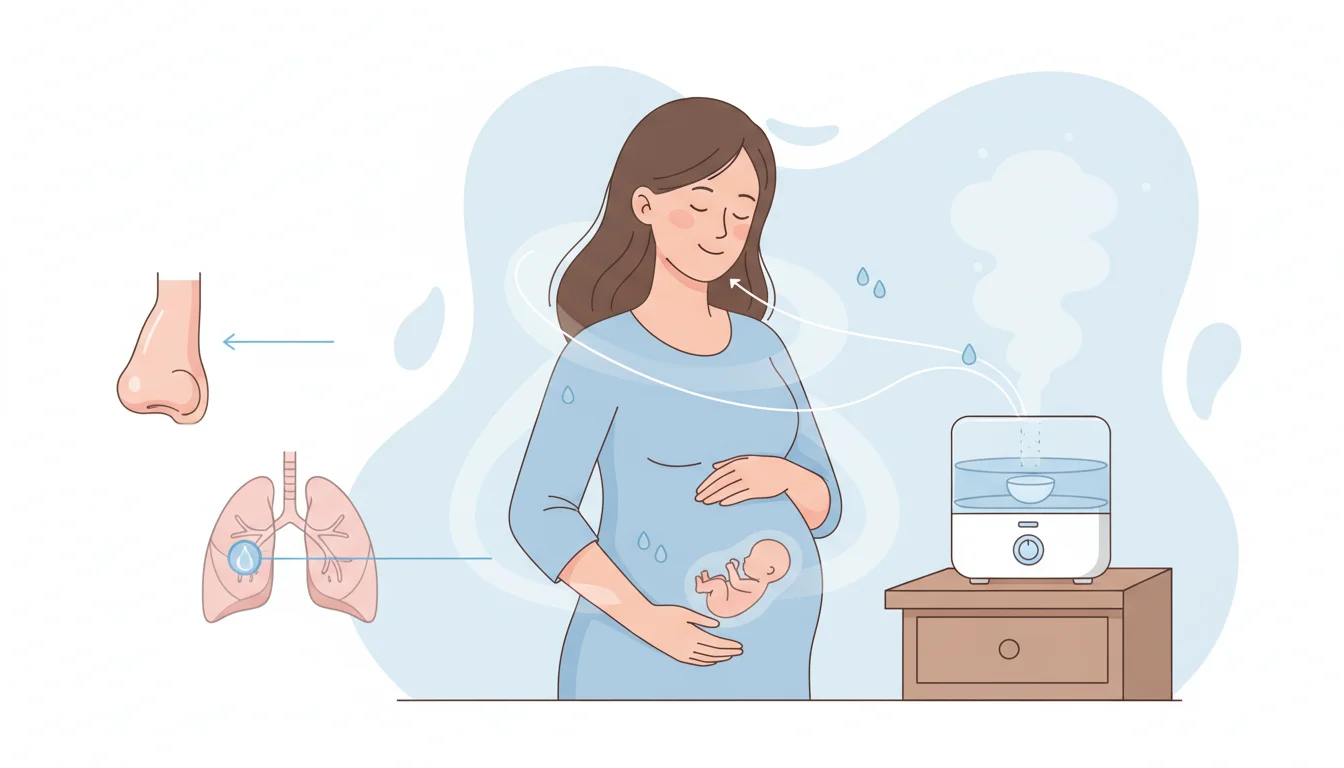
Cool Mist vs Warm Mist Humidifiers: Which Is Safer During Pregnancy?
Cool mist humidifiers are the recommended choice during pregnancy because they eliminate burn risks entirely while providing identical humidity benefits.
| Feature | Cool Mist | Warm Mist |
|---|---|---|
| Safety Risk | No burn hazard | Hot water/steam burn potential |
| Energy Use | Lower electricity consumption | Higher due to heating element |
| Noise Level | Ultrasonic models nearly silent | Gentle bubbling sound |
| Congestion Relief | Effective with proper humidity | Slightly more soothing for some |
| Bacteria Risk | Requires daily cleaning | Boiling kills some pathogens |
| Medical Recommendation | Preferred for pregnancy/nursery | Use with caution; place out of reach |
Cool mist technology breakdown:
- Ultrasonic: Uses vibrations to create fine mist. This is the quietest option for bedroom use but requires distilled water to prevent white mineral dust.
- Evaporative: A fan blows air through a wet wick filter. These units self-regulate humidity output, though filter replacement adds ongoing cost.
If you choose warm mist for congestion relief, place the unit at least 6 feet from your bed and any walking paths. While warm steam feels therapeutic when you're stuffed up, the burn risk outweighs the benefits for most pregnant women. ASH US specifically recommends ultrasonic cool-mist humidifiers as the safest choice during pregnancy.
Optimal Humidity Levels During Each Trimester
The EPA recommends maintaining indoor humidity between 30% and 50% throughout pregnancy, with adjustments based on symptoms and season.
| Trimester | Primary Concern | Humidity Target | Key Adjustment |
|---|---|---|---|
| First | Morning sickness dehydration | 40-50% | Combat fluid loss symptoms |
| Second | Skin changes, early congestion | 40-50% | Monitor for preeclampsia risk factors |
| Third | Peak congestion, sleep disruption | 40-50% | Prioritize nighttime comfort |
Monitoring and seasonal tips:
- Purchase a hygrometer for $10-15 to measure actual humidity rather than guessing
- Winter heating drops indoor humidity to 15-25%, making humidifier use essential
- Summer air conditioning also dries air, though less severely than winter heating
- Watch for window condensation as a sign that humidity exceeds 50%
Research from [Cloud Nine Care] found associations between high ambient humidity in the early second trimester and increased preeclampsia risk. This makes monitoring particularly valuable during weeks 13-20. A $12 hygrometer gives you data instead of guesswork.
Essential Safety Guidelines and Precautions
Contaminated humidifiers pose serious respiratory risks, including documented cases of lung injury in pregnant women who used poorly maintained devices.
Non-negotiable safety practices:
- Water type: Use distilled or demineralized water only. Tap water minerals disperse as white dust that irritates lungs.
- Placement: Position 6 feet from your bed, away from electrical outlets, and not directly on wooden furniture.
- Humidity cap: Never exceed 50% humidity. Condensation on windows signals over-humidification.
- Medical consultation: Discuss humidifier use with your provider if you have asthma, mold allergies, or any respiratory condition.
When to avoid humidifier use:
- Visible mold anywhere in your home
- History of mold-triggered asthma attacks
- Unable to commit to a daily cleaning routine
- Home already tests above 50% humidity
A [NIH study on Korean pregnant women] documented respiratory complications from contaminated humidifiers, reinforcing that cleaning isn't optional. The convenience of skipping a day isn't worth the infection risk.
Cleaning and Maintenance: A Step-by-Step Schedule
Daily cleaning takes 3 minutes. Weekly deep cleaning takes 20 minutes. Skipping either invites mold and bacteria into your breathing space.
Daily routine (every morning):
- Empty all remaining water from the tank
- Wipe tank interior and base with a clean, dry cloth
- Refill with fresh distilled water
- Check the humidistat reading and adjust output as needed
Weekly deep clean:
- Disassemble the tank, base, and removable nozzles
- Soak all parts in undiluted white vinegar for 20-30 minutes
- Scrub corners and crevices with a soft toothbrush
- Rinse thoroughly with clean water
- Air dry completely before reassembly
Filter replacement schedule:
- Heavy daily use: Replace every 3 months
- Moderate use: Replace every 6 months
- Follow manufacturer specifications for your specific model
Warning signs requiring immediate cleaning:
- Musty or sour smell from mist output
- Visible pink or black residue inside the tank
- White crusty buildup on surfaces
- Reduced mist output or clogged nozzles
White vinegar works perfectly and carries zero pregnancy safety concerns. Avoid bleach-based cleaners unless you rinse exhaustively and air dry for 24 hours before use. [Children's Hospital Colorado] recommends the vinegar method as both effective and safe for nursery equipment.
Choosing the Best Humidifier for Pregnancy: What to Look For
Your pregnancy humidifier becomes your baby's nursery humidifier. Invest in quality features you'll appreciate for years.
Priority features ranked:
- Tank size: A 1.5+ gallon capacity runs 8-12 hours without refilling—essential for uninterrupted sleep.
- Noise output: Under 30 decibels for bedroom placement. Ultrasonic models run quietest.
- Cleaning access: A wide tank opening that fits your hand inside. Dishwasher-safe components save time.
- Built-in humidistat: Automatic shutoff at target humidity prevents over-humidification.
- Auto shutoff: Empty tank protection prevents motor damage and safety hazards.
Budget $40-80 for a quality unit with these features. Cheaper models lack humidistats and have narrow tank openings that make cleaning miserable. The extra $20 pays for itself in reduced frustration during your third trimester, when bending over a tiny tank opening feels impossible.
FAQ
Is sleeping with a humidifier safe during pregnancy?
Sleeping with a properly maintained cool mist humidifier is safe and beneficial during pregnancy. Keep humidity between 40-50%, use distilled water, and position the unit at least 6 feet from your bed.
What humidity level causes mold growth?
Mold growth accelerates when indoor humidity exceeds 50-60% consistently. Monitor with a hygrometer and reduce humidifier output if you notice window condensation or damp spots on walls.
Do humidifiers help with pregnancy nausea?
Humidifiers don't directly treat nausea but help prevent dehydration symptoms that worsen morning sickness effects. Maintaining proper humidity supports overall comfort during first trimester challenges.
How often should I replace my humidifier during pregnancy?
Replace your humidifier if mineral buildup resists cleaning, the motor sounds strained, or mold returns within days of deep cleaning. Quality units last 3-5 years with proper maintenance.
Are essential oils safe in humidifiers during pregnancy?
Many essential oils carry pregnancy restrictions. Avoid adding any oils to your humidifier unless your OB specifically approves the oil type and dilution ratio. Some oils can trigger contractions or other complications.
Does insurance cover humidifiers for pregnancy?
Standard health insurance rarely covers humidifiers as durable medical equipment during pregnancy. However, HSA and FSA accounts typically allow humidifier purchases. Check your specific plan benefits before buying.
What's the difference between a humidifier and a vaporizer for pregnancy?
Vaporizers boil water to create warm steam, carrying burn risks. Humidifiers disperse cool or warm mist without boiling temperatures. Cool mist humidifiers remain the safest choice for pregnancy and nursery use.
When should I start using a humidifier during pregnancy?
Start using a humidifier when you notice congestion, dry skin, or sleep disruption from dry air. Many women begin in the first trimester when pregnancy rhinitis symptoms appear, typically around weeks 6-8.
Share this post
Related Posts
Who Should Not Use a Humidifier: 8 Groups at Risk in 2026
Who Should Not Use a Humidifier: 8 Groups at Risk in 2026
Will a Humidifier Help With Bloody Nose? Science-Backed Answer for 2026
Will a Humidifier Help With Bloody Nose? Science-Backed Answer for 2026
Best Humidifiers for Sinus Issues: Expert Guide to Relief in 2026
Best Humidifiers for Sinus Issues: Expert Guide to Relief in 2026