Humidifier Setting Off Air Purifier? Here's Why It Happens and How to Fix It
Your air purifier's red warning light during humidifier operation signals particle detection, not malfunction. Ultrasonic humidifiers emit water droplets in the 1-5 micron range, which sensors interpret as PM2.5 pollution. This guide explains why this happens and provides seven proven fixes to run both devices together.
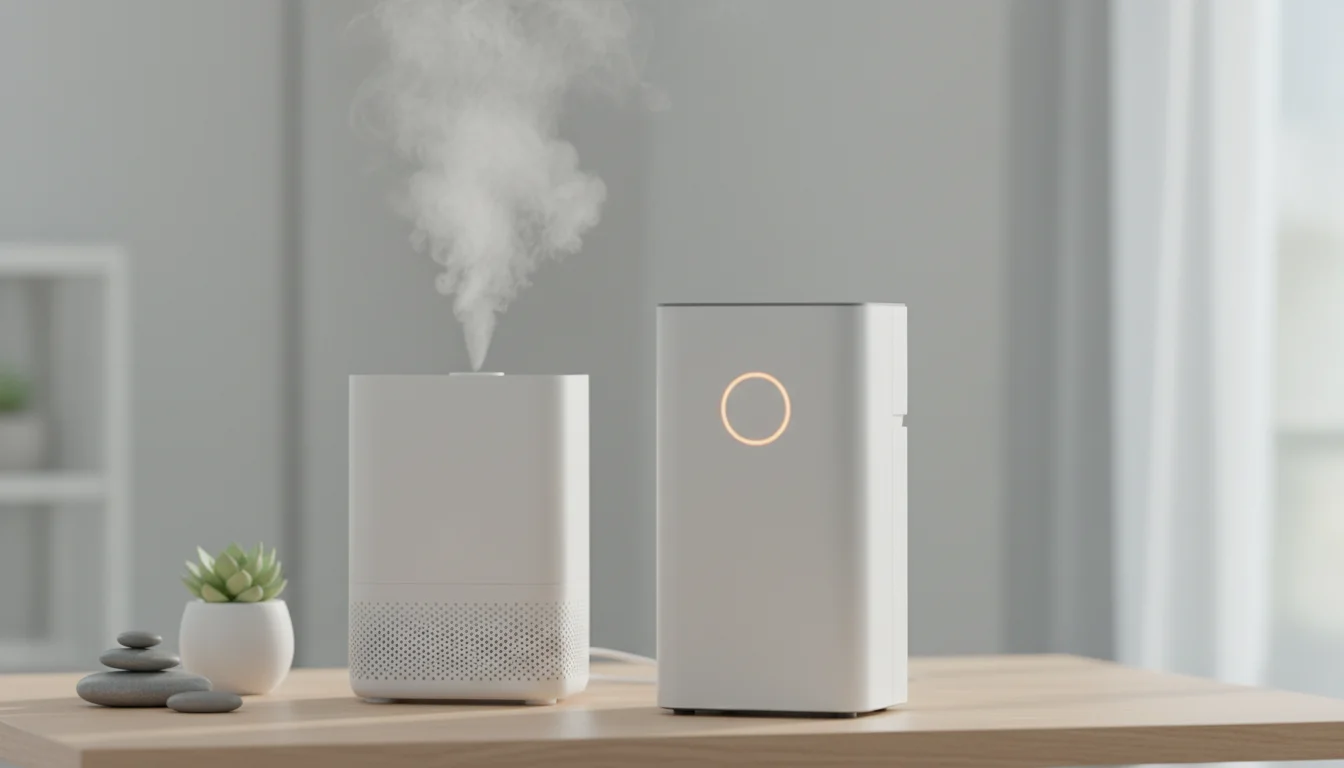
Why Does Your Humidifier Trigger Your Air Purifier?
Air purifier sensors measure particle size through laser scattering technology, making no distinction between harmful pollutants and harmless water droplets. When your humidifier sets off air purifier alerts, the sensor is responding correctly to detected particles—it simply cannot tell what those particles are.
| Factor | What Happens | Impact on Readings |
|---|---|---|
| Water droplet size | Ultrasonic mist creates 1-5 micron particles | Registers as PM2.5 pollution |
| Tap water minerals | Sodium, calcium, and magnesium become airborne | Creates detectable solid particles |
| Mineral evaporation | Water evaporates, minerals remain as dust | Leaves "white dust" in air |
| Sensor technology | Laser measures size only, not composition | Cannot distinguish water from smoke |
Research from PMC found these mineral particles contain sodium, magnesium, silicate, sulfate, and calcium. The concentration correlates directly with your water's mineral content. Mouse inhalation studies showed gene dysregulation but no acute lung injury, though long-term effects remain under investigation.
Ultrasonic vs Evaporative Humidifiers: Which Works Better with Air Purifiers?
Evaporative and steam humidifiers release invisible water vapor that air purifier sensors ignore completely. The misting mechanism of ultrasonic units creates the compatibility problem.
| Humidifier Type | How It Works | Sensor Triggering | Noise Level | Best For |
|---|---|---|---|---|
| Ultrasonic | Vibrates water into fine mist | High (1-5 micron droplets) | Whisper quiet | Bedrooms without air purifiers |
| Evaporative | Fan blows air through wet wick | None (true vapor) | Moderate fan noise | Rooms with air purifiers |
| Steam | Boils water into vapor | Minimal (true vapor) | Quiet bubbling | Compatibility and hygiene |
| Impeller | Spinning disk creates mist | High (similar to ultrasonic) | Low | Budget options |
According to [Kaiterra], evaporative models avoid the aerosol problem entirely. The trade-off is real: I switched from an ultrasonic to an evaporative model and noticed the fan noise immediately. Still, it's worth it for accurate air quality readings.
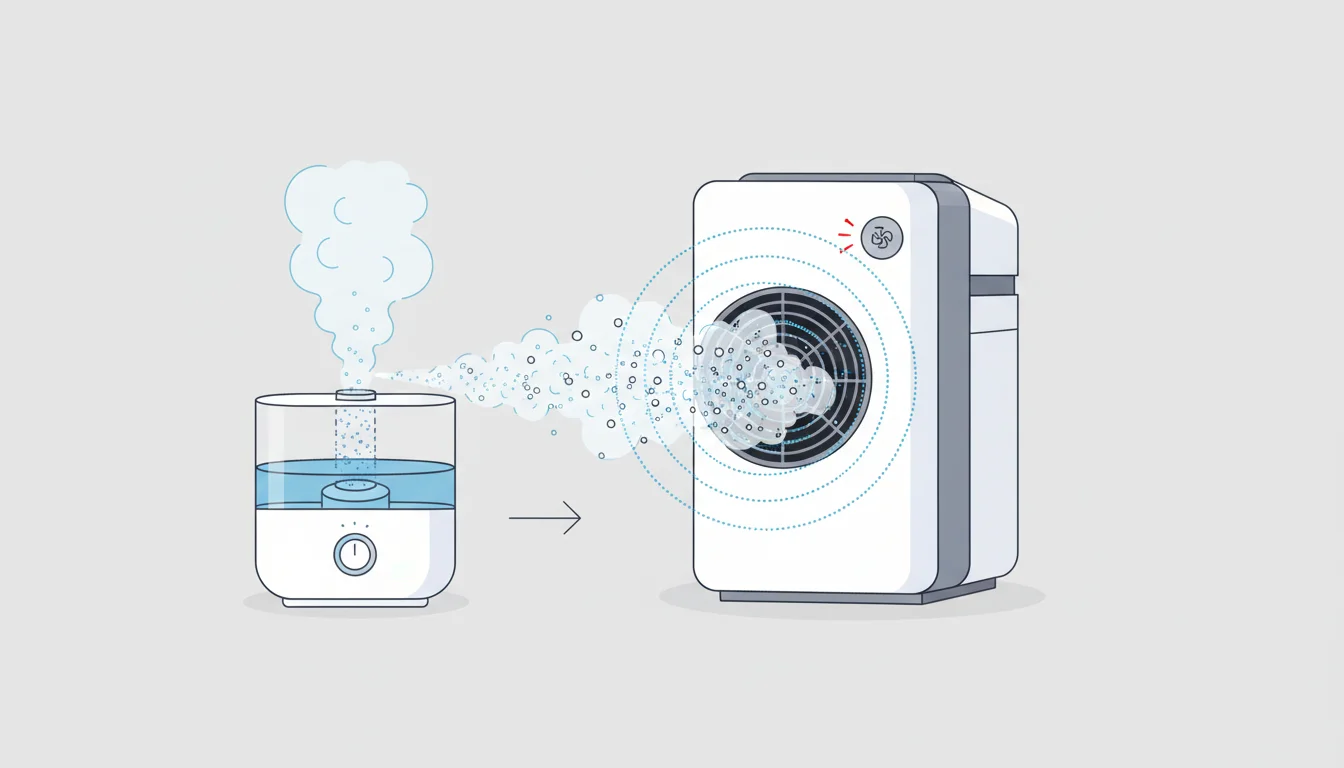
Optimal Placement: How Far Apart Should They Be?
Keep your humidifier and air purifier at least 6-10 feet apart. This distance prevents mist from reaching the purifier's intake before droplets evaporate into invisible vapor.
- Height difference matters: Place the humidifier 2-3 feet off the ground on furniture. Keep the air purifier at floor level. This stratification lets mist disperse upward while purified air circulates below.
- Intake orientation: Position the humidifier's mist outlet facing away from the air purifier's intake vents. Direct exposure overwhelms sensors instantly.
- Airflow mapping: Observe how air moves through your room. HVAC vents, ceiling fans, and windows create currents that carry mist. Position your devices accordingly.
- Wall clearance: Give your air purifier 3-4 feet of clear space on all sides for proper circulation.
[Air Purifier First] recommends keeping air purifiers away from high-humidity zones entirely. I learned this the hard way after placing both devices on the same nightstand.
7 Proven Solutions to Stop False Readings
The most effective fix is using distilled water, which eliminates the mineral particles that compound the detection problem. Here are all seven solutions ranked by effectiveness.
Switch to distilled or demineralized water: This removes 100% of mineral particles from humidifier output. It costs roughly $1 per gallon but extends filter life significantly.
Replace ultrasonic with evaporative humidifier: This eliminates the aerosol problem at the source. Expect to spend $40-80 for a quality evaporative unit.
Maintain 40-50% humidity: Lower output means fewer airborne droplets. Use a hygrometer to monitor levels accurately.
Alternate device schedules: Run the humidifier at night and the air purifier during the day. Both accomplish their goals without interference.
Relocate to opposite room sides: Maximum distance minimizes particle travel to sensors.
Disable auto mode: Manual fan speed settings prevent the purifier from ramping up in response to detected mist. Set a consistent medium speed.
Automate with smart plugs: Schedule devices to run at different times automatically. Some users program humidifiers to pause when air purifier sensors activate.
Intellipure emphasizes that distilled water combined with proper placement solves 90% of cases. Start there before buying new equipment.
Filter Maintenance When Using Both Devices
Mineral deposits from humidifiers accelerate HEPA filter degradation, potentially halving filter lifespan when using tap water in ultrasonic units. Check filters monthly instead of quarterly when running both devices.
- Pre-filter inspection: White dust accumulates here first. Vacuum or rinse washable pre-filters weekly during heavy humidifier use.
- HEPA filter monitoring: Look for gray discoloration or reduced airflow. Mineral buildup clogs microscopic filter pores permanently.
- Filter replacement timing: Using distilled water extends HEPA filter life by 40-60% compared to tap water operation.
- Cleaning schedule: Wipe exterior vents and sensors with a dry microfiber cloth. Moisture residue affects sensor accuracy.
HisoAir found that mineral particle accumulation creates permanent filter damage. I replaced a $60 HEPA filter after just three months of tap water use. Distilled water would have saved that cost several times over.
What Humidity Level Is Best for Air Quality?
The EPA recommends 30-50% indoor relative humidity for optimal health and minimal sensor interference. Staying below 50% dramatically reduces false air purifier triggers.
| Humidity Level | Air Purifier Impact | Health Considerations |
|---|---|---|
| Below 30% | No sensor issues | Dry skin, respiratory irritation |
| 30-40% | Minimal triggering | Comfortable for most people |
| 40-50% | Occasional triggering | Ideal range per EPA |
| Above 50% | Frequent false readings | Mold and dust mite growth |
| Above 60% | Constant alerts | Serious mold risk |
A standalone hygrometer costs $10-15 and provides accurate readings independent of your humidifier's built-in sensor. According to HeatCoolAppliance, most humidifier sensors read 5-10% lower than actual room humidity. Trust the hygrometer.
FAQ
Does humidity damage air purifier filters permanently?
Excessive moisture causes mold growth inside HEPA filters, creating permanent damage and unpleasant odors. Mineral deposits also clog filter pores irreversibly. Keep humidity below 50% and use distilled water to protect your investment.
Will turning off the air purifier sensor solve the problem?
Disabling auto mode stops false alerts but eliminates the purifier's ability to respond to actual pollution. Manual mode at medium speed provides consistent filtration without sensor-triggered adjustments. You lose adaptive response but gain consistent operation.
Do all air purifiers react to humidifiers the same way?
Laser-based particle sensors trigger most easily. Some premium models use multiple sensor types or algorithms that filter out humidity interference. Check manufacturer specifications for humidity tolerance ratings before purchasing.
Is the white dust from humidifiers harmful to breathe?
Studies show mineral particles cause gene changes in mouse lungs but no acute injury. Long-term human health effects remain unclear. Using distilled water eliminates this concern entirely and costs less than potential health risks.
Should I run the air purifier on high to clear humidifier mist faster?
Higher fan speeds pull more mist into filters, accelerating clogging and wear. Medium or low settings with proper device placement work better. Let distance and time allow droplets to evaporate naturally.
Do combo air purifier and humidifier units avoid this problem?
Most combo units position components to prevent interference and use evaporative humidification. Quality varies significantly by brand. Read reviews that specifically mention sensor accuracy during humidification before purchasing.
How long does humidifier mist take to evaporate?
Fine ultrasonic mist evaporates within 3-5 feet of travel under normal room conditions. Higher temperatures and lower humidity speed evaporation. The 6-10 foot placement recommendation accounts for this evaporation distance plus a safety margin.
Share this post
Related Posts
Who Should Not Use a Humidifier: 8 Groups at Risk in 2026
Who Should Not Use a Humidifier: 8 Groups at Risk in 2026
Will a Humidifier Help With Bloody Nose? Science-Backed Answer for 2026
Will a Humidifier Help With Bloody Nose? Science-Backed Answer for 2026
Best Humidifiers for Sinus Issues: Expert Guide to Relief in 2026
Best Humidifiers for Sinus Issues: Expert Guide to Relief in 2026