Easy to Clean Humidifiers: A Complete Buyer's Guide for Low-Maintenance Moisture Control
A humidifier that's easy to clean features a top-fill design, wide tank opening, and minimal parts that allow full hand access for scrubbing. Studies show complex humidifier designs require 20-30 minutes of cleaning time versus just 5-10 minutes for easy-clean models. This guide breaks down the exact design features, humidifier types, and maintenance strategies that minimize your cleaning burden.
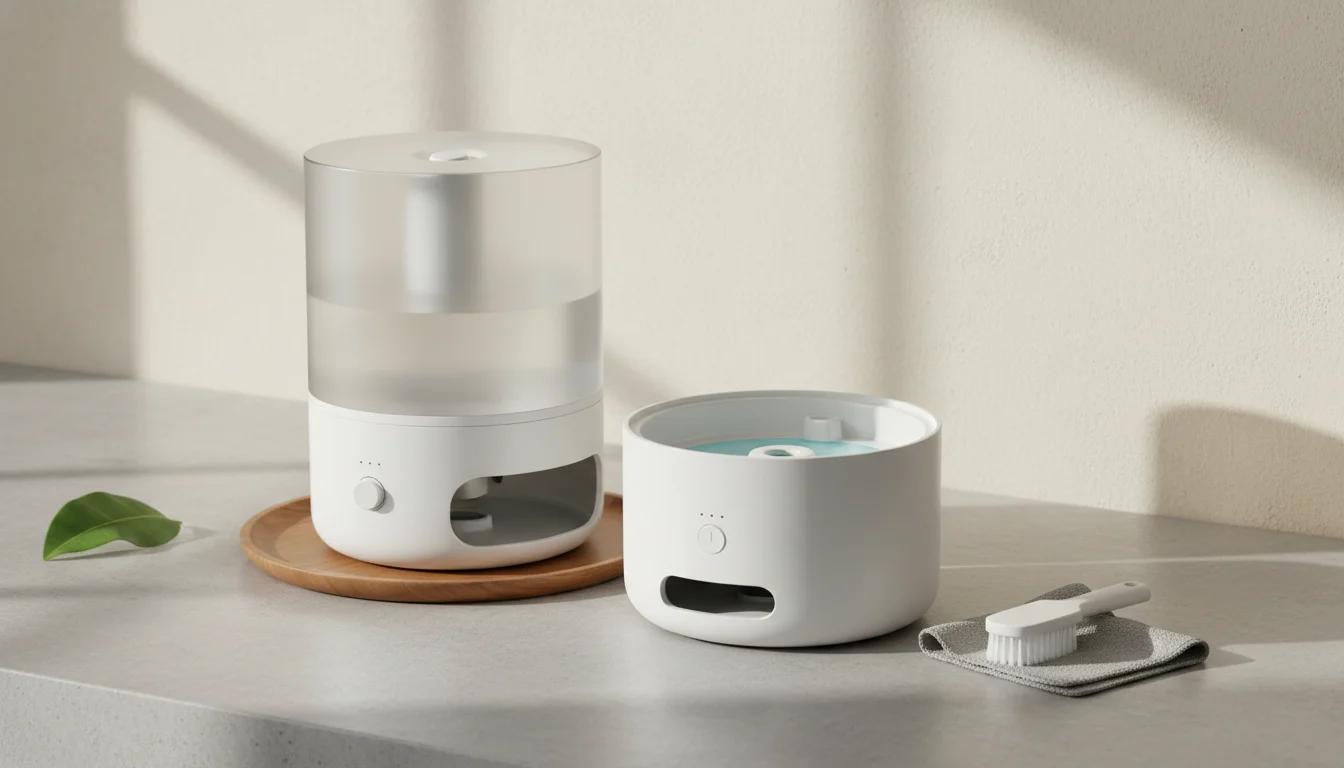
Why Humidifier Cleaning Ease Should Be Your Top Priority
Neglected humidifiers become health hazards, spraying mold spores, bacteria, and mineral dust directly into your breathing air. What should be a wellness device transforms into an indoor air pollutant.
Most manufacturers recommend weekly deep cleaning, yet few owners follow through. The result? A graveyard of abandoned humidifiers sitting in closets across America.
| Cleaning Factor | Complex Design | Easy-Clean Design |
|---|---|---|
| Weekly cleaning time | 20-30 minutes | 5-10 minutes |
| Disassembly required | Multiple parts | 2-3 parts |
| Hand access to tank | Restricted | Full access |
| Mineral buildup areas | Many crevices | Smooth surfaces |
| Filter maintenance | Regular changes | Often filter-free |
Performance degrades as mineral deposits accumulate. Output drops, efficiency tanks, and your humidifier works harder to produce less moisture.
The low-maintenance humidifier you choose today determines whether you'll still be using it six months from now. Time investment compounds over the product lifetime—a 15-minute weekly savings adds up to 13 hours annually.
Design Features That Make Humidifiers Easy to Clean
Six specific design elements separate easy-clean humidifiers from maintenance nightmares. Prioritize these features, and you'll spend minutes instead of half-hours on upkeep.
Top-fill design stands out as the single most important feature. Wide openings allow your entire hand inside for scrubbing, and you can refill without disassembly. The Levoit Classic 300S exemplifies this approach with its wide-mouth tank that makes cleaning effortless.
Dishwasher-safe components eliminate hand-scrubbing entirely for tanks and trays. Blueair's humidifiers feature dishwasher-safe tanks—load them in, run the cycle, and you're done.

- Filter-free systems remove ongoing costs and filter-cleaning hassles completely
- Stainless steel reservoirs resist mineral buildup and offer natural antimicrobial properties
- Minimal parts count means fewer places for gunk to hide and accumulate
- Wide tank openings of at least 4 inches allow full hand access for wiping
The Carepod humidifier combines several of these features, using only three main parts with stainless steel components you can boil for sterilization. Dr. Jesse L. Berry, a licensed esthetician, praises its three-step cleaning process: disassemble, scrub or boil, and refill.
Top-Fill vs Bottom-Fill: Which Is Easier to Maintain?
Top-fill humidifiers win the maintenance battle decisively. They allow cleaning without removing the tank from the base, cut cleaning time in half, and eliminate the spill risks that plague bottom-fill designs.
| Maintenance Factor | Top-Fill | Bottom-Fill |
|---|---|---|
| Average cleaning time | 5-10 minutes | 15-20 minutes |
| Tank removal required | No | Yes |
| Spill risk during refill | Low | High |
| Hand access for scrubbing | Full | Restricted |
| Internal crevices | Fewer | More |
| Flip/invert required | No | Yes |
Bottom-fill tanks force you to flip the entire reservoir upside down. Water drips and mess happens. Narrow necks prevent reaching inside to scrub away buildup.
The Dreo HM311 demonstrates top-fill advantages with its removable top that exposes a large basin. You can scrub during refills, making quick cleaning part of your refill routine rather than a separate chore.
Top-fill designs also feature simpler internal structures. Fewer crevices mean fewer hiding spots for mold and mineral deposits. Safety 1st's top-fill models highlight large tank openings and extended run times up to 60 hours, reducing both cleaning and refilling frequency.
Humidifier Types Ranked by Cleaning Difficulty
Impeller humidifiers rank as the easiest to maintain, while warm mist models demand the most cleaning effort. Your choice of humidifier type predetermines your maintenance commitment.
| Rank | Type | Cleaning Difficulty | Key Maintenance Tasks |
|---|---|---|---|
| 1 (Easiest) | Impeller | Low | Wipe rotating discs periodically |
| 2 | Evaporative | Moderate | Replace/clean wick filter every 1-2 weeks |
| 3 | Ultrasonic | Moderate-High | Clean tank every 2-3 days, manage mineral dust |
| 4 (Hardest) | Warm Mist/Steam | High | Weekly descaling, frequent mineral removal |
Impeller humidifiers use a simple spinning disc mechanism. Fewer parts mean fewer maintenance headaches—wipe the disc, clean the tank, and you're done.
Evaporative models require regular filter changes and wick cleaning. The filter traps minerals and bacteria, and skipping changes causes performance to suffer.
Ultrasonic humidifiers produce mineral dust when used with hard water. That white powder settles on furniture and floors, so you'll need to clean the tank every 2-3 days to prevent biofilm buildup.
Warm mist humidifiers boil water, which kills bacteria—but the good news stops there. Boiling accelerates mineral scale formation on heating elements, making descaling a weekly chore that requires vinegar soaks and scrubbing.
Preventing Mineral Buildup and Reducing Cleaning Frequency
Distilled water cuts mineral buildup by 90% or more. This single change transforms your cleaning routine from a tedious chore into a quick wipe-down.
- Use distilled or demineralized water to eliminate the calcium and magnesium that cause scale
- Empty and dry the tank daily when not running to prevent bacterial growth
- Soak with white vinegar weekly to dissolve deposits before they harden
- Install demineralization cartridges if you must use tap water
- Consider a water softener if you live in a hard water area
Tap water contains dissolved minerals that concentrate as water evaporates. Those minerals coat every interior surface, clog nozzles, and reduce output.
The vinegar soak works because acetic acid dissolves calcium carbonate deposits. Fill the tank with undiluted white vinegar, let it sit for 30 minutes, then rinse thoroughly. Deposits wipe away easily.
Demineralization cartridges add ongoing cost but intercept minerals before they reach the tank. They're worth considering if distilled water isn't practical for your household.
What to Look for When Shopping for Easy-Clean Humidifiers
Measure the tank opening before you buy. Anything under 4 inches in diameter restricts hand access and makes thorough cleaning difficult or impossible.
- Tank opening diameter: Minimum 4 inches for full hand access
- Dishwasher-safe labels: Check removable components specifically
- Long-term reviews: Look for cleaning feedback from users at 3+ months
- Replacement parts availability: Ensure you'll find components when needed
- Warranty terms: Longer coverage suggests manufacturer confidence
User reviews reveal cleaning realities that product descriptions hide. Search reviews for "clean" and "maintenance" to find honest assessments, and pay attention to complaints about hard-to-reach areas or parts that trap moisture.
Simple humidifier designs with fewer components always clean faster. Count the parts in product photos—more pieces mean more cleaning time and more places for problems to develop.
The best humidifier for easy cleaning combines top-fill access, wide openings, and dishwasher-safe components in a filter-free package. These features together create units you'll maintain for years rather than abandon after months.
FAQ
How often should you clean a humidifier?
Clean your humidifier tank every 2-3 days during active use and perform a deep clean with vinegar weekly. Empty and dry the unit completely when not in use to prevent bacterial growth.
What is the white dust from my humidifier?
White dust consists of mineral deposits from tap water, dispersed into the air by ultrasonic humidifiers. Switch to distilled water or add a demineralization cartridge to eliminate this problem completely.
Are filterless humidifiers better?
Filterless humidifiers eliminate replacement costs and filter-cleaning tasks. They work well with distilled water, but using tap water without a filter produces more mineral dust, so water choice matters more with these units.
How do you remove pink mold from a humidifier?
Pink residue is Serratia marcescens bacteria. Clean with undiluted white vinegar, scrubbing all surfaces. For stubborn growth, use a diluted bleach solution (1 teaspoon per gallon), rinse thoroughly, and dry completely before use.
Do humidifiers need distilled water?
Distilled water isn't required but dramatically reduces maintenance. Tap water works but deposits minerals on internal surfaces, requiring more frequent cleaning. Hard water areas benefit most from switching to distilled.
What size room does a typical humidifier cover?
Small units cover 200-400 square feet, medium units handle 400-700 square feet, and large units work for 700-1000+ square feet. Match capacity to your room size to avoid running the unit constantly.
How long do humidifiers last with proper maintenance?
Well-maintained humidifiers last 5-10 years. Neglected units fail within 1-2 years from mineral damage, mold contamination, or motor burnout. Easy-clean designs encourage the regular maintenance that extends lifespan.
Is warm mist or cool mist easier to clean?
Cool mist humidifiers are easier to clean overall. Warm mist units accumulate mineral scale faster due to the boiling process, and the heating elements require regular descaling that cool mist models avoid entirely.
Share this post
Related Posts
Who Should Not Use a Humidifier: 8 Groups at Risk in 2026
Who Should Not Use a Humidifier: 8 Groups at Risk in 2026
Will a Humidifier Help With Bloody Nose? Science-Backed Answer for 2026
Will a Humidifier Help With Bloody Nose? Science-Backed Answer for 2026
Best Humidifiers for Sinus Issues: Expert Guide to Relief in 2026
Best Humidifiers for Sinus Issues: Expert Guide to Relief in 2026