How a Humidifier Can Help Stop Snoring: Science-Backed Guide for 2026
Snoring occurs when partially blocked airflow causes throat tissues to vibrate during sleep. Approximately 40% of men and 24% of women snore regularly, with symptoms worsening during dry winter months or in arid climates. This guide explains how a humidifier to help with snoring works, which type to choose, and how to optimize your bedroom setup for quieter nights.
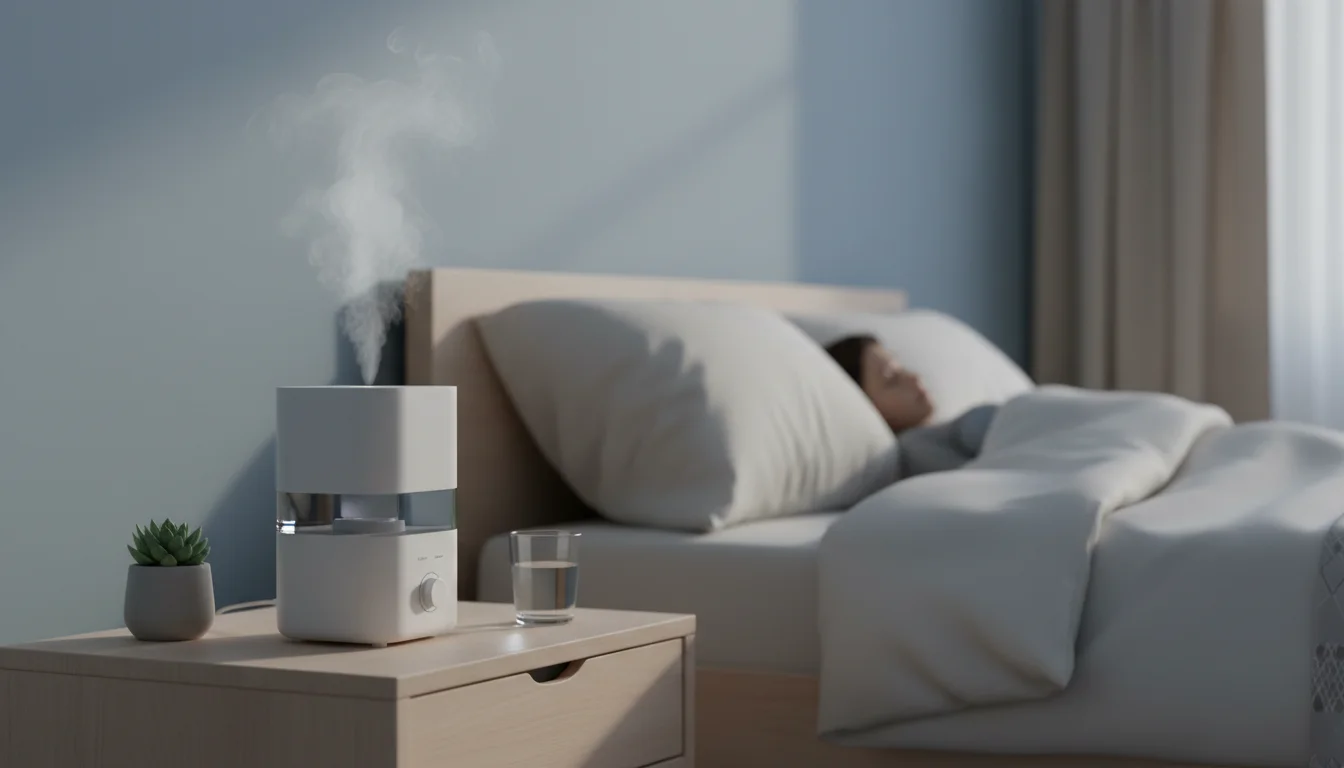
Why Dry Air Causes Snoring: The Science Explained
Dry air pulls moisture from your nasal passages and throat, causing inflammation that narrows your airways and forces tissues to vibrate louder as you breathe.
When indoor humidity drops below 30%, your body responds in ways that make snoring worse:
- Tissue swelling: Dehydrated mucous membranes become irritated and inflamed, constricting the airway
- Thicker mucus: Your body produces stickier secretions that block nasal passages and increase turbulent airflow
- Increased vibration: Dry tissues lose their natural lubrication and flap more intensely when air passes through
- Mouth breathing: Nasal congestion from dry air forces you to breathe through your mouth—a primary snoring trigger
The connection between humidity and snoring is measurable. A study published in Sleep and Breathing found that increases in relative humidity correlated directly with decreases in the snoring index. Winter months bring the worst combination: outdoor cold air holds less moisture, and indoor heating strips away what remains.
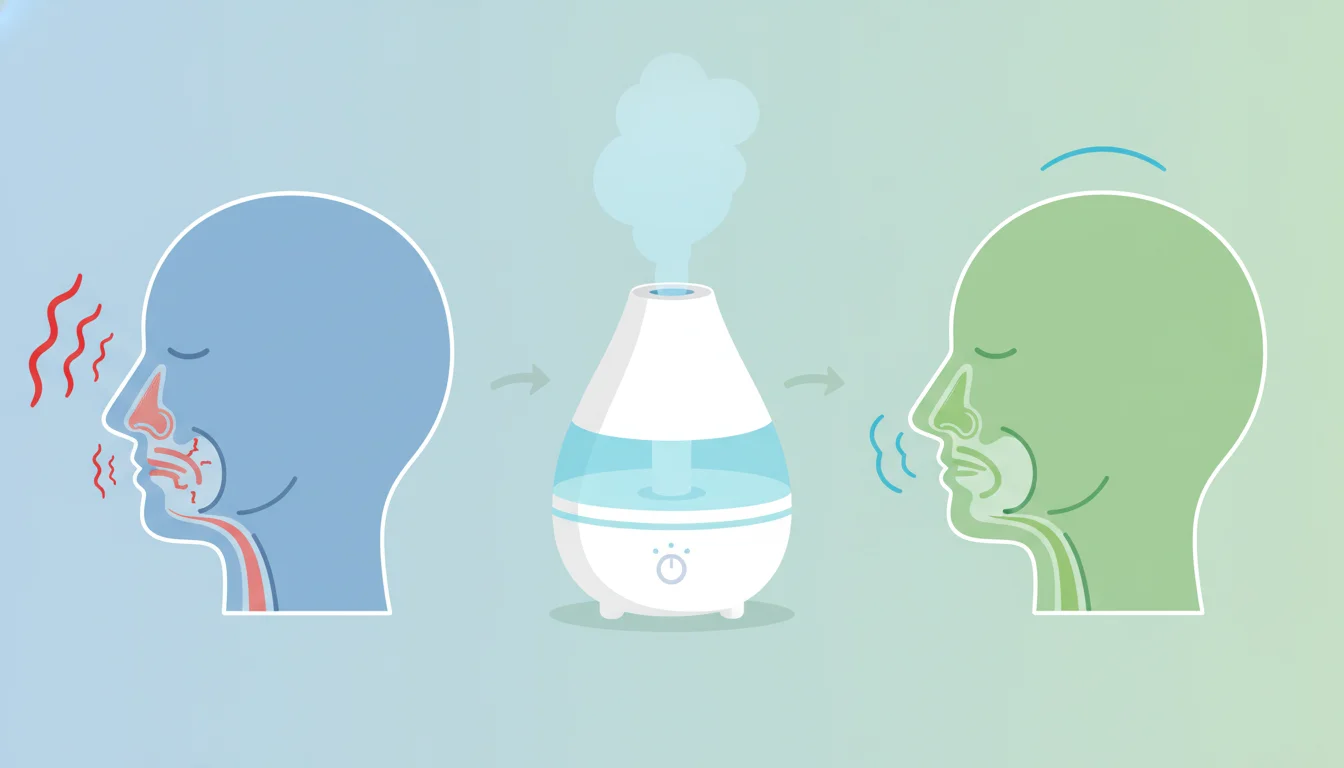
How Humidifiers Help Reduce Snoring
Adding moisture to bedroom air keeps nasal passages and throat tissues hydrated, allowing smoother airflow with significantly less tissue vibration during sleep.
| Mechanism | What Happens | Effect on Snoring |
|---|---|---|
| Tissue hydration | Mucous membranes stay lubricated | Less vibration, quieter breathing |
| Mucus thinning | Secretions become less sticky | Better drainage, fewer blockages |
| Reduced inflammation | Airways stay open and relaxed | More consistent airflow |
| Prevented overnight drying | Moisture levels remain stable | No 3 AM snoring episodes |
Clinical polysomnography tests show fewer breathing obstructions when mucous membranes stay well hydrated. Subjects sleeping in humidity-controlled environments experienced improved oxygen saturation and longer deep sleep stages, according to research from [Jingnuo Air].
The benefits extend beyond snoring. If you struggle with allergies, sinus issues, or post-nasal drip, humidified air loosens mucus and prevents the tissue dryness that triggers nighttime congestion.
Warm Mist vs Cool Mist Humidifiers: Which Is Better for Snoring?
Cool mist humidifiers are generally the better choice for snoring relief because they add moisture without warming the room, which helps prevent the nasal congestion that warm air sometimes causes.
| Feature | Cool Mist | Warm Mist |
|---|---|---|
| How it works | Ultrasonic vibration or evaporative wick | Boils water to create steam |
| Safety | Safe around children and pets | Hot water poses burn risk |
| Energy use | Lower electricity consumption | Higher due to heating element |
| Bacteria | Requires regular cleaning | Boiling kills most pathogens |
| Noise level | Ultrasonic models nearly silent | Gentle bubbling sound |
| Best climate | Warm or year-round use | Cold winter months |
For bedroom use, ultrasonic cool mist models win on noise alone. They operate nearly silently, letting you sleep without the white noise some people find distracting. Warm mist units produce a gentle bubbling sound that bothers light sleepers.
Fair warning: both types work equally well at raising humidity levels. The "best" choice depends on your climate, safety needs, and noise tolerance. If you live somewhere cold and have no children, warm mist adds cozy comfort. Everyone else should start with cool mist.
Optimal Humidity Levels and Humidifier Placement for Snoring Relief
The ideal bedroom humidity for reducing snoring falls between 40% and 50%—a range that hydrates airways without creating conditions for mold or dust mites.
Getting placement right matters as much as the humidity level itself:
- Distance: Position the humidifier 3 to 6 feet from your bed
- Height: Elevate it on a nightstand or table, not the floor
- Direction: Aim mist toward the sleeping area without pointing directly at your face
- Size match: Choose a unit rated for your bedroom's square footage
- Monitoring: Use a hygrometer to track actual humidity levels
Humidity above 60% creates new problems. Mold spores thrive, dust mites multiply, and your allergy symptoms worsen. According to EPA guidelines referenced by [Ozlo Sleep], keeping relative humidity between 30% and 50% prevents dry skin, nasal irritation, and airway inflammation.
I learned this the hard way: running a large humidifier in a small bedroom pushed levels past 65%. Within a week, I noticed musty smells near the window. A $15 hygrometer would have saved me hours of cleaning.
When a Humidifier Won't Help Your Snoring
A humidifier addresses only snoring caused by dry air conditions. Structural, medical, or lifestyle factors require different interventions entirely.
Situations where humidity alone won't solve the problem:
- Sleep apnea: Requires medical evaluation and CPAP therapy, not moisture
- Deviated septum: Structural blockage needs surgical correction
- Enlarged tonsils or adenoids: Physical obstruction requires professional treatment
- Obesity: Excess tissue around the airway persists regardless of humidity
- Alcohol consumption: Muscle relaxation effects override environmental factors
- Sleep position: Back sleeping causes tongue collapse that humidity cannot prevent
If your snoring persists after two weeks of optimal humidity levels, consult a sleep specialist. Untreated sleep apnea increases the risk of heart disease, stroke, and daytime fatigue. A humidifier pairs well with CPAP therapy but never replaces it.
The test is simple: if you snore year-round in all environments, dry air probably isn't your primary cause.
Humidifier Maintenance Tips for Healthy Sleep
A neglected humidifier becomes a breeding ground for mold and bacteria, potentially worsening the respiratory problems you're trying to solve.
| Task | Frequency | Why It Matters |
|---|---|---|
| Empty and dry tank | Daily when not in use | Prevents stagnant water bacteria |
| Clean tank and base | Every 3–7 days | Stops mold and mineral buildup |
| Replace filters | Per manufacturer schedule | Maintains output and air quality |
| Use distilled water | Every refill | Eliminates mineral white dust |
| Deep clean with vinegar | Monthly | Removes stubborn deposits |
Research from Amerisleep confirms that dirty humidifiers release bacteria and mold spores into the air you breathe all night. The snoring relief you gain gets canceled out by respiratory irritation.
Trust me on the distilled water advice. Tap water minerals create a fine white dust that coats furniture and potentially irritates lungs. The extra cost pays for itself in reduced cleaning time.
FAQ
Does a humidifier help with snoring immediately?
Most people notice improvement within the first few nights of maintaining 40–50% humidity. The effects compound as your nasal passages and throat tissues fully rehydrate over one to two weeks of consistent use.
Should I run my humidifier all night for snoring?
Yes. Running it continuously maintains stable moisture levels that prevent the overnight drying responsible for snoring. Start the humidifier an hour before bed and keep it running until morning for best results.
What size humidifier do I need for my bedroom?
Match the unit's coverage rating to your room size. A 300-square-foot bedroom needs a medium-capacity humidifier producing 2–3 gallons daily. Undersized units run constantly without reaching optimal humidity.
Does a humidifier help with sleep apnea?
A humidifier provides comfort but does not treat sleep apnea. However, many CPAP machines include heated humidifiers to prevent the airway dryness that CPAP therapy sometimes causes. Consult your sleep specialist for proper treatment.
Is warm or cool mist better for nighttime congestion?
Cool mist is generally preferred because warm, moist air sometimes worsens nasal congestion in sensitive individuals. Both effectively humidify the room, so choose based on your personal response and bedroom temperature preferences.
How do I know if dry air is causing my snoring?
Track whether your snoring worsens during winter months, in air-conditioned rooms, or in arid climates. If you wake with a dry mouth, cracked lips, or a scratchy throat, dry air likely contributes to your snoring.
What humidity level stops snoring?
Maintaining bedroom humidity between 40% and 50% provides optimal snoring relief for most people. Use a hygrometer to monitor levels and adjust your humidifier output accordingly.
Share this post
Related Posts
Who Should Not Use a Humidifier: 8 Groups at Risk in 2026
Who Should Not Use a Humidifier: 8 Groups at Risk in 2026
Will a Humidifier Help With Bloody Nose? Science-Backed Answer for 2026
Will a Humidifier Help With Bloody Nose? Science-Backed Answer for 2026
Best Humidifiers for Sinus Issues: Expert Guide to Relief in 2026
Best Humidifiers for Sinus Issues: Expert Guide to Relief in 2026