Humidifier vs Dehumidifier for Baby: Which Does Your Nursery Need in 2026?
The humidifier vs dehumidifier for baby debate comes down to one number: indoor humidity. The EPA recommends keeping nursery humidity between 30-50% to protect infant respiratory health and prevent allergen growth. This guide breaks down exactly when you need each device based on your climate, season, and your baby's symptoms.

Understanding Humidity and Why It Matters for Babies
Your baby's respiratory system reacts to air quality far more intensely than yours does. Infants breathe exclusively through their noses for the first several months, making them vulnerable to any moisture imbalance in their environment.
The ideal humidity for a baby's room sits between 40-50%. Drop below 30%, and you'll notice dry, flaky skin, congestion, and restless sleep. Push above 60%, and you're creating a breeding ground for mold and dust mites.
| Humidity Level | Effects on Baby | Action Needed |
|---|---|---|
| Below 30% | Dry skin, nasal congestion, cracked lips, irritated airways | Add humidifier |
| 30-40% | Acceptable but not optimal; monitor for dryness symptoms | Monitor closely |
| 40-50% | Optimal range for baby comfort and health | Maintain current conditions |
| 50-60% | Risk of dust mite proliferation begins | Consider dehumidifier |
| Above 60% | Mold growth, bacteria, respiratory irritants | Add dehumidifier immediately |
A $15 hygrometer tells you exactly where your nursery stands. Place one at crib level since humidity varies throughout a room. Check readings at different times of day—morning and evening levels often differ by 10-15%.
When to Use a Humidifier for Your Baby
Cool-mist humidifiers work best during winter months, in dry climates, and in homes with forced-air heating that strips moisture from indoor air. These conditions can dry out your baby's nasal passages and skin within hours.
Signs your baby needs a humidifier:
- Dry, flaky patches on cheeks, elbows, or legs
- Frequent nasal congestion without other cold symptoms
- Cracked or bleeding lips
- Static electricity when touching blankets or clothing
- Waking frequently with a stuffy nose
Congestion relief happens fast. Moist air keeps nasal passages from drying out overnight, which means fewer 3 AM wake-ups from a stuffed-up baby. One clinical study found that proper humidification reduced hospital stays for infants with bronchiolitis by shortening their oxygen requirements.
Always choose cool-mist over warm-mist for nurseries. Warm-mist units heat water and pose a burn risk if tipped. Ultrasonic cool-mist models run quieter and use less energy. Levoit and [Walgreens Health] both recommend cool-mist specifically for infant safety.
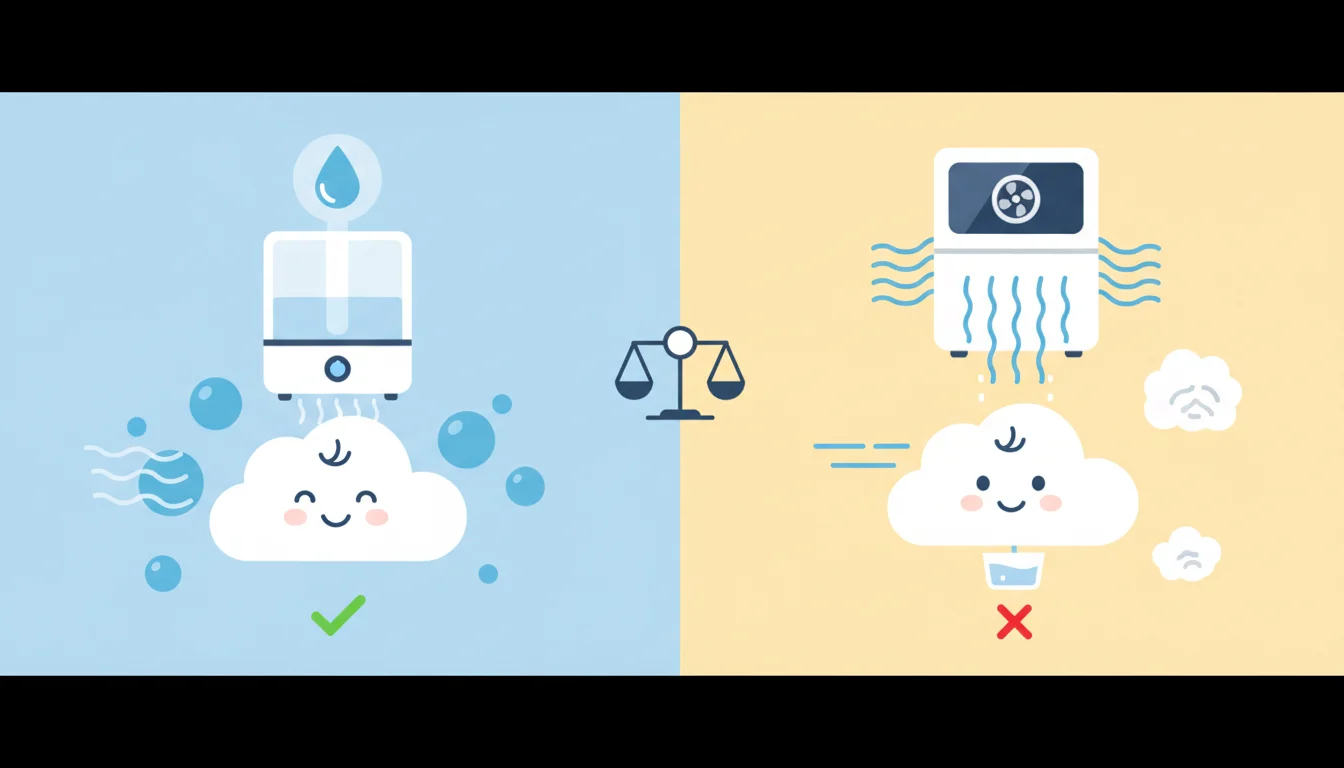
When to Use a Dehumidifier for Your Baby
A dehumidifier becomes essential when indoor humidity climbs above 50-60%. This commonly happens in coastal areas, humid southern climates, and during summer months with poor ventilation. Excess moisture creates conditions where mold and dust mites thrive.
Warning signs you need a dehumidifier:
- Musty smell in the nursery or closets
- Condensation forming on windows
- Visible mold spots on walls, ceilings, or around windows
- Baby showing allergy symptoms: wheezing, persistent cough, eczema flares
- Damp feeling to bedding or curtains
Mold spores trigger respiratory distress in babies with developing airways. Dust mites, which multiply rapidly above 50% humidity, rank among the most common infant allergens. Reducing humidity below 50% starves both problems at the source.
Choose a unit with quiet operation since dehumidifiers run louder than humidifiers. Look for adjustable humidity settings so you can hit 40-50% without overshooting into dry territory. Bluewater Cooling recommends models with child safety features and positioning the unit completely out of reach. Clean the water collection tank weekly to prevent bacteria growth inside the machine itself.
Seasonal and Climate-Based Recommendations
Your humidity needs shift with the calendar. Winter heating systems pull moisture from indoor air, dropping levels to 20-30% in many homes. Summer brings the opposite problem, especially with air conditioning cycling on and off.
| Season | Typical Humidity Problem | Recommended Device |
|---|---|---|
| Winter | Too dry from heating | Humidifier |
| Summer | Too humid, especially with AC | Dehumidifier |
| Spring | Variable; check readings | Monitor with hygrometer |
| Fall | Variable; may shift weekly | Monitor with hygrometer |
Geographic considerations matter too:
- Desert Southwest: Year-round humidifier territory. Indoor levels rarely climb above 30% naturally.
- Pacific Northwest: Dehumidifier season runs fall through spring. Summer brings drier air.
- Gulf Coast and Southeast: Dehumidifiers work overtime from April through October. Winter months might require brief humidifier use.
- Midwest: Both devices see action. Bitter winters demand humidifiers, while humid summers flip the need.
Fair warning: don't guess your humidity levels based on how the air feels. Perception varies wildly from actual readings. Invest in a hygrometer before buying either device. Healthline emphasizes measurement over assumption in their guide on humidity control.
Safety Tips and Best Practices for Baby Rooms
Proper maintenance separates helpful devices from potential health hazards. A dirty humidifier sprays bacteria and mold into the air your baby breathes. A neglected dehumidifier grows colonies of the very organisms you're trying to eliminate.
Humidifier safety rules:
- Clean the tank and base daily with soap and water
- Use distilled water to prevent white mineral dust on surfaces
- Replace filters according to the manufacturer's schedule
- Position at least 3 feet from the crib
- Never aim mist directly at your baby
Dehumidifier safety rules:
- Empty and wipe the water tank every 1-2 days
- Clean the filter weekly
- Keep cords completely out of reach
- Position in a corner away from the crib and play areas
- Check for mold growth inside the unit monthly
The biggest mistake parents make is over-humidifying. Running a humidifier around the clock pushes humidity into the danger zone where mold grows. Use the built-in humidistat if your unit has one. If not, check your hygrometer twice daily and turn the unit off when you hit 50%.
Making the Right Choice: Decision Guide for Parents
Start with your hygrometer reading. Below 40%? Get a humidifier. Above 50%? Get a dehumidifier. Between 40-50%? You're in the sweet spot—hold off on buying either device.
Quick decision framework:
- Dry skin + congestion + winter = Humidifier
- Musty smell + condensation + allergies = Dehumidifier
- Variable symptoms by season = Consider both devices
- Budget under $50 = Quality single-function unit
- Budget $100-200 = Premium unit with hygrometer and auto-shutoff
Combination units that both humidify and dehumidify do exist. They cost more upfront but simplify year-round management. Consider one if your climate swings dramatically between seasons.
Talk to your pediatrician if your baby shows persistent congestion, breathing difficulties, or skin conditions that don't improve with humidity management. These symptoms sometimes signal underlying issues requiring medical attention beyond environmental adjustments. ComfortTemp notes that proper humidity supports but doesn't replace pediatric care when needed.
FAQ
Do newborns need a humidifier in summer?
Most newborns don't need humidifiers during summer months. Air conditioning and natural humidity typically keep levels adequate. Check your hygrometer and add one only if readings drop below 30% consistently.
How close should a humidifier be to a baby's crib?
Position humidifiers at least 3 feet from the crib. This prevents direct mist contact with your baby's face and reduces moisture buildup on bedding. Elevated placement on a dresser or shelf works best.
Does a humidifier help with baby eczema?
Humidifiers provide relief for eczema symptoms triggered by dry air. Maintaining 40-50% humidity prevents skin from losing moisture overnight. Combine with pediatrician-recommended moisturizers for best results.
How do I know if my baby's room is too humid?
Condensation on windows is the clearest sign. Musty odors, damp-feeling fabrics, and visible mold spots also indicate excess humidity. A hygrometer reading above 60% confirms the problem objectively.
Is it safe to run a humidifier all night for baby?
Running a humidifier overnight is safe with proper maintenance and monitoring. Use a unit with auto-shutoff when the tank empties, and check morning humidity levels to ensure you're not exceeding 50%.
What type of water should I use in a baby's humidifier?
Distilled water prevents mineral buildup and white dust on nursery surfaces. Tap water contains minerals that humidifiers disperse into the air. This residue settles on furniture and can irritate sensitive airways.
Do dehumidifiers make rooms colder?
Dehumidifiers generate slight heat during operation, often raising room temperature by 2-5 degrees. In summer, this effect is minimal compared to air conditioning. Position the unit away from the crib to prevent any warmth from reaching your baby.
How often should I clean a baby room humidifier?
Clean the tank and base daily with mild soap and water. Deep clean weekly with white vinegar to dissolve mineral deposits. Replace filters monthly or as directed by the manufacturer. Neglecting cleaning turns humidifiers into bacteria dispensers.
Share this post
Related Posts
Who Should Not Use a Humidifier: 8 Groups at Risk in 2026
Who Should Not Use a Humidifier: 8 Groups at Risk in 2026
Will a Humidifier Help With Bloody Nose? Science-Backed Answer for 2026
Will a Humidifier Help With Bloody Nose? Science-Backed Answer for 2026
Best Humidifiers for Sinus Issues: Expert Guide to Relief in 2026
Best Humidifiers for Sinus Issues: Expert Guide to Relief in 2026