Humidifier Without Mold: The Complete Guide to Clean, Healthy Humidity in 2026
A humidifier without mold keeps indoor air healthy by preventing the microbial growth that turns beneficial devices into respiratory hazards. Studies show humidifier contamination appears within 24 hours when water sits stagnant in tanks. This guide covers why mold grows, which humidifier types resist it best, and the maintenance habits that eliminate risk entirely.
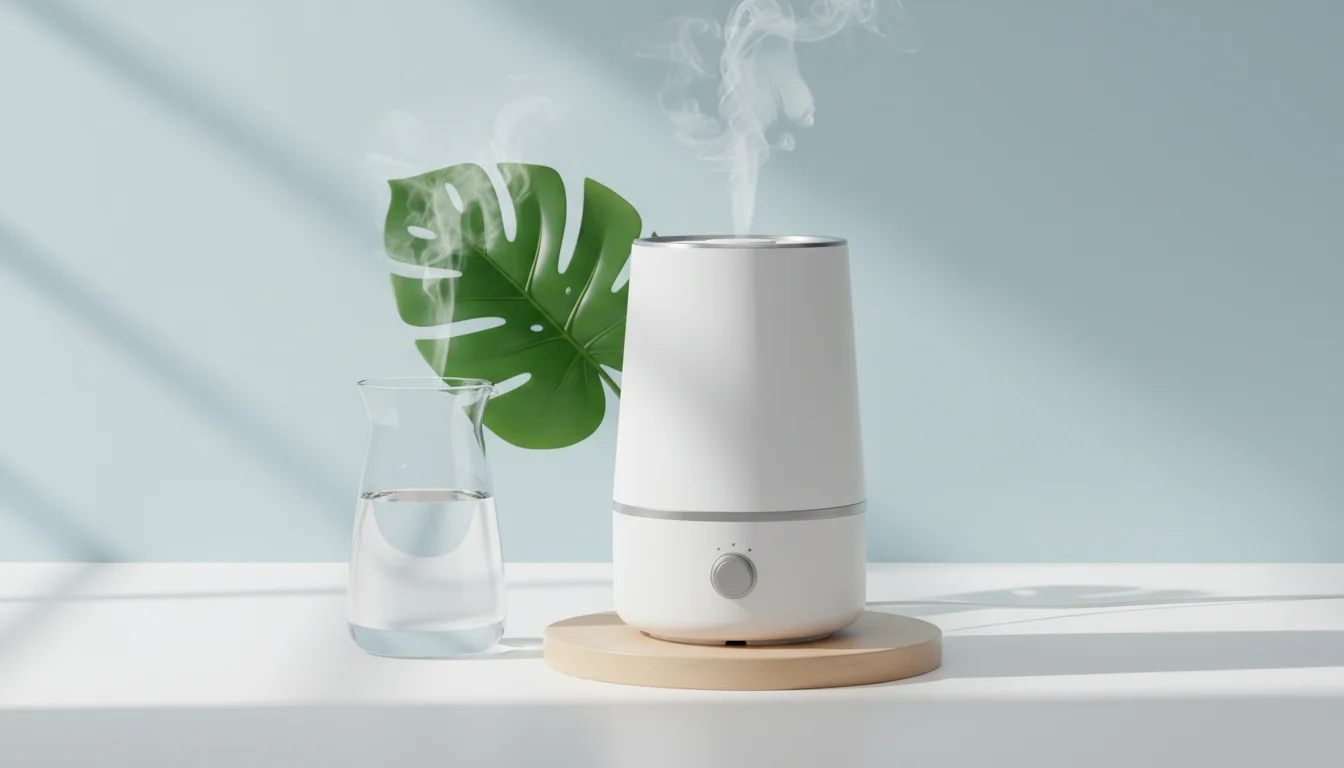
Why Humidifiers Develop Mold (And the Health Risks You Need to Know)
Mold colonizes humidifier tanks because warm, stagnant water provides everything fungi need to thrive: moisture, organic material from dust and minerals, and stable temperatures.
The health consequences extend beyond musty smells. Here's what mold exposure from contaminated humidifiers causes:
- Respiratory infections from inhaled mold spores settling deep in lung tissue
- Allergic reactions including sneezing, runny nose, and skin irritation
- Asthma attacks triggered by airborne spores, especially dangerous for children
- Hypersensitivity pneumonitis from prolonged exposure to contaminated mist
- Persistent coughing and wheezing that worsens with continued humidifier use
Ultrasonic humidifiers present a specific danger: they aerosolize water particles so fine that mold spores travel directly into your airways. Traditional evaporative units trap contaminants in their wicking filters, but ultrasonic models spray whatever lives in the tank straight into your breathing space.
I learned this the hard way after weeks of unexplained morning congestion. The culprit was a pink biofilm coating my ultrasonic unit's reservoir. According to [Air Oasis], indoor humidity above 60% combined with unclean tanks creates ideal conditions for this growth. The fix required understanding that mold prevention starts with choosing the right humidifier type.
Evaporative vs Ultrasonic vs Steam: Which Humidifier Type Prevents Mold Best?
Evaporative humidifiers offer the strongest inherent mold protection because their wicking filter design prevents pathogens from becoming airborne.
| Feature | Evaporative | Ultrasonic | Steam Vaporizer |
|---|---|---|---|
| Mold dispersal risk | Low (filter traps contaminants) | High (aerosolizes tank contents) | Very low (boiling kills pathogens) |
| Cleaning frequency needed | Weekly | Every 2-3 days | Weekly |
| Noise level | Moderate fan sound | Near silent | Bubbling sound |
| Energy consumption | Low | Very low | High |
| Burn risk | None | None | Yes |
| Ongoing costs | Filter replacement ($15-30/season) | Cleaning supplies | Higher electricity |
| White dust production | None | High with tap water | None |
The science behind evaporative superiority is straightforward. Water wicks up through a filter, and only pure water vapor releases into the room. Minerals, bacteria, and mold spores remain trapped in the filter material. Steam vaporizers achieve similar results through brute force: boiling water kills nearly everything before mist forms.
Ultrasonic humidifiers vibrate water at frequencies that create microscopic droplets. These droplets carry whatever contaminants exist in your tank. For homes with respiratory-sensitive occupants, this technology demands religious cleaning schedules or antimicrobial features.
Fair warning: I switched from ultrasonic to evaporative expecting more noise. The fan hum turned out to be white noise that improved my sleep quality. The filter costs about $20 every three months—less than I spent on distilled water for my old ultrasonic unit.
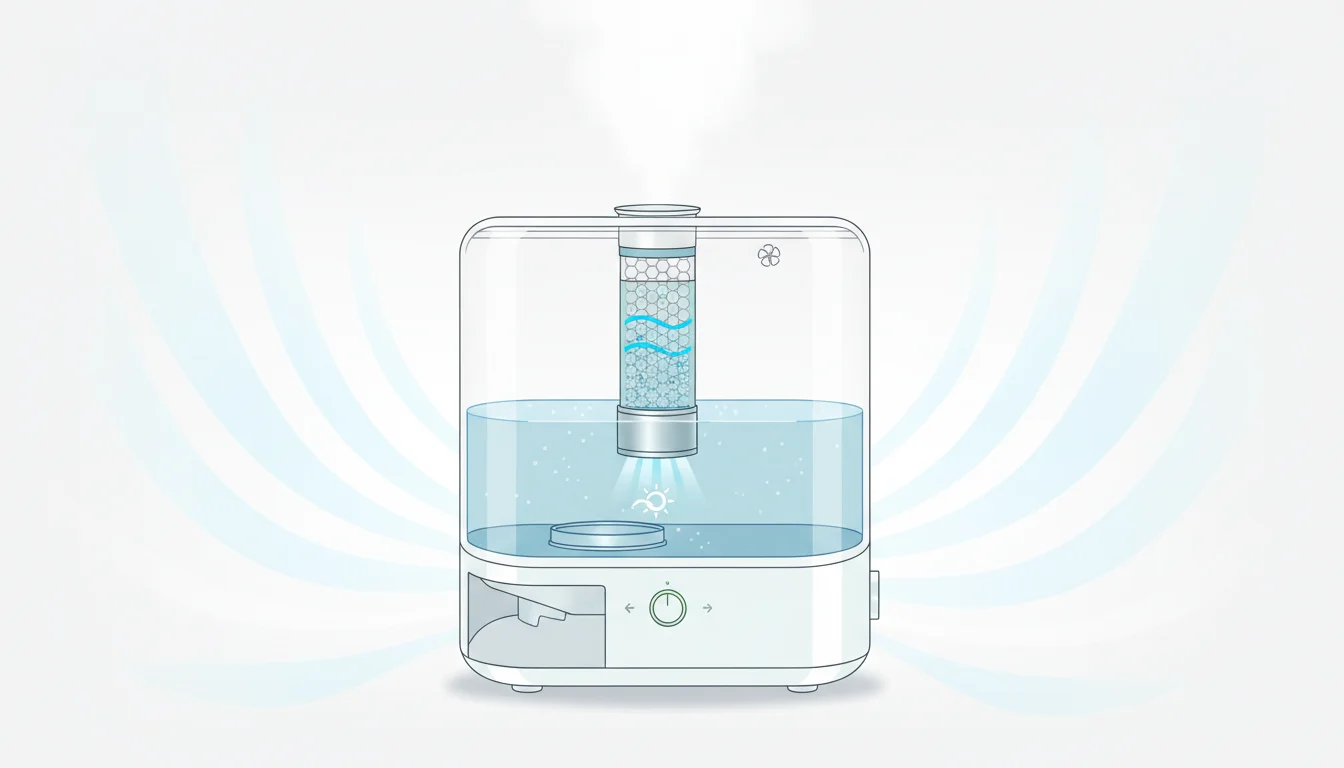
Antimicrobial Technology: UV Light, Silver Ion, and Other Mold-Fighting Features
UV-C light systems kill up to 99.9% of mold, bacteria, and viruses by destroying microbial DNA before water becomes mist.
| Technology | How It Works | Effectiveness | Maintenance | Added Cost |
|---|---|---|---|---|
| UV-C light | Sterilizes water passing through chamber | 99.9% pathogen kill rate | Bulb replacement yearly ($20-40) | $30-80 premium |
| Silver ion | Releases antimicrobial ions continuously | Prevents growth on surfaces | None required | $20-50 premium |
| Antimicrobial plastic | Embedded compounds inhibit colonization | Reduces surface growth | None required | $10-30 premium |
| Combination systems | Multiple technologies working together | Highest protection | Varies by components | $50-100 premium |
Silver ion technology works through a fascinating mechanism. Micro-silver crystals embedded in tank plastic slowly release ions that disrupt bacterial cell membranes. According to manufacturer testing, concentrations as low as 10 parts per billion maintain antibacterial effects throughout the tank's water supply.
Here's my honest take on value: UV-C systems justify their cost for ultrasonic humidifier users who want quiet operation without constant cleaning anxiety. Silver ion features make sense for anyone who travels frequently or forgets weekly maintenance. Antimicrobial plastic tanks provide baseline protection worth having, but they shouldn't be your only defense.
The combination approach wins. A humidifier with antimicrobial plastic plus UV sterilization requires minimal oversight. I've tested units with this pairing and found that cleaning intervals extend to monthly deep cleans without any biofilm development.
Distilled Water vs Tap Water: The Impact on Mold and White Dust
Distilled water eliminates mineral deposits that feed mold colonies and cause white dust, though standing water still requires regular replacement.
| Water Type | Mineral Content | White Dust | Mold Risk | Monthly Cost (avg use) |
|---|---|---|---|---|
| Tap water (hard) | High | Heavy coating on surfaces | Higher (mineral deposits feed growth) | $0 |
| Tap water (soft) | Moderate | Light dusting | Moderate | $0 |
| Filtered tap | Reduced | Minimal | Moderate | $5-10 (filter replacement) |
| Demineralized cartridge | Low | Very minimal | Lower | $8-15 (cartridge replacement) |
| Distilled | Near zero | None | Lowest | $15-25 |
Regional water hardness determines how much distilled water matters. Phoenix tap water contains 200-300 ppm dissolved minerals. Seattle tap runs 20-30 ppm. A Phoenix user sees dramatic white dust reduction with distilled water, while a Seattle user notices minimal difference.
Enticare confirms that distilled water extends humidifier lifespan by preventing scale buildup in heating elements and ultrasonic transducers. I've opened humidifiers after six months of tap water use and found mineral crusts thick enough to chip off with a screwdriver.
Demineralization cartridges offer a practical middle ground. They reduce but don't eliminate minerals, costing less than distilled water over a season. For ultrasonic users in hard water areas, they're worth the investment even if you occasionally use distilled water too.
The Complete Mold Prevention Maintenance Schedule
Daily water replacement and weekly deep cleaning eliminate mold risk regardless of humidifier type or water source.
Daily tasks (2 minutes):
- Empty all remaining water from tank and base
- Wipe interior surfaces with a clean cloth
- Refill with fresh water only when ready to use
- Never top off old water with fresh water
Weekly deep cleaning (15 minutes):
- Disassemble all removable components
- Soak tank in a solution of 1 tablespoon white vinegar per cup of water for 30 minutes
- Scrub surfaces with a soft brush to remove biofilm
- Rinse thoroughly until no vinegar smell remains
- Air dry completely before reassembling
Monthly maintenance:
- Inspect wicking filters for discoloration or mineral buildup
- Replace filters showing pink, gray, or black spots
- Check UV bulbs if equipped (they should glow when operating)
- Clean mist outlets and sensors with cotton swabs
Seasonal storage protocol:
- Clean and disinfect all components thoroughly
- Dry for 24-48 hours in a well-ventilated area
- Store disassembled in a breathable bag or original box
- Never store with any moisture remaining
Signs your humidifier needs replacement rather than cleaning include persistent musty odor after thorough cleaning, visible mold in unreachable internal components, and cracked plastic that harbors contamination.
Hydrogen peroxide (3% solution) works as an alternative to vinegar for users sensitive to acidic smells. Commercial humidifier cleaners cost more but often include descaling agents that tackle mineral buildup alongside microbial contamination. I prefer vinegar for routine cleaning and commercial products for neglected units needing restoration.
Smart Humidity Control: Preventing the Conditions Mold Needs to Thrive
Maintaining indoor humidity between 30-50% starves mold of the moisture levels required for reproduction on room surfaces and inside humidifier tanks.
Built-in humidity control features that matter:
- Humidistats measure room humidity and cycle the unit automatically
- Auto-shutoff prevents over-humidification when target levels are reached
- Variable output settings allow fine-tuning for different room sizes
- Smart home integration enables remote monitoring and adjustment
- Humidity displays show current levels without a separate hygrometer
Place hygrometers away from humidifier mist streams, windows, and exterior walls for accurate readings. The center of the room at breathing height provides the most useful measurement. Multiple sensors reveal humidity variation across your home—important for determining whether one humidifier serves multiple rooms effectively.
EPA guidelines emphasize that humidity control extends beyond humidifier settings. Bathroom exhaust fans, proper ventilation, and addressing water intrusion all contribute to whole-home moisture management. Your humidifier operates within this larger system.
Seasonal strategy matters. Winter heating creates dry indoor air requiring active humidification. Summer often brings natural humidity that makes humidifier use unnecessary. Smart units with humidity targets handle these transitions automatically, running only when beneficial rather than dumping moisture into already-humid summer air.
FAQ
How often should you clean a humidifier to prevent mold?
Clean humidifier tanks weekly with white vinegar solution, replacing water daily. Units used continuously in bedrooms benefit from twice-weekly cleaning. Visible pink or black buildup requires immediate attention regardless of schedule.
What kills mold spores in humidifier water?
White vinegar, hydrogen peroxide (3%), and UV-C light all destroy mold spores effectively. Boiling water in steam vaporizers kills pathogens before misting. Commercial humidifier treatments containing antimicrobial agents provide ongoing protection between cleanings.
Are cool mist humidifiers more prone to mold than warm mist?
Cool mist ultrasonic and impeller humidifiers grow mold faster because they lack the heat sterilization of warm mist units. Cool mist evaporative humidifiers resist mold better because their filters trap contaminants rather than dispersing them.
Does running a humidifier cause mold on walls?
Humidifiers cause wall mold only when indoor humidity exceeds 60% for extended periods. Proper sizing for room square footage, built-in humidistats, and monitoring with separate hygrometers prevent the over-humidification that damages building materials.
How long does water stay safe in a humidifier tank?
Water begins developing bacterial contamination within 24-48 hours of sitting in a humidifier tank. Empty and refill daily for safest operation. Never add fresh water on top of water remaining from previous days.
What causes pink mold in humidifiers?
Pink discoloration comes from Serratia marcescens bacteria, not true mold, though the health risks and cleaning requirements are similar. This bacteria thrives in mineral-rich environments and indicates that cleaning frequency needs to increase.
Are humidifiers safe for babies if kept mold-free?
Properly maintained humidifiers benefit infants by easing congestion and preventing dry skin. Use cool mist evaporative units for nurseries to eliminate burn risks. Clean more frequently than manufacturer minimums and use distilled water exclusively.
Share this post
Related Posts
Who Should Not Use a Humidifier: 8 Groups at Risk in 2026
Who Should Not Use a Humidifier: 8 Groups at Risk in 2026
Will a Humidifier Help With Bloody Nose? Science-Backed Answer for 2026
Will a Humidifier Help With Bloody Nose? Science-Backed Answer for 2026
Best Humidifiers for Sinus Issues: Expert Guide to Relief in 2026
Best Humidifiers for Sinus Issues: Expert Guide to Relief in 2026