Best Humidifier for Baby Congestion: 2026 Safety Guide & Top Picks
A humidifier adds moisture to dry indoor air, helping loosen mucus in a baby's nasal passages for easier breathing. The American Academy of Pediatrics recommends cool mist models specifically for infants due to burn risks associated with warm steam devices. This guide covers what humidifier is best for baby congestion, safety protocols, top 2026 picks, and maintenance essentials.
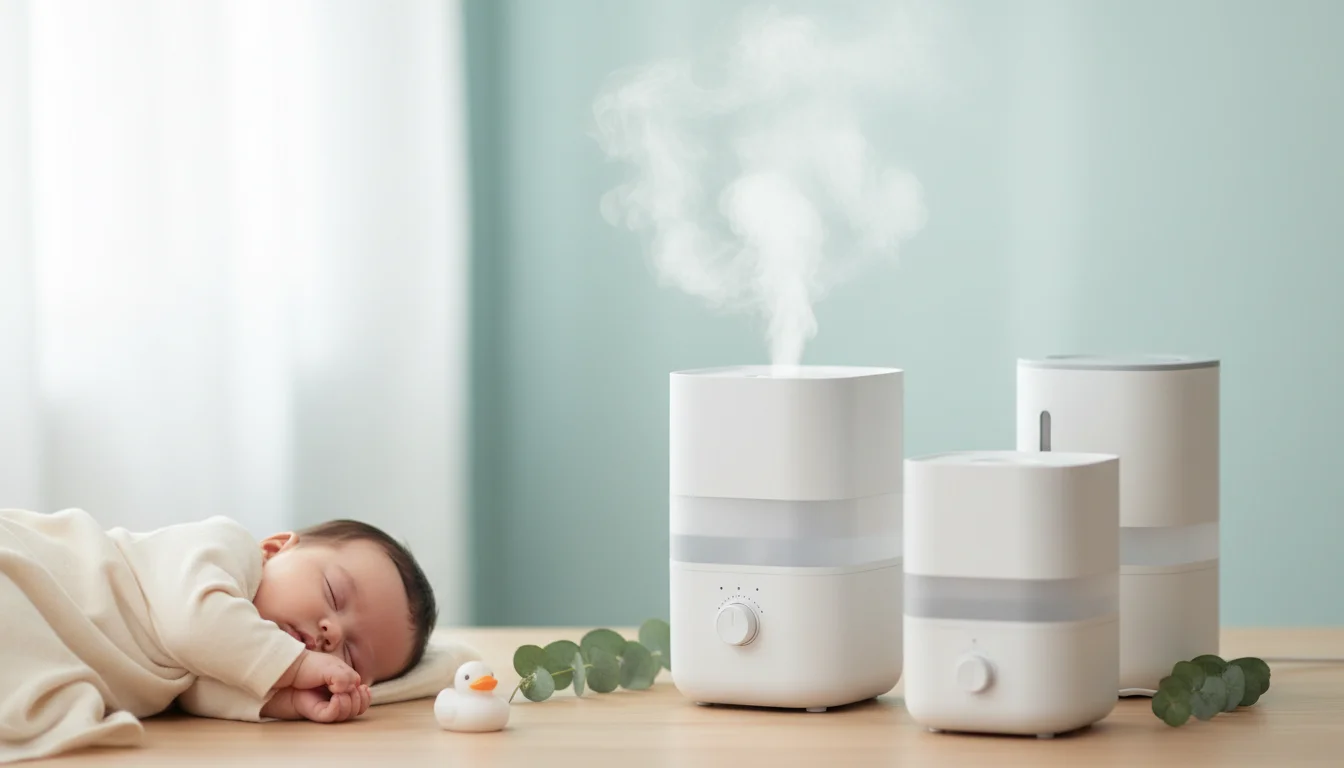
How Humidifiers Help Relieve Baby Congestion
Moisture from a humidifier thins sticky mucus and hydrates irritated nasal tissues, making it easier for babies to breathe and sleep.
Dry indoor air causes mucus to thicken, blocking tiny nasal passages. When humidity levels reach 40–60%, the nasal lining stays hydrated and swelling decreases. This creates natural relief without medication.
When humidifiers work best for baby congestion relief:
- Winter months when heating systems dry out indoor air
- Dry climates with low natural humidity
- During cold symptoms when nasal passages become inflamed
- Nighttime hours when congestion disrupts sleep
Clinical evidence confirms that humidifiers reduce dryness and breathing discomfort. However, studies have not proven they shorten cold duration or cure infections. They provide supportive care by addressing symptoms rather than the underlying illness.
A humidifier for newborn congestion works as one tool in your relief toolkit. Pair it with saline drops and gentle nasal suction for best results. According to Nationwide Children's Hospital, proper use and cleaning matter more than which specific model you choose.

Cool Mist vs Warm Mist: Which Is Safer for Babies?
Cool mist humidifiers are the only safe choice for nurseries because warm mist vaporizers create serious burn risks for infants and toddlers.
The AAP recommendation is clear: warm mist devices heat water to produce steam, and if tipped over, boiling water causes scalding injuries. Studies document toddlers sustaining hand burns requiring skin grafts from these accidents.
| Feature | Cool Mist Humidifier | Warm Mist Vaporizer |
|---|---|---|
| Burn Risk | None | High (boiling water) |
| AAP Recommended for Babies | Yes | No |
| Humidity Output | Equal to warm mist | Equal to cool mist |
| Energy Use | Lower | Higher |
| Noise Level | Varies by type | Quieter operation |
| Bacteria Risk | Depends on cleaning | Steam kills some germs |
Both types add identical moisture to the air. The temperature normalizes before reaching your baby's airways, so the difference is purely about safety in the nursery.
Ultrasonic vs evaporative cool mist options:
- Ultrasonic models use vibrations to create mist. They run quieter but disperse minerals and bacteria from the water directly into the air.
- Evaporative models use a wick filter and fan. Filters trap contaminants, producing cleaner output.
For baby humidifier safety, evaporative cool mist with a quality filter offers the cleanest air. If you choose ultrasonic, use distilled water to minimize mineral dust. According to WebMD, this simple switch reduces particulate exposure significantly.
Key Features to Look for in a Baby Humidifier
Match tank capacity to your nursery's square footage and prioritize whisper-quiet operation under 30 dB for uninterrupted sleep.
Essential features for a quiet humidifier for baby:
- Room coverage: A 1-gallon tank typically covers 250–400 square feet. Measure your nursery first.
- Noise level: Look for ratings under 30 dB. Anything above 35 dB sounds like a running refrigerator.
- Auto shut-off: Prevents dry running when the tank empties, protecting the motor and your peace of mind.
- Humidity sensor: Maintains optimal 30–50% humidity automatically. Levels that are too high promote mold growth.
- Wide tank opening: Your hand needs to fit inside for scrubbing. Narrow necks make thorough cleaning impossible.
- Dishwasher-safe parts: Reduces maintenance time dramatically.
Features to approach with caution:
Skip the baby humidifier with essential oils if your infant is under 6 months. Their respiratory systems are too sensitive. Soft night lights work well, but bright LEDs can disrupt sleep cycles.
A portable baby humidifier makes sense for families who travel frequently. Look for USB charging and compact designs under 1 pound. You'll sacrifice tank capacity for convenience—mini models typically need refilling every 4–6 hours.
Top Humidifier Picks for Baby Congestion in 2026
The Levoit LV600S stands out as the best humidifier for baby congestion, combining large coverage with smart controls and near-silent operation.
| Model | Best For | Tank Size | Noise Level | Price Range |
|---|---|---|---|---|
| Levoit LV600S | Overall performance | 6L | Under 35 dB | $120–$150 |
| Vicks Filter-Free Cool Mist | Budget buyers | 1.2 gallons | Quiet | $25–$45 |
| Crane Drop Ultrasonic | Small nurseries | 1 gallon | Whisper-quiet | $40–$60 |
| USB Mini Humidifiers | Travel | 300–500ml | Variable | $15–$30 |
Levoit LV600S (Best Overall)
This model covers rooms up to 753 square feet. App controls let you adjust settings without entering the nursery. While a warm and cool mist option exists, stick to cool for safety. The 6-liter tank runs 50+ hours on low settings.
Vicks Filter-Free Cool Mist (Best Budget)
This is the best baby humidifier in 2026 for cost-conscious parents. VapoPad slots allow adding menthol for older babies (3+ months). No filter means no replacement costs, though you'll need to clean it more frequently.
Crane Drop Ultrasonic (Best for Small Nurseries)
The teardrop design fits on narrow surfaces. The one-gallon tank covers 250 square feet for about 24 hours. Parents consistently praise how quietly it runs.
Portable Mini Humidifiers (Best for Travel)
USB charging works with car adapters and power banks. Small tanks empty fast, so these serve as backup options rather than primary nursery units.
Humidifier Safety and Maintenance Tips
Daily water changes and weekly deep cleaning prevent mold and bacteria buildup that can make congestion worse instead of better.
Daily maintenance:
- Empty remaining water completely
- Refill with fresh distilled or filtered water
- Wipe exterior surfaces dry
Weekly deep cleaning:
- Disassemble all removable parts
- Soak in white vinegar solution for 30 minutes
- Scrub with a soft brush to remove mineral deposits
- Rinse thoroughly with clean water
- Air dry completely before reassembling
Placement rules for baby humidifier safety:
- Position 3+ feet from the crib
- Use a stable, flat surface
- Keep cords completely out of reach
- Point mist away from walls and furniture
- Never place on carpet (moisture damage risk)
Warning signs requiring immediate attention:
- Pink or orange residue (bacterial colony)
- Musty or sour smell
- Visible white mineral buildup
- Slimy film inside tank
Monitor humidity with a separate hygrometer. Keep levels between 30–50%. Above 50% encourages mold growth in your nursery, while below 30% defeats the purpose entirely.
When to Call the Pediatrician
A humidifier supports breathing comfort but cannot treat infections, allergies, or structural issues causing persistent congestion.
Seek medical attention when your baby shows:
- Fever above 100.4°F (38°C)
- Rapid or labored breathing
- Refusing to eat or drink
- Blue tint around lips or fingernails
- Congestion lasting beyond 10–14 days
- Unusual irritability or lethargy
Other safe baby congestion remedies to try first:
- Saline nasal drops (loosen thick mucus)
- Bulb syringe or nasal aspirator (gentle suction)
- Slightly elevated mattress position (check with pediatrician)
- Steam from a hot shower (sit in bathroom, not in the shower)
Trust your instincts. You know your baby's normal patterns. Any breathing difficulty warrants a call—pediatricians prefer fielding questions over missing serious symptoms.
FAQ
How long should I run a humidifier in my baby's room?
Run the humidifier during sleep hours, typically 8–12 hours overnight. Turn it off during the day to prevent excess moisture buildup. Monitor humidity levels and stop if readings exceed 50%.
Can I use tap water in my baby's humidifier?
Distilled water works best, especially for ultrasonic models. Tap water contains minerals that create white dust and promote bacterial growth. Filtered water serves as an acceptable alternative if distilled is unavailable.
How close should a humidifier be to my baby's crib?
Position the humidifier at least 3 feet from the crib on a stable surface. Direct mist should not reach bedding or your baby's face. Keep cords secured and completely out of reach.
Do humidifiers help with baby snoring caused by congestion?
Congestion-related snoring often improves with added humidity. Moist air reduces swelling in nasal passages that causes the sound. If snoring persists after congestion clears, consult your pediatrician about other causes.
How do I know if my nursery humidity is too high?
Condensation on windows signals excess humidity. Musty odors and damp-feeling fabrics also indicate problems. Purchase an inexpensive hygrometer to monitor levels. Aim for 30–50% and reduce runtime if needed.
Are humidifiers safe for premature babies?
Consult your neonatologist before using any humidifier for preemies. Their respiratory systems require extra precautions. Hospital-grade equipment and stricter cleaning protocols may be necessary for fragile lungs.
Should I use a humidifier year-round for my baby?
Most families need humidifiers only during dry winter months or in arid climates. Summer humidity often exceeds healthy levels naturally. Store the unit cleaned and dried during off-seasons to prevent mold.
Can a dirty humidifier make my baby sicker?
Contaminated humidifiers spray bacteria and mold spores directly into the air your baby breathes. This worsens respiratory symptoms and can introduce new problems. Clean religiously or stop using the unit entirely.
Share this post
Related Posts
Who Should Not Use a Humidifier: 8 Groups at Risk in 2026
Who Should Not Use a Humidifier: 8 Groups at Risk in 2026
Will a Humidifier Help With Bloody Nose? Science-Backed Answer for 2026
Will a Humidifier Help With Bloody Nose? Science-Backed Answer for 2026
Best Humidifiers for Sinus Issues: Expert Guide to Relief in 2026
Best Humidifiers for Sinus Issues: Expert Guide to Relief in 2026