Why Did My Humidifier Water Turn Black? Causes, Fixes & Prevention
Black water in your humidifier signals mold growth, mineral oxidation, or bacterial contamination requiring immediate attention. Studies show that humidifiers left uncleaned for 48+ hours develop measurable microbial colonies. This guide explains why humidifier water turns black and how to fix the problem permanently.
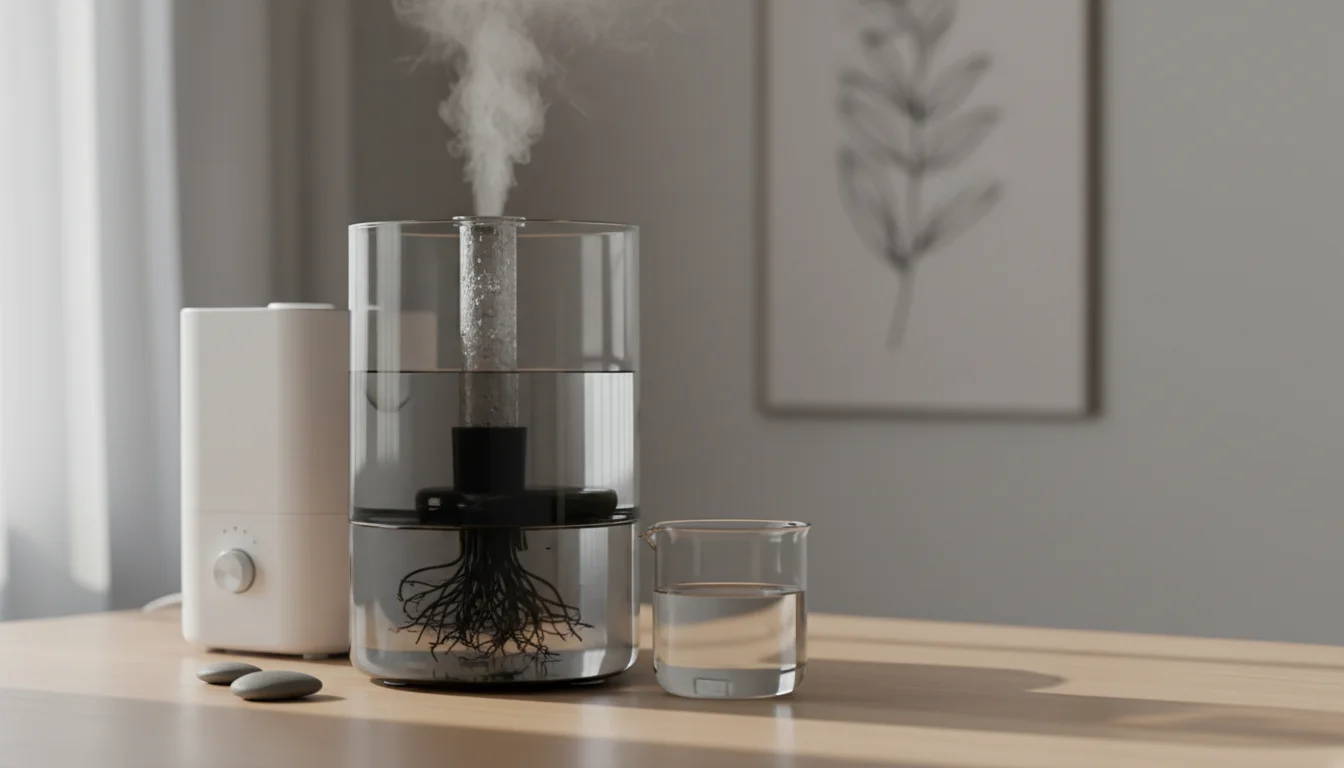
Common Causes of Black Water in Humidifiers
Mold, mineral deposits, and bacterial biofilms account for nearly all cases of black humidifier water. These contaminants thrive in warm, stagnant water and multiply rapidly when cleaning gets neglected.
Mold and Mildew Growth
- Thrives in warm, moist environments with standing water
- Appears as black slime, floating particles, or tank coating
- Proliferates within 24-48 hours of water sitting idle
- Releases spores directly into your breathing air
Mineral Deposits
- Hard water contains iron, manganese, calcium, and magnesium
- These minerals oxidize over time and turn dark or black
- Create gritty residue that clings to tank walls
- Concentrate as water evaporates, accelerating discoloration
Bacterial Biofilms
- Colonies form protective slimy layers on surfaces
- Appear dark and become increasingly resistant to cleaning
- Develop on tank walls, bases, and internal components
Equipment Degradation
- Steam humidifier heating elements shed oxidized metal particles
- Older electrode models release carbon particles as electrodes wear
- Dust and airborne contaminants settle into standing water
The warm, dark interior of your humidifier creates perfect conditions for these problems. I learned this the hard way after finding black gunk coating my tank following a two-week vacation. [Respiratory Therapy Zone] confirms that microbial growth begins within days of neglecting regular maintenance.
Black Water Causes by Humidifier Type
Each humidifier design creates unique conditions for black water formation. Your specific model determines which contamination type poses the greatest risk.
| Humidifier Type | Primary Black Water Cause | Key Vulnerability |
|---|---|---|
| Ultrasonic | Mineral buildup and concentration | Vibration disperses minerals; no filter to trap them |
| Evaporative | Mold growth in wicks and filters | Wet wicks become breeding grounds |
| Steam/Warm Mist | Oxidized heating element particles | Boiling concentrates minerals and cooks residue onto surfaces |
| Impeller | Bacterial deposits on rotating disk | Disk mechanism harbors microbes |
| Whole-House | Mineral accumulation on water panels | Panels require seasonal replacement |
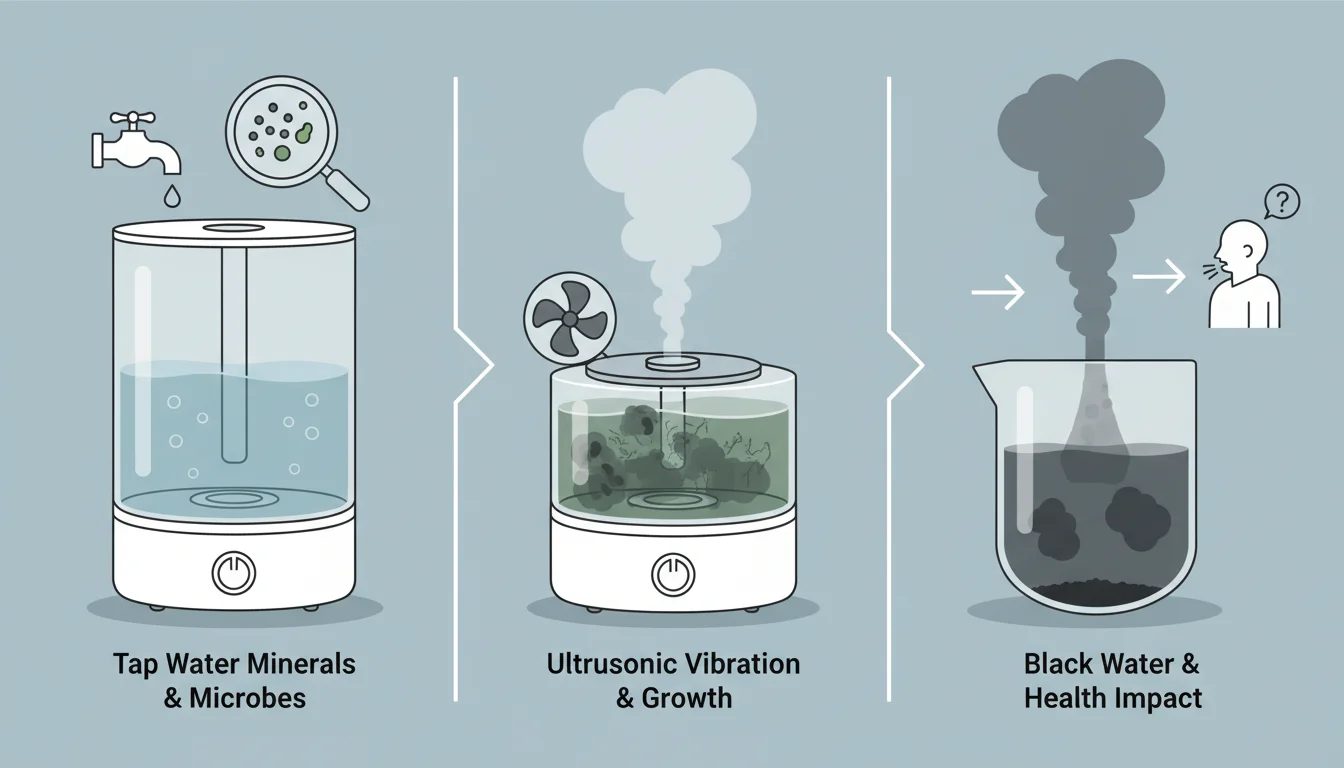
Ultrasonic models cause the most headaches. They vibrate water into fine mist without filtering out minerals, which explains that white dust on your furniture. Those same minerals darken inside the tank over time. [US Water Systems] recommends distilled water specifically for ultrasonic units to prevent this buildup entirely.
Steam humidifiers present a different challenge. The heating element literally cooks organic matter onto its surface, creating stubborn black deposits that require aggressive cleaning.
Health Risks of Black Humidifier Water
Contaminated humidifier mist disperses mold spores, bacteria, and mineral particles directly into your lungs. This transforms a device meant to improve air quality into a health hazard.
Respiratory Issues
- Mold spores trigger asthma attacks and allergic reactions
- Bacteria cause coughing, chest tightness, and breathing difficulty
- Mineral particles irritate airways and nasal passages
Humidifier Fever
- Flu-like symptoms from inhaling contaminated mist
- Fever, chills, and body aches lasting 24-48 hours
- Caused by bacterial endotoxins in dirty water
Serious Infection Risks
- Legionnaires' disease bacteria thrive in stagnant warm water
- Children, elderly, and immunocompromised individuals face elevated danger
- Symptoms mimic pneumonia and require medical treatment
Stop using your humidifier immediately if you notice black water and experience respiratory symptoms. The connection between dirty humidifiers and lung problems is well documented. Fair warning: I ignored early signs once and ended up with a persistent cough that lasted three weeks.
How to Clean Black Water From Your Humidifier
A thorough cleaning with vinegar or hydrogen peroxide eliminates black residue and kills the microorganisms causing it. This process takes 30-60 minutes and restores your humidifier to safe operation.
Step-by-Step Cleaning Process
- Unplug and disassemble all removable parts from the base unit
- Empty completely by dumping any remaining water
- Rinse with warm water to remove loose debris
- Prepare cleaning solution: Mix equal parts white vinegar and water for minerals, or use 3% hydrogen peroxide for mold
- Soak all components for 30 minutes minimum, or 1 hour for heavy contamination
- Scrub with a soft brush to dislodge stubborn black deposits
- Rinse thoroughly at least 3 times to remove all cleaning solution
- Air dry completely before reassembling
Alternative Cleaning Agents
| Agent | Best For | Mixture Ratio |
|---|---|---|
| White Vinegar | Mineral deposits | 1:1 with water |
| Hydrogen Peroxide | Mold and bacteria | Use 3% solution undiluted |
| Bleach | Heavy contamination | 1 teaspoon per gallon |
| Citric Acid | Stubborn scale | 1 tablespoon per cup of water |
| Cleaning Vinegar | Faster mineral removal | Higher acidity than white vinegar |
Trust me on this: soak longer than you think necessary. I rushed the process once and found black residue returning within a week. [Miro Home] emphasizes that thorough soaking breaks down biofilms that quick cleaning misses.
Preventing Black Water: Maintenance Best Practices
Using distilled water and emptying your tank daily prevents 90% of black water cases. These habits take minutes but save hours of deep cleaning later.
Daily Habits
- Empty the tank completely and refill with fresh water
- Never let water sit longer than 24 hours
- Wipe the tank interior with a clean cloth when refilling
Weekly Maintenance
- Clean the tank with vinegar solution
- Inspect the base unit for moisture and residue
- Check filters and wicks for discoloration
Seasonal Tasks
- Replace filters according to manufacturer schedule
- Deep clean with hydrogen peroxide before storage
- Store completely dry during off-season months
Water Type Comparison
| Water Type | Mineral Content | Black Water Risk | Annual Cost (daily use) |
|---|---|---|---|
| Tap Water | High | High | $0 |
| Filtered Water | Medium | Medium | $50-100 |
| Distilled Water | None | Very Low | $150-300 |
| Demineralized Water | None | Very Low | $100-200 |
The distilled water investment pays off. I calculated my time spent scrubbing mineral deposits at roughly 4 hours monthly before switching. At any reasonable hourly value, distilled water costs less than the cleaning time wasted.
When to Replace Your Humidifier
Persistent black residue after thorough cleaning indicates permanent contamination in microscopic crevices. At this point, no amount of scrubbing restores safe operation.
Signs Replacement Is Necessary
- Black residue returns within days of deep cleaning
- Visible cracks or damage in tank surfaces
- Musty odor persists despite disinfection
- Unit runs inefficiently or produces weak mist
- Model lacks modern antimicrobial features
Replacement Timeline
| Humidifier Age | Condition | Recommendation |
|---|---|---|
| 0-2 years | Black water appears | Deep clean and improve maintenance |
| 2-4 years | Recurring contamination | Evaluate cleaning results; consider replacement |
| 4-5+ years | Persistent issues | Replace with modern unit |
Modern humidifiers include antimicrobial tank materials, UV sterilization, and easy-clean designs that resist contamination. These features add $20-50 to the purchase price but dramatically reduce the maintenance burden. Look for models with wide tank openings that let you reach every surface with a brush.
FAQ
How often should I clean my humidifier to prevent black water?
Clean your humidifier at least once weekly during active use. Empty and refill the tank daily. Deep clean with vinegar or hydrogen peroxide every 7 days to prevent biofilm formation.
Is black humidifier water dangerous to breathe?
Yes. Black water indicates mold, bacteria, or both. These contaminants become aerosolized in the mist and enter your lungs, causing respiratory irritation, allergic reactions, and potential infections.
Does boiling tap water before adding it to my humidifier help?
Boiling kills bacteria but concentrates minerals. You end up with sterile water containing higher mineral levels that still cause black deposits. Distilled water remains the better choice.
Why does my humidifier water turn black after only one day?
Rapid blackening suggests heavy mineral content in your water supply or existing contamination in your humidifier. Test with distilled water. If blackening continues, deep clean all components or replace the unit.
Are humidifier cleaning tablets effective against black water?
Bacteriostatic tablets prevent microbial growth but do not remove existing contamination. Use them as prevention after thorough cleaning, not as a substitute for regular maintenance.
Does the type of humidifier affect how quickly water turns black?
Yes. Ultrasonic and warm mist humidifiers develop black water faster than evaporative models. Ultrasonic units concentrate minerals, while warm mist units cook residue onto heating elements.
Should I run vinegar through my humidifier to clean it?
Never run vinegar through your humidifier during operation. Soak components in vinegar solution, scrub, and rinse thoroughly before use. Running vinegar disperses acidic mist into your air.
Share this post
Related Posts
Who Should Not Use a Humidifier: 8 Groups at Risk in 2026
Who Should Not Use a Humidifier: 8 Groups at Risk in 2026
Will a Humidifier Help With Bloody Nose? Science-Backed Answer for 2026
Will a Humidifier Help With Bloody Nose? Science-Backed Answer for 2026
Best Humidifiers for Sinus Issues: Expert Guide to Relief in 2026
Best Humidifiers for Sinus Issues: Expert Guide to Relief in 2026